

Court guides
From the first idea to the finished court, our guides walk you through dimensions, surfaces and installation.
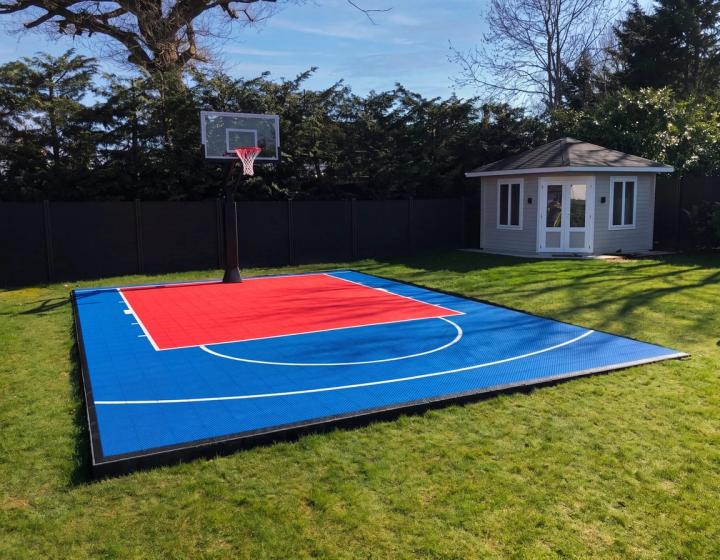
Dimensions2 guides
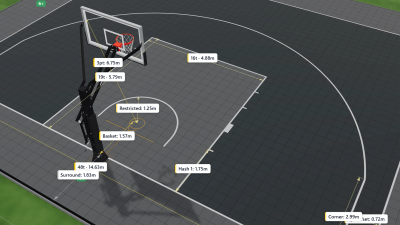
3×3 basketball court dimensions & layout guide
FIBA sets the 3x3 court at 15 m by 11 m of playing area. What that means once you add run-off, and how the layout adapts to a garden, a club or a school yard. Metric and imperial throughout.
Read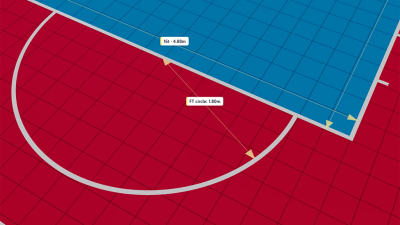
Basketball court dimensions & sizes
The measurements are fixed, but which set applies depends on the format you are building. FIBA and NBA full courts, half courts, 3x3 and compact key courts, in metric and imperial, with the run-off each one needs.
ReadBy sport8 guides
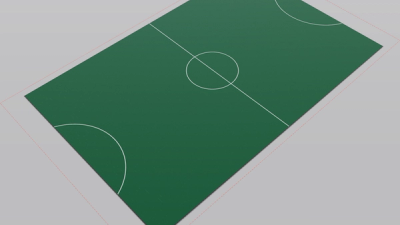
5-a-side football pitch dimensions
Five-a-side pitches usually run between about 26 by 16 m and 40 by 24 m, and there is no single governing dimension. What decides the right one is how many players, how much containment, and whether you actually want futsal instead.
Read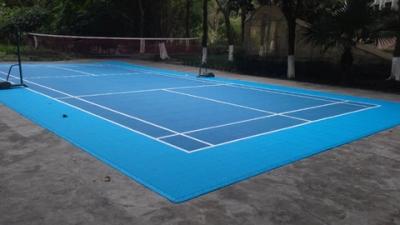
Badminton court dimensions and layout
A badminton court is 13.40 by 6.10 m, and it is the same slab a pickleball court sits on. The dimensions, the run-off the BWF asks for, and a straight answer on whether wind makes an outdoor court worth building.
Read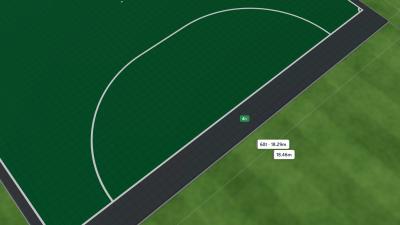
Futsal court dimensions and surface
FIFA futsal pitches run from 25 by 16 m up to 40 by 20 m. Futsal is the one sport here that a hard, true floor genuinely improves rather than compromises, because the ball is designed not to bounce.
Read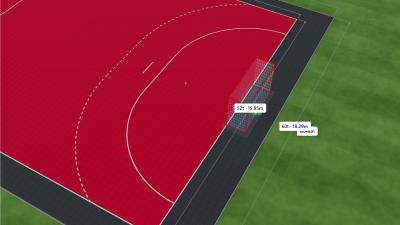
Handball court dimensions and markings
An IHF handball court is 40 by 20 m, the largest in the range and beyond most sites. A 32 by 16 m youth court with every marking scaled to match is the one most schools and clubs actually build.
Read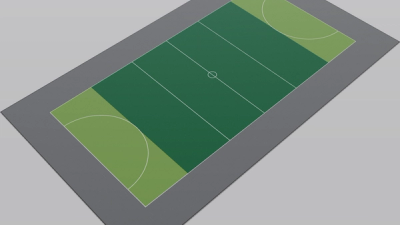
Netball court dimensions and markings
A netball court is 30.5 by 15.25 m, divided into three thirds, with a goal circle of 4.9 m radius at each end. The post carries no backboard and stands on the goal line, which is the detail people coming from basketball get wrong.
Read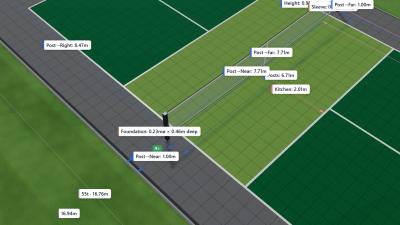
Pickleball court dimensions and layout
A pickleball court is 20 ft by 44 ft, the same for singles and doubles, and it needs less than a third of the space a tennis court does. What that means for a real garden, why the kitchen sets how the game plays, and a straight answer on the noise.
Read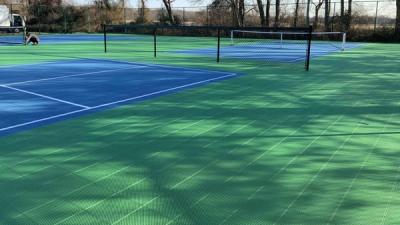
Tennis court dimensions, and what fits in a garden
A full tennis court needs about 36.6 by 18.3 m once you include the run-off, which is why most gardens cannot take one. The ITF stage courts are the useful answer, and the smallest is about the size of a badminton court.
Read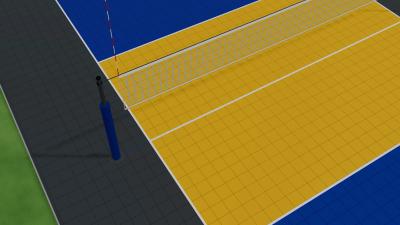
Volleyball court dimensions and the free zone
A volleyball court is 18 by 9 m, but the number that decides whether you can build one is the free zone. At the FIVB minimum of 3 m all round, the total becomes 24 by 15 m, and much of the game is played out there.
ReadFlooring2 guides
Padel court surfaces
Padel needs a low, slow, repeatable bounce and a controlled slide, and only sand-filled artificial turf gives it. What to specify, what it sits on, what it costs as a share of a court, and why brushing is not optional.
Read
How to choose a court surface
There is no best surface, only the right one for where the court sits and how hard it gets used. What separates a base from a playing surface, why a covered court is still an outdoor court, and what each option actually costs you over twenty years.
ReadHoops4 guides

Basketball hoop dimensions & specifications guide
The rim sits at 3.05 m everywhere, but backboards run from 44 to 72 inches, and the overhang changes how much room you need behind the baseline. Official measurements, and what each one means for a home installation.
Read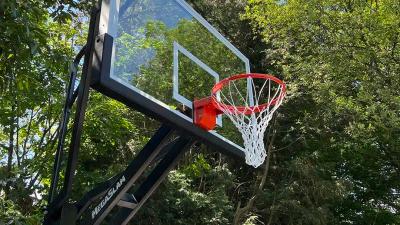
Choosing a basketball hoop for your home court
The hoop is the one part of a court you cannot quietly change later — it is a concrete footing in a fixed position. How it mounts, how big the board should be, what "all-weather" actually demands of the steel, and which savings at the cheap end turn out to be expensive.
Read
MegaSlam vs Goalrilla: quality, safety, and the true story behind ASTM standards
Both are built well above portable-hoop standard, so the comparison is worth making properly. Post construction, backboard, height adjustment and hardware, plus what availability and support look like if you are buying in the UK.
Read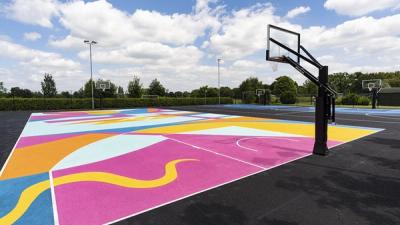
Buying basketball hoops for schools & education
Specifying for an institution is a procurement decision with a fifteen-year horizon, not a purchase. Ring heights by age, why the school answer on backboards differs from the home one, the inspection regime, coring into existing tarmac, and whole-life cost.
ReadInstallation4 guides
Basketball hoop installation guide
Most in-ground hoops come down to the same five stages: plan, dig, pour, level the anchor, then build. What each stage involves, and why the anchor is the one you cannot rush. Includes the MegaSlam installation manuals.
Read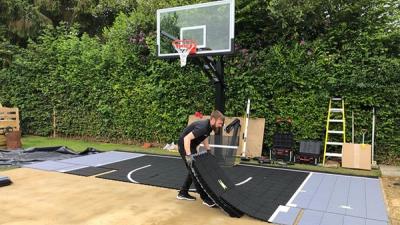
How to install a basketball court
Laying the tiles is genuinely a weekend job. The sub-base usually is not. This separates what you can install yourself from what is worth paying a local contractor to get right the first time.
Read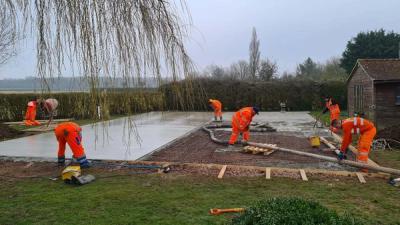
How to build a basketball court
A court is only as good as what sits underneath it. The sub-base decides how it plays, how long it lasts, and whether problems surface a year later. Base types, flatness tolerances, drainage, and the mistakes that cost most to undo.
Read
Basketball court lighting for home courts
How much light a home court actually needs, why mounting height matters more than wattage, keeping spill off the neighbours — and the duct that has to go in before the base does.
ReadCosts & budgets1 guide
Design1 guide
Owning your court6 guides
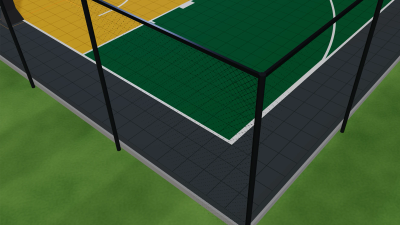
Fencing and keeping the ball in
Most home courts do not need fencing all the way round. They need it in one or two directions, at a height set by what is behind them. And anything over 2 m usually needs planning permission, which is where this gets expensive.
Read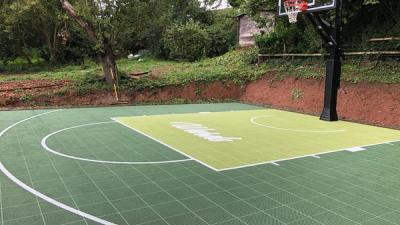
Looking after a modular court
A tiled court asks for less than almost any other surface. Sweep it, wash it occasionally, keep the joints clear, and it will look the same in ten years. Here is the short list of what genuinely matters.
Read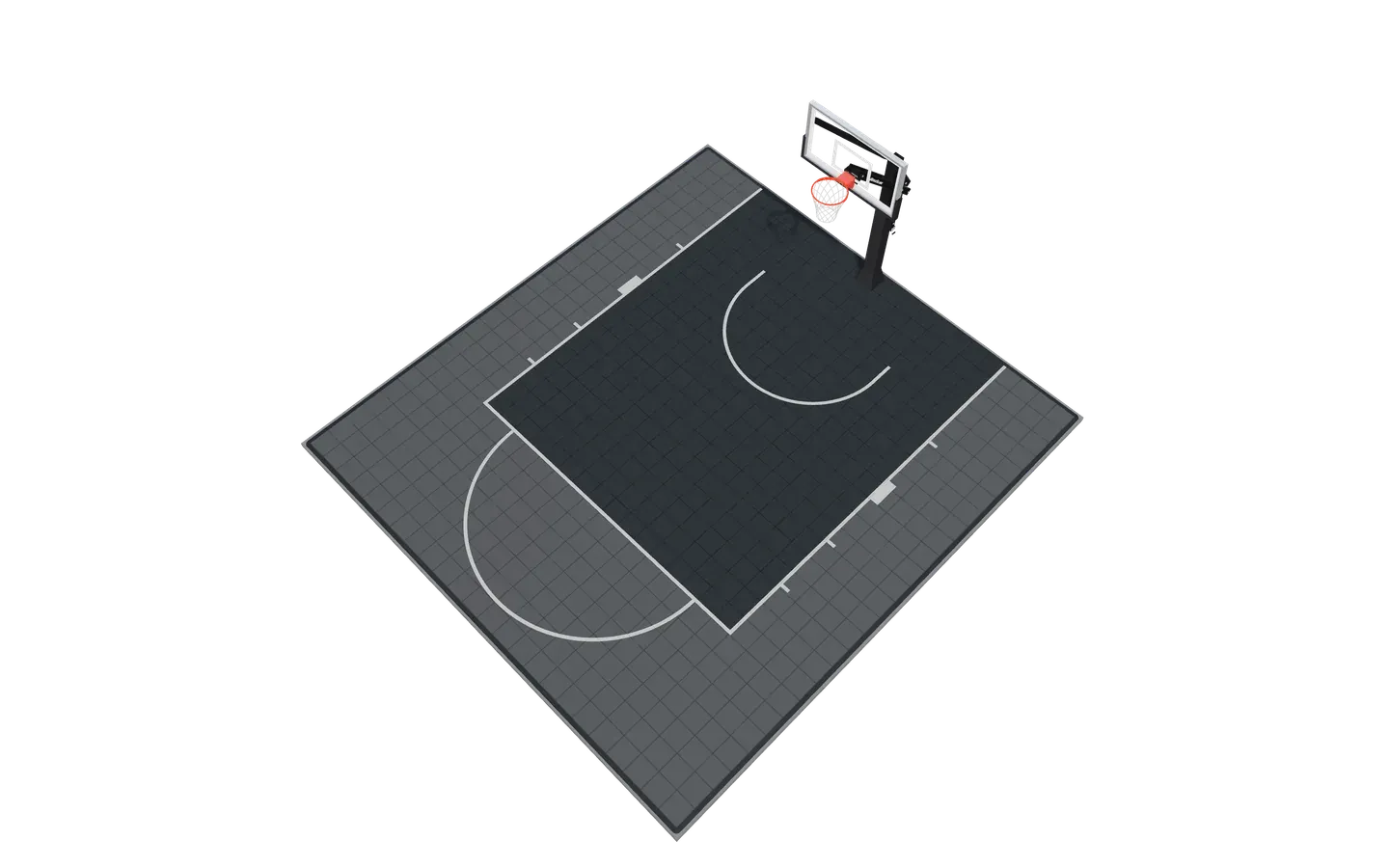
Your court in winter
A tiled court does not need putting away for winter. It drains, it handles frost, and it is playable on any dry day. The things that actually cause winter damage are salt, metal shovels and standing water.
ReadHow long a court lasts
The surface rarely fails first. What decides how long a court lasts is the base under it, the drainage around it, and whether the tiles were UV stabilised for outdoor use. Here is what to ask before you buy.
Read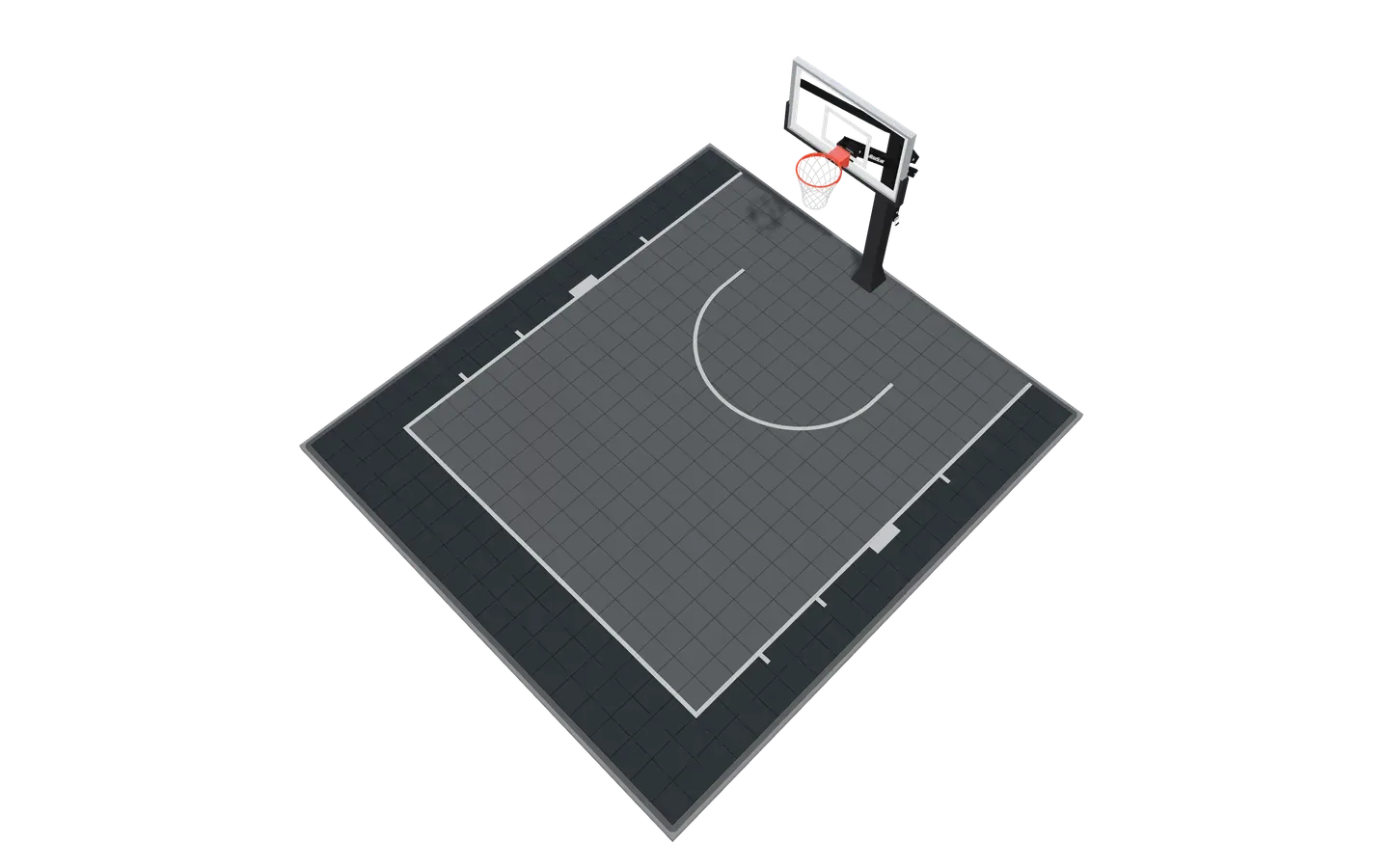
Replacing a damaged tile
One damaged tile is one tile, not a patched court. It lifts out and a new one clips in, usually without tools. The catch is colour: batches vary slightly, so the time to buy spares is with the original order.
Read
Resurfacing a court you already have
If you already have a tarmac or concrete court that plays badly, the base is usually fine and the surface is the problem. Tiles lay straight over it, which makes resurfacing a weekend rather than a rebuild.
ReadRules & costs by country12 guides
Planning permission and pricing differ by country. These guides are written against local rules.
Basketball court cost in France
From about €2,500 for a key court on an existing slab to €24,000 for a garden half court built from new. What the terrassement really costs, how to read a devis, and the TVA question worth putting in writing.
ReadDo you need planning permission for a garden basketball court in France?
Most garden courts in France need no permit for the court itself — a flat surface at ground level is treated as a terrasse de plain-pied. What triggers paperwork is usually the fencing, the lighting and where the property sits.
ReadBasketball court cost in Germany
From about €2,600 on an existing slab to €26,000 for a garden half court built new. Why German groundworks price above the European average, the 80 cm frost depth a hoop footing must reach, and the §35a tax relief worth €1,200.
Read
Do You Need a Building Permit for a Basketball Court in Your Garden in Germany?
In most cases a garden court in Germany needs no Baugenehmigung. The exceptions are where it gets specific: fence heights that vary by state, floodlighting, conservation areas, and whether your surface counts as Versiegelung.
ReadBasketball court cost in Italy
From about €2,500 for a key court on existing paving to €24,000 built from new. IVA at 22% is the highest in the comparison, and Italy is the one market where permission is a real cost line and not just a delay.
ReadDo you need permission for a garden basketball court in Italy?
A removable court on paving you already have is usually edilizia libera — no permission at all. What pushes it up to CILA, SCIA or a full permit, the vincoli that override all of it, and the condominio question people forget.
ReadBasketball court cost in the Netherlands
From about €2,600 on existing paving to €26,000 built from new. Soft subsoil and a high water table make the base the biggest line — and a court counts as verharding, which many gemeenten now regulate.
ReadDo You Need Planning Permission for a Basketball Court in Your Garden in the Netherlands?
A straightforward back-garden court in the Netherlands is usually vergunningsvrij. What changes that is the fixed post, fence height, and whatever your gemeente's bestemmingsplan says. How to check yours, and what a VvE adds.
Read
Do You Need Planning Permission for a Basketball Court in Your Garden in Spain?
A private garden court in Spain is usually an obra menor, which means a declaración responsable rather than a full licencia. Planning sits with the municipality, so this covers what pushes you into the heavier route.
ReadHow Much Does a Basketball Court Cost in Spain?
Spanish court builds run from about €4,885 for a small training area to €49,352 for a full court. Groundwork is the biggest line every time, ahead of tiles and hoops. Three worked examples at 2026 euro pricing.
ReadDo You Need Planning Permission for a Basketball Court in Your Garden (UK)?
Most domestic courts in the UK are permitted development and need no application at all. That changes if the property is listed or sits in a conservation area, or once you add floodlighting or tall fencing. A Lawful Development Certificate is how you get it in writing.
Read
How Much Does a Basketball Court Cost in the UK?
Key courts start around £2,000, half courts run £8,000 to £15,000, and a full court is £25,000 and up. Where the money actually goes, with groundwork costed separately so you can see it on its own.
Read