

Basketball hoop dimensions & specifications guide
The rim sits at 3.05 m everywhere, but backboards run from 44 to 72 inches, and the overhang changes how much room you need behind the baseline. Official measurements, and what each one means for a home installation.

Understanding regulation and recreational basketball hoop sizes
Basketball hoops may look simple, but correct dimensions are critical for realistic play, safe installation and proper court alignment. This guide explains official hoop measurements, how professional standards translate to home courts, and what to consider when choosing a system for residential, school or club use.
Standard basketball hoop height
The regulation height of a basketball hoop is consistent worldwide and applies to professional, amateur and home courts.
Key measurement
Regulation rim height is 3.05 m (10 feet) from playing surface to top of rim. This standard is used by:
- NBA, FIBA, NCAA
- High schools and clubs
- Home courts built to regulation scale
Lowered heights may be used temporarily for youth play, but full-height capability is essential for long-term use.
Basketball rim dimensions
The rim is the most standardised part of the entire system.
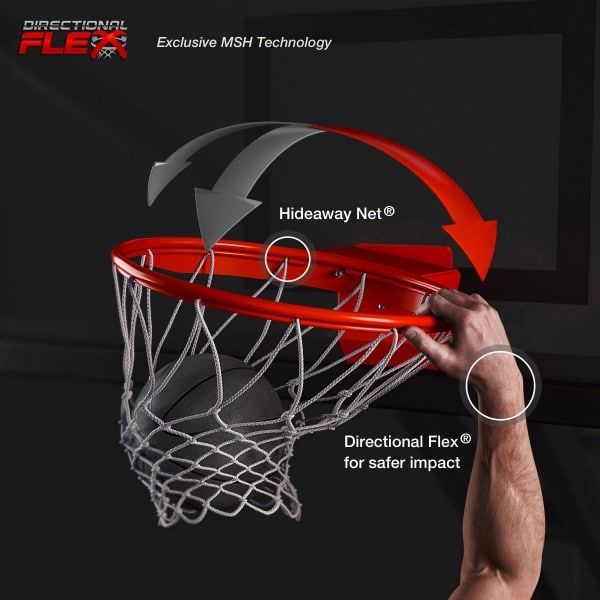
Regulation rim size
- Internal diameter: 45 cm (18 inches)
- Steel thickness: typically 16–20 mm
- Mounting height: rim top at 3.05 m
This size accommodates:
- Official size 7 basketballs
- Proper shot clearance
- Dunk loads when used with a flex rim
Anything smaller or thinner will change shot behaviour and durability.
Backboard dimensions explained
Backboard size affects rebound realism, shooting angles and overall court feel.
Regulation backboard sizes
- NBA / FIBA: 180 × 105 cm (72 × 42 inches)
Common home court sizes
- 72” (full regulation) – best performance
- 60” – excellent for compact courts
- 54” – entry-level, reduced rebound realism
For serious home play, tempered glass backboards with steel framing are strongly recommended.
Backboard overhang & pole offset
Overhang is the horizontal distance from the backboard face to the support pole.
Typical overhang ranges
- Professional systems: 120–160 cm
- High-end home systems: 80–120 cm
- Entry systems: 60–80 cm
Greater overhang means:
- Reduced collision risk
- Improved layup angles
- More realistic playing experience
This measurement is often overlooked but has a major impact on safety and realism.
NBA vs FIBA hoop dimensions – are they different?
Despite differences in court markings and game rules, hoop dimensions are identical.
The main differences lie in court layout, not the hoop itself.
Basketball Court Layout Guides (opens in a new tab)
Home basketball hoop considerations
When installing a hoop at home, regulation dimensions still apply, but context matters.
Key considerations:
- Available court depth
- Backboard width vs driveway size
- Adjustable height range
- Base or in-ground installation
High-quality adjustable systems allow youth play without compromising adult regulation height.
Best Basketball Hoops for Home Courts (opens in a new tab)
Quick reference dimensions
- Rim height: 3.05 m
- Rim diameter: 45 cm
- Backboard (regulation): 180 × 105 cm
- Ball size (men’s): Size 7
- Recommended overhang: 80 cm+
Related products
Frequently asked questions
View all FAQs →More questions? Browse the full basketball court FAQ