The key stages of outdoor basketball court planning
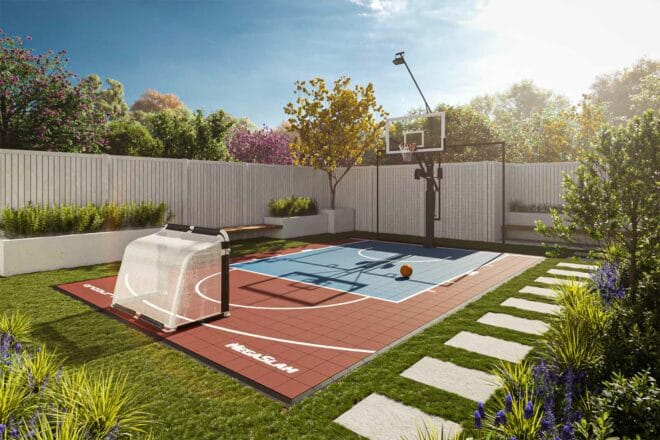
Planning an outdoor basketball court isn’t about choosing a surface, a hoop, or a layout in isolation. Courts that perform well over time are the result of coordinated decisions, where dimensions, materials, and equipment are planned together, not added piecemeal.
Many outdoor courts fall short not because of poor products, but because early decisions were made without considering how the court would actually be used, maintained, and exposed to the environment.
This guide connects the key stages of outdoor basketball court planning, helping you move from early ideas to a court that plays consistently, withstands real-world conditions, and remains fit for purpose long after installation.
Step 1: Start With the Right Layout (Not Just the Right Size)
Most court projects begin with a diagram. But diagrams don’t account for real-world constraints like run-off space, surrounding structures, or how players actually move beyond the lines during play.
Different formats place very different demands on space:
3×3 courts follow a regulation half-court footprint, but with specific line placements and spacing that differ from informal half courts. If you’re planning this format, the 3×3 Basketball Court Dimensions & Layout Guide explains what’s required and what flexibility exists in real sites.
Compact courts prioritise efficient use of space, but proportions still matter. Poor scaling can make even a small court feel awkward to play on. The Compact Basketball Court Dimensions Guide outlines what works in tighter environments.
Larger and full courts introduce additional considerations around orientation, drainage, and clearance that must be resolved early.
Before selecting surfaces or equipment, confirm what layout your space can realistically support – including practical run-off, overhead clearance, and access for installation.
Step 2: Choose a Surface That Matches the Environment
Surface performance outdoors is also heavily influenced by what sits beneath it. Even the best flooring system will underperform if the base is poorly prepared. Flatness, drainage, and long-term stability all start at ground level. The Basketball Court Sub-Base Guide explains how different base constructions affect surface behaviour, drainage, and durability over time and why cutting corners below the surface often leads to visible problems above it.
Outdoor basketball surfaces are often chosen based on appearance or initial cost. In reality, outdoor performance is governed by exposure.
Sunlight, moisture, temperature swings, and air movement all affect how a surface behaves over time. A surface that performs well indoors may degrade quickly outdoors, while a system designed for exposure can deliver more consistent play year-round.
If you’re comparing surface types, the Outdoor Basketball Court Surface Options guide provides a practical comparison of common solutions, from concrete and coatings to purpose-built sports systems.
It’s also important to understand why indoor and outdoor flooring behave so differently. The Indoor vs Outdoor Basketball Court Flooring guide explains how environment dictates material choice, installation method, and long-term performance.
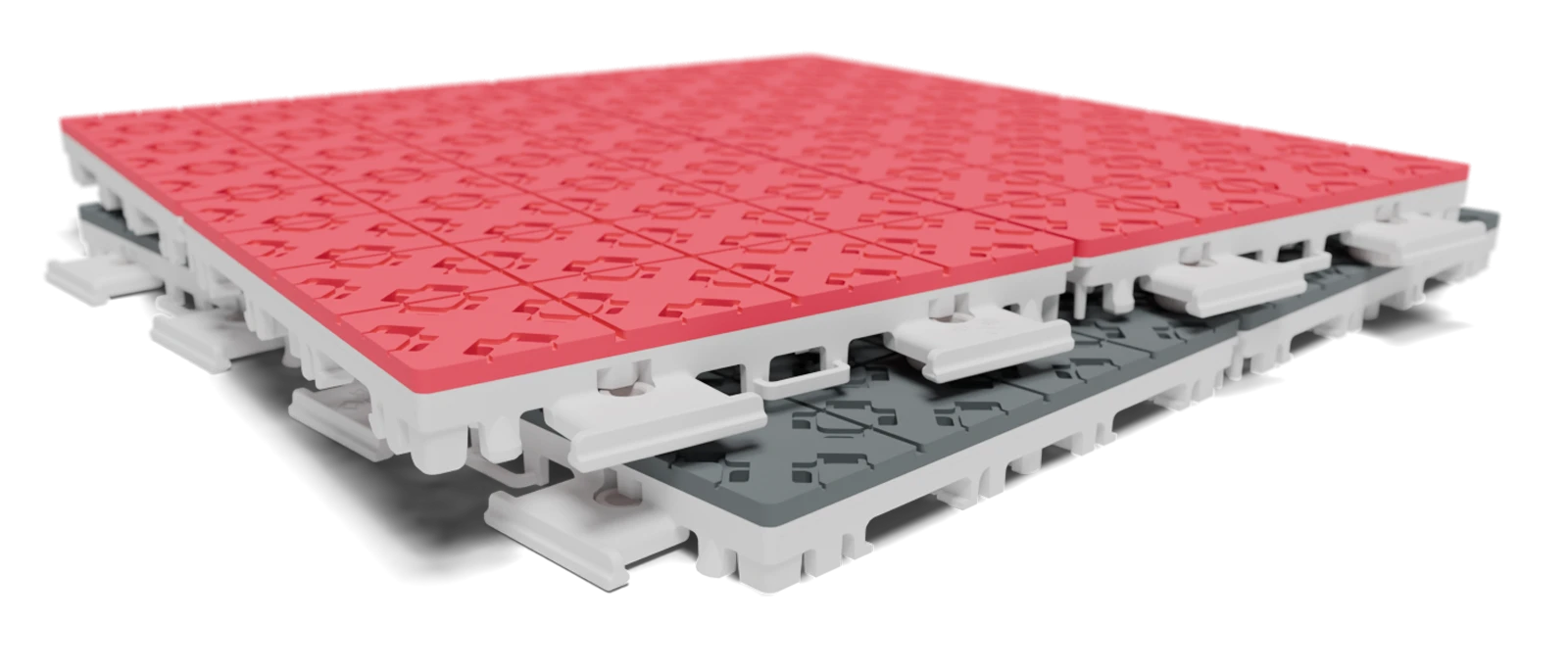
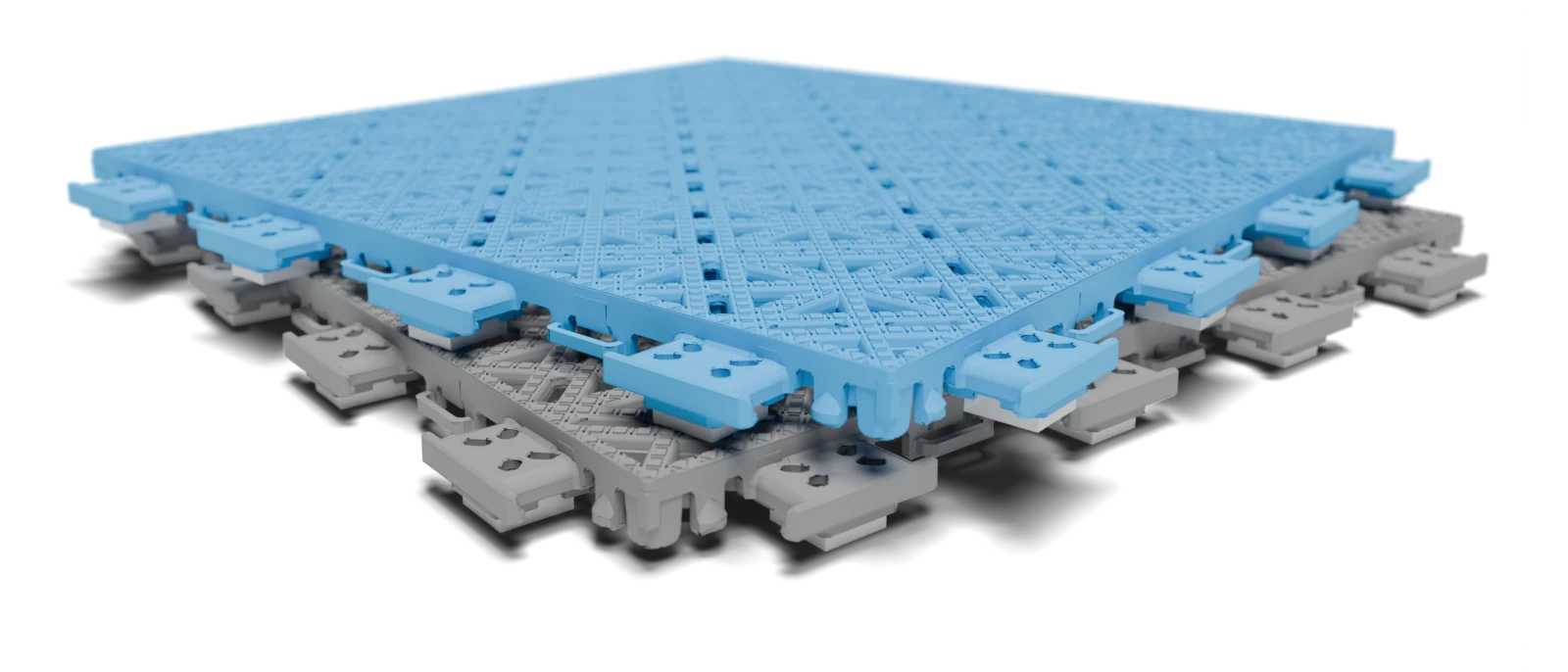
For many outdoor courts, especially in residential, school, and club settings, modular sports flooring offers a balanced solution. These systems are designed to manage drainage, thermal movement, and wear while maintaining predictable traction and ball response.
If you want to compare materials directly, ordering a
Basketball Court Flooring Sample Pack can help validate surface choice before committing to a full installation.
Step 3: Match the Hoop to the Court – Not the Other Way Around
Basketball hoops are often selected late in the process, but they have a major influence on how a court feels and performs.
Backboard size, mounting method, and stability affect rebound angles, ball response, and player confidence. A hoop that feels oversized or under-specified for the court can undermine even the best surface and layout.
Key factors to align with the court footprint include:
- Backboard proportion relative to court size
- Stability and anchoring for outdoor and high-use environments
- Height adjustment for shared-use courts
- Clearance behind the baseline and above the rim
Portable hoops may offer flexibility, but they introduce compromises around stability and long-term durability. In contrast, in-ground systems prioritise consistency and performance, making them better suited to permanent outdoor courts.
For education and shared-use facilities, the Buying Basketball Hoops for Schools guide outlines what to prioritise, from safety and durability to lifecycle value.
Installation planning also matters. Understanding ground conditions, concrete requirements, and clearances early avoids costly compromises later. The Basketball Hoop Installation Guide details what’s required for a stable, long-term setup.
Common Planning Mistakes (And How to Avoid Them)
Several issues appear repeatedly in underperforming outdoor courts:
Treating covered spaces as indoor environments
Roofs do not eliminate moisture or temperature movement. If a space isn’t fully sealed and climate controlled, it should be planned as outdoor.
Choosing surfaces before confirming usage intensity
Occasional recreational play and daily training place very different demands on flooring.
Selecting a hoop before confirming layout and clearance
Hoop choice should follow layout confirmation, not precede it.
Underestimating the importance of the base
Drainage, flatness, and structural preparation beneath the surface are critical to long-term performance.
Avoiding these mistakes usually comes down to slowing down early and treating the court as a system rather than a collection of parts.
A Simple Planning Framework
When choosing how to proceed, a few questions often clarify the right direction quickly:
- Where will the court be located, and how exposed is it?
- Who will use the court now – and in five years?
- What matters most: comfort, consistency, or durability?
- How permanent should the installation be?
Clear answers to these questions make later decisions far easier.
Practical Tools to Help You Move From Ideas to Installation
Once the fundamentals are clear, the final step is translating intent into buildable decisions.
The tools below are designed to remove guesswork from the final stages of planning and ensure that layout, surface, and equipment work together as a complete system:
- Edit layouts, colours, and equipment in the 3D Basketball Court Designer
- Compare materials in person with a basketball court flooring sample pack
- Review outdoor-ready systems in the basketball hoops range
- Confirm installation requirements using the basketball court installation guide
Each step helps ensure the finished court performs exactly as intended – on the surface and beneath it.
Build Once. Build It Right.
A successful outdoor basketball court isn’t defined by how it looks on day one, but by how it performs over time.
When layout, surface, and equipment are aligned with the environment and intended use, the result is a court that supports real play rather than compromises. Whether you’re building a compact home court, a school facility, or a regulation 3×3 setup, the same principle applies: decisions made early determine performance later.
As the format continues to grow at grassroots, collegiate, and competitive levels, facilities built with intent will define how the game is played locally for years to come.

 English (UK)
  Български
  Čeština
  Dansk
Dansk  Deutsch
  Nederlands
  Español
  Eesti
Eesti  Français
  Ελληνικά
  Hrvatski
  Magyar
  Italiano
  Latviešu valoda
  Lietuvių kalba
  Norsk bokmål
  Português
  Polski
  Română
  Српски језик
  Slovenčina
  Slovenščina
  Suomi
Suomi  Svenska
  Türkçe
  العربية
  Bosanski
  Українська