Official FIBA 3×3 Basketball Court Size
3X3 basketball is a fast-paced, half-court format played worldwide in clubs, schools and official FIBA competitions. Designed for intensity and accessibility, it requires a precise court layout to ensure correct line markings, safe run-off areas and consistent gameplay.
This guide explains official 3X3 basketball court dimensions, recommended space requirements and practical layout considerations. Use it to understand how much space you need — then open a preconfigured 3X3 court in our 3D designer and customise it to suit your project.
What Is a 3X3 Basketball Court?
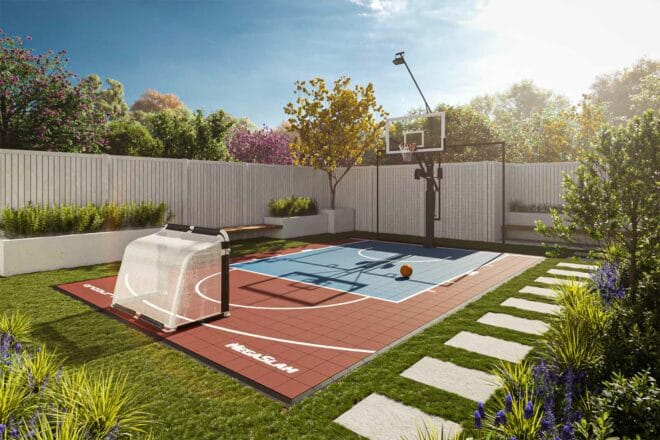
A 3X3 basketball court is a single-hoop court based on half-court play, with markings defined specifically for the 3X3 format. Unlike informal half courts, a regulation 3X3 court follows exact dimensions and line placements to support competitive play and training.
The format is used in official FIBA 3X3 competitions, as well as in clubs, schools and community spaces where efficient use of space and high-intensity play are priorities.
Official 3X3 Basketball Court Dimensions
A regulation 3X3 basketball court uses the same playing area size as a standard half court, with specific line markings adapted for the format.
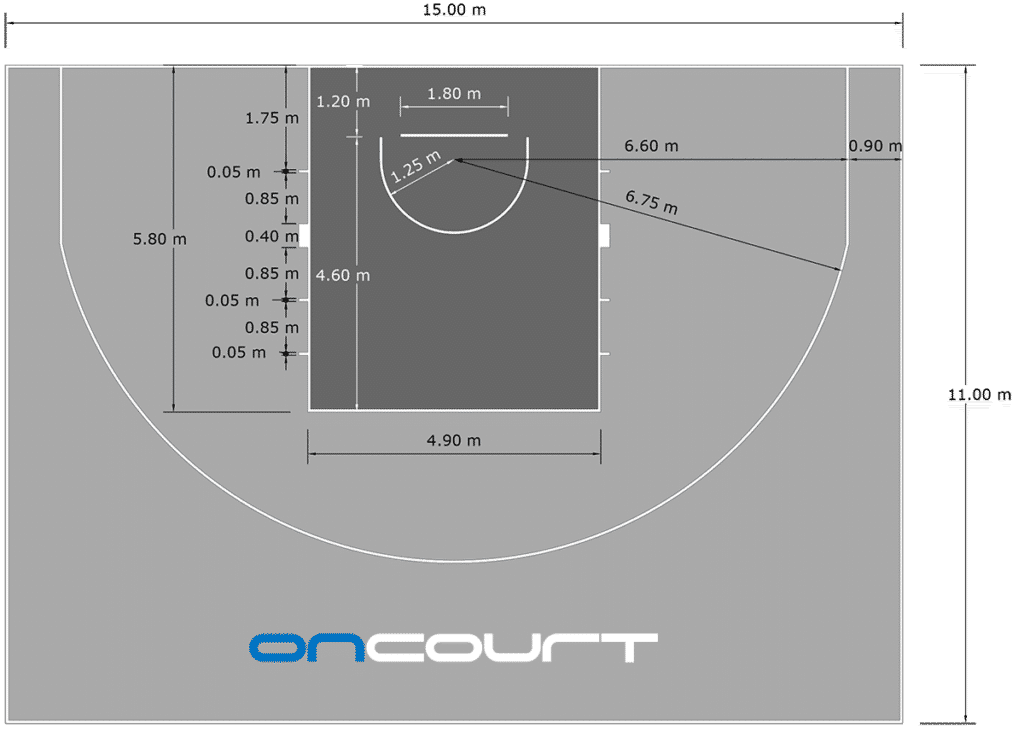
Playing court dimensions: 15 m × 11 m (length × width)
Key layout details:
- Single basket positioned on the centre of the baseline
- No centre circle
- Three-point arc (used as the two-point line in 3X3)
- No Free throw arc
- Free throw line and key sized according to regulation standards
These dimensions ensure consistent spacing, fair play and compatibility with official competition rules.
Minimum Space & Run-Off Requirements
While the playing area is 15 m × 11 m, additional space is recommended around the court to allow for safe movement and play. If your space constraints don’t allow for a 3×3 setup, you can learn more about compact basketball court dimensions for a greater understanding of what fits in smaller areas.
Recommended allowances:
- Clear run-off space around all sides of the court
- Additional clearance behind the baseline to account for momentum and rebound play
- Adequate overhead clearance where applicable
When planning a 3X3 court for a residential or club setting, total available space often determines how closely you can follow recommended run-off guidelines. Smaller sites can still work effectively with careful layout planning.
3X3 Court Layout Diagram
A 3X3 court layout includes all essential markings required for the format, arranged within a compact footprint. Key features include the basket placement, arc position and free throw area, all scaled proportionally to maintain proper spacing.
Planning a 3X3 Court for Different Environments
Each environment benefits from thoughtful placement, surface selection and equipment choice.
Clubs & Training Spaces
For clubs, a regulation 3X3 layout provides an excellent training surface for skill development, conditioning and small-sided competition.
Home Installations
3X3 courts are well suited to private gardens and driveways where space is limited. Many home installations adapt the recommended run-off areas while keeping the playing dimensions accurate.
Schools & Community Courts
3X3 courts are popular in schools and community settings due to their efficient footprint and suitability for multiple age groups.
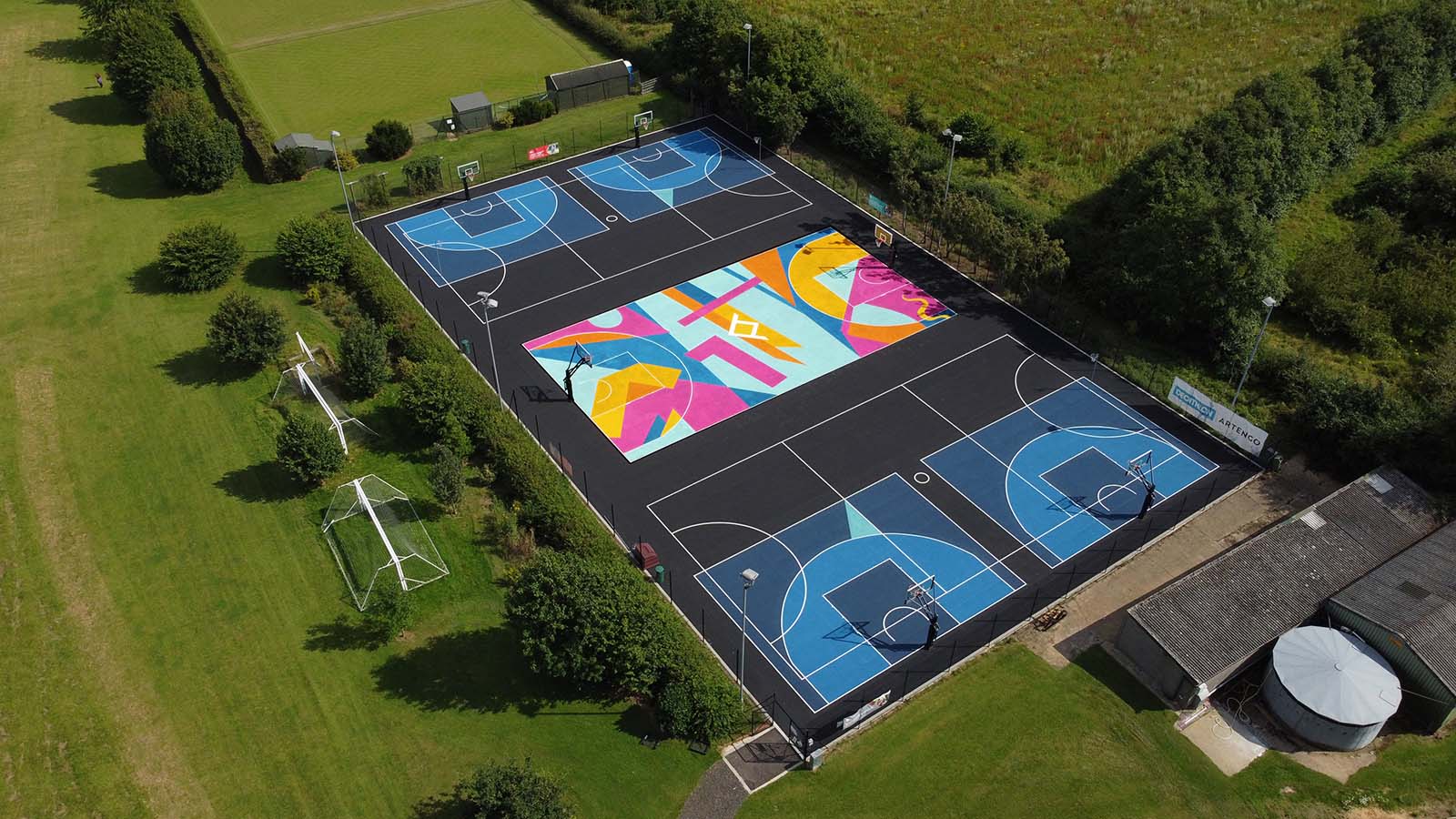
Writtle University College 3×3 Basketball Courts
January 6, 2022
The UK’s first dedicated 3×3 Basketball Facility opened its gates at Writtle University College On Saturday 3rd July 2021.
FIBA 3X3 vs Professional 3-on-3 Leagues
While FIBA 3×3 defines a global standard for court dimensions and layout, some professional leagues, such as the US based BIG3, use custom court designs created for broadcast and live events. These layouts may include modified line markings or scoring zones and are not intended as standard construction references.
For permanent installations in homes, clubs, schools and community settings, FIBA 3×3 dimensions provide the correct and widely accepted framework.
Next Steps: Turn Dimensions Into a Court You Can Build
A regulation 3×3 court is more than a set of measurements. The playing area is fixed, but the real-world success of the court depends on what happens around it: safe run-off, reliable traction, and an installation that stays true over time.
If you’re planning a permanent 3×3 court for home, school, or club use, the smartest approach is to move from “layout” to “specification” in three steps:
- Confirm the available space (including practical run-off)
- Choose a surface that fits the environment and maintenance reality
- Match the hoop and installation plan to the court footprint
Practical tools to help you move from planning to specification
The tools below are designed to remove guesswork from the final stages of planning. They allow you to test layouts against real dimensions, compare surface materials in person, and ensure that flooring and equipment choices work together as a complete system. Used in sequence, they help translate a regulation layout into a court that performs reliably once built — not just on paper.
Edit a 3×3 court in the 3D Basketball Court Designer to adjust dimensions, colours, and equipment.
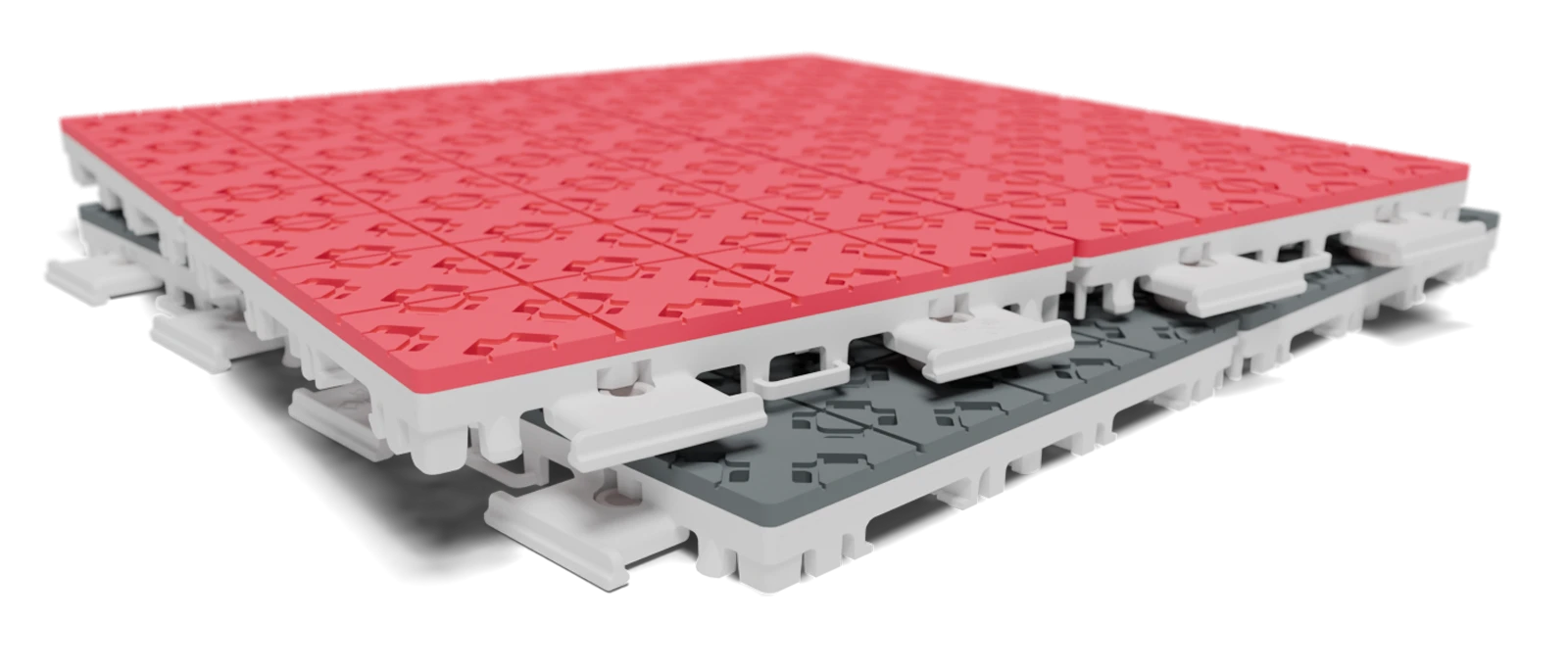
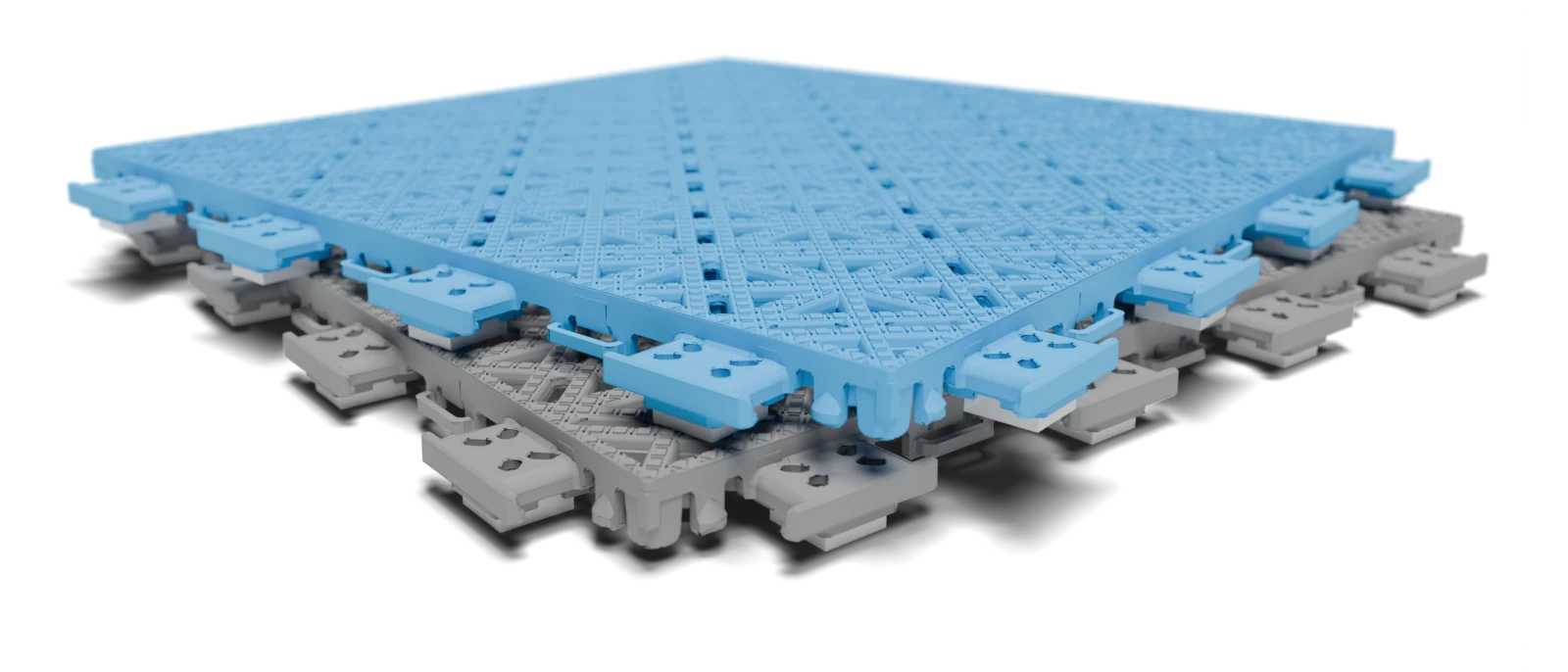
Review basketball-specific modular flooring systems built for outdoor performance.
Compare materials with a basketball court flooring sample pack.
A properly planned 3X3 basketball court delivers high-intensity play in a compact space. By following correct dimensions and layout principles, you can create a court that performs reliably across home, club and community environments. Use this guide to plan your space — then refine every detail using the 3D court designer.

 English (UK)
  Български
  Čeština
  Dansk
Dansk  Deutsch
  Nederlands
  Español
  Eesti
Eesti  Français
  Ελληνικά
  Hrvatski
  Magyar
  Italiano
  Latviešu valoda
  Lietuvių kalba
  Norsk bokmål
  Português
  Polski
  Română
  Српски језик
  Slovenčina
  Slovenščina
  Suomi
Suomi  Svenska
  Türkçe
  العربية
  Bosanski
  Українська