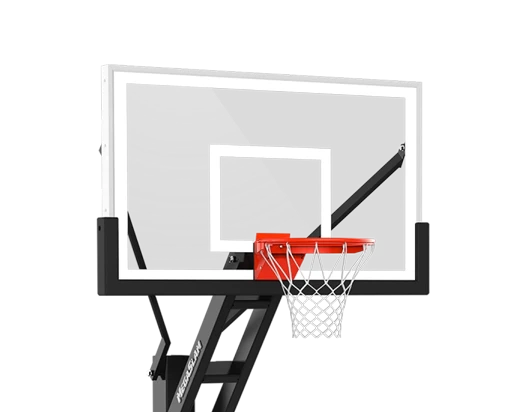
Installation af basketballbane: hvad er gør-det-selv, og hvad er ikke
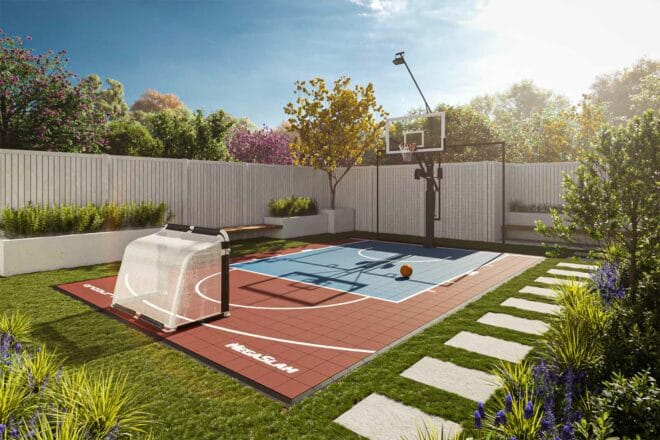
Installation af en basketballbane er langt mere enkel, end mange forventer, forudsat at forarbejdet er udført korrekt. Med en korrekt forberedt underbase er de fleste OnCourt basketballbanebelægninger og kurvesystemer velegnede til gør-det-selv-installation med standardværktøj og et mindre hold.
Denne guide forklarer, hvad du selv kan installere, hvor professionel hjælp anbefales, og hvordan den samlede installationsproces hænger sammen.
Hvad kan installeres som gør-det-selv?
Når underlaget er færdigt og plant, er de øvrige elementer på basketballbanen designet til at blive installeret hurtigt og effektivt.
Du kan typisk selv installere:
- Modulært gulv til basketballbaner
- Ramper og kantafslutninger til banen
- Fliselayouts med opmærkede linjer
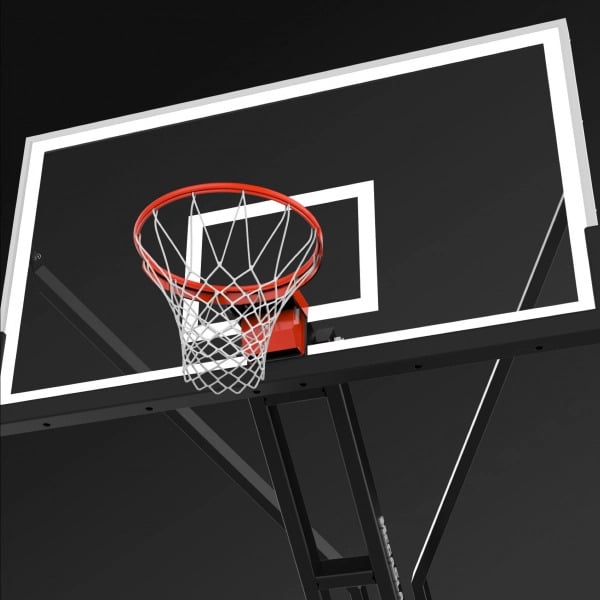
- Mega Slam basketballkurvesystemer (med assistance)
Hvad kræver normalt en entreprenør:
- Opbygning af beton- eller asfaltunderlag
- Udgravning, dræning og jordarbejde
- Elinstallationer (belysning)
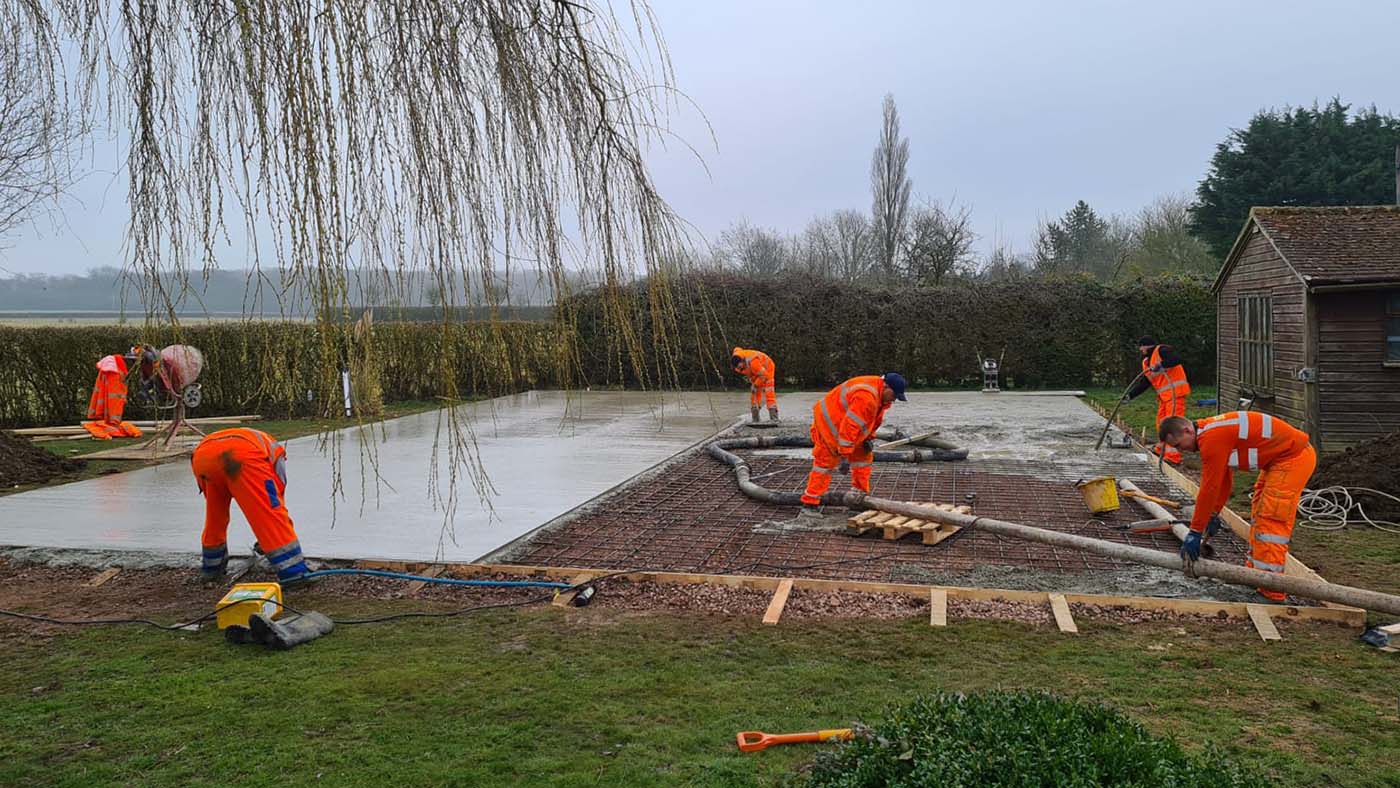
Brug af lokale installatører til opbygning af underbase
Selvom banebelægninger og kurve er velegnede til gør-det-selv-installation, er underbasen det mest kritiske konstruktive element i projektet. I denne fase vælger mange kunder at samarbejde med en lokal entreprenør inden for jordarbejde.
OnCourt understøtter denne proces ved at levere:
- Tekniske tegninger
- Specifikationer og tolerancer for underlaget
- Koordinationsvejledning efter behov
Lokale entreprenører bidrager med værdifuld stedsspecifik viden, herunder om dræning, jordbundsforhold og adgang, mens OnCourt hjælper med at sikre, at underlaget opfylder kravene til langsigtet baneperformance.
Installation af basketballgulv derhjemme
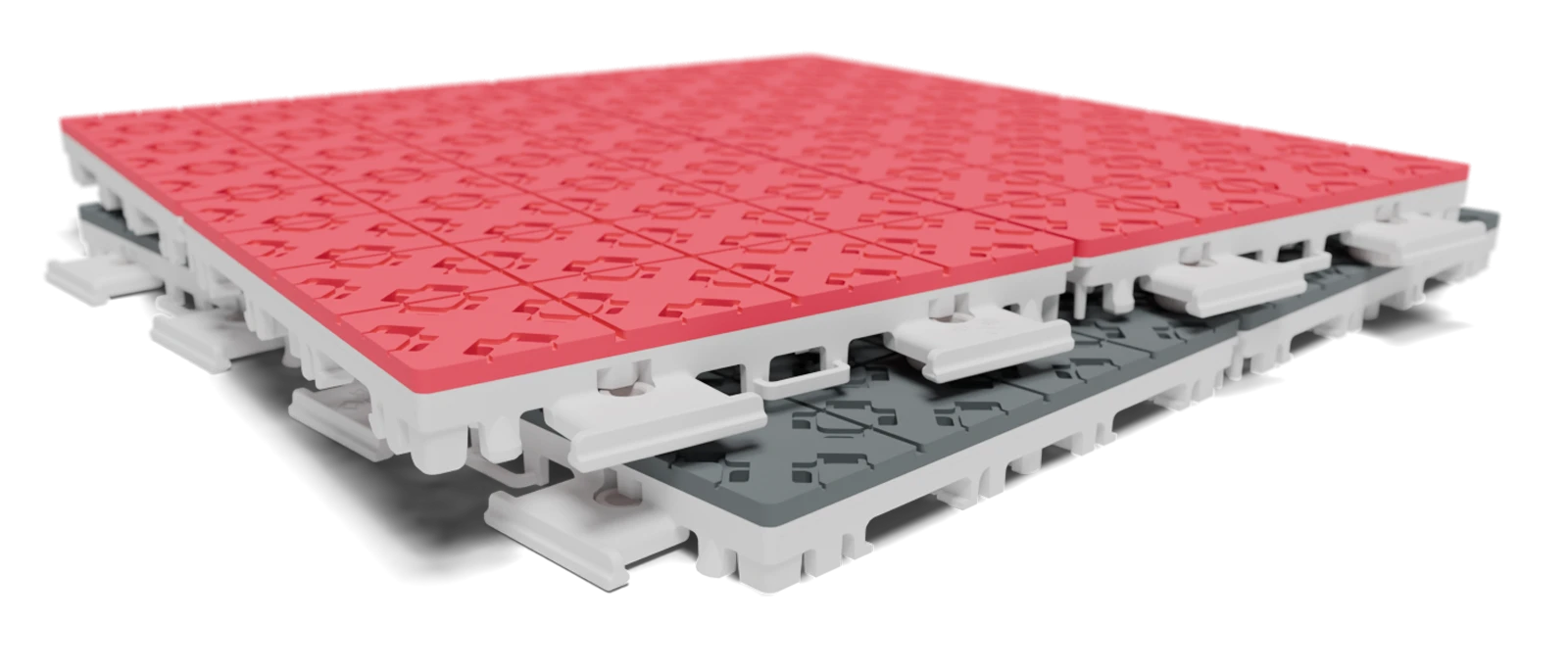
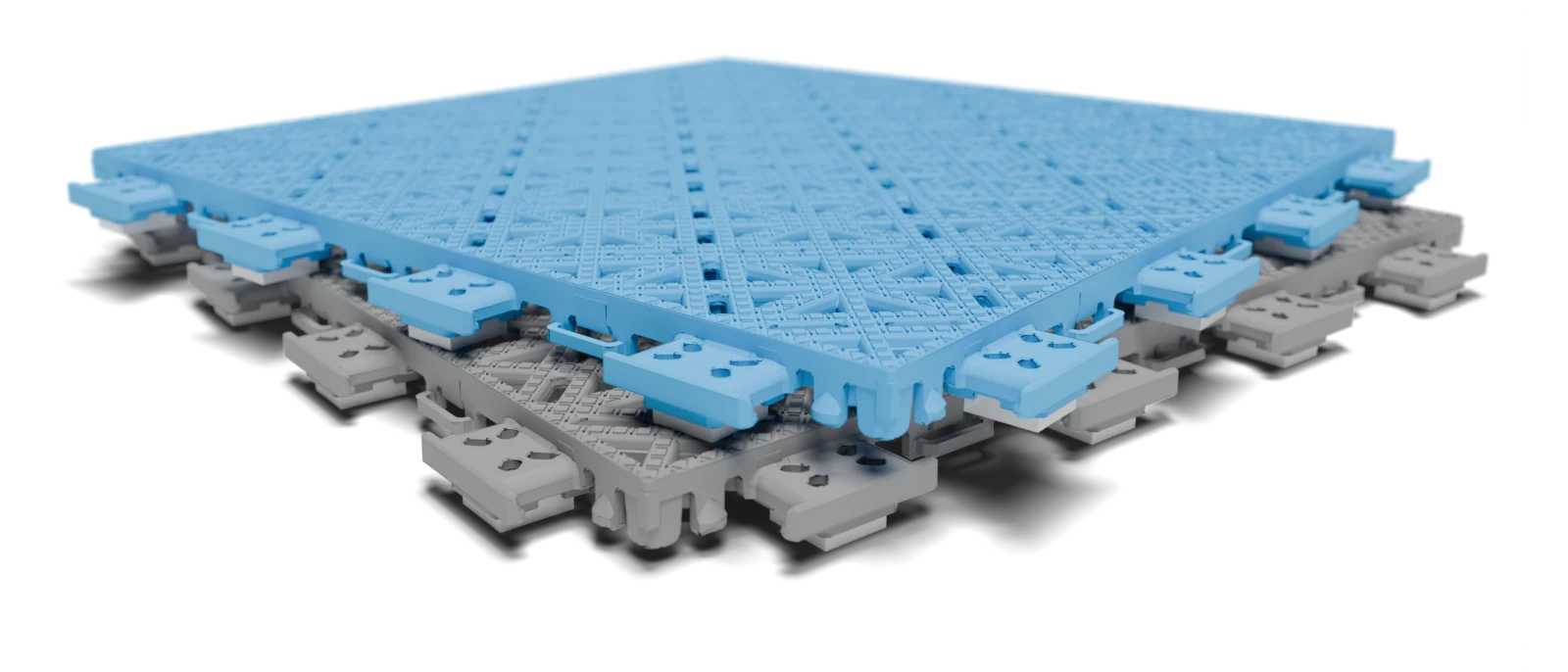
Når underlaget er klar, er installationen af en OnCourt basketballbane en hurtig og logisk proces. De modulære banebelægninger leveres i mærkede pakker med et nummereret layoutkort. Der kræves ingen lim eller specialværktøj.
Et team på to personer kan typisk installere:
- Kompakte baner på få timer
- Halvbaner inden for én dag
Ekstra hjælpere gør håndtering af paller og justering af fliser lettere, men selve processen er enkel.
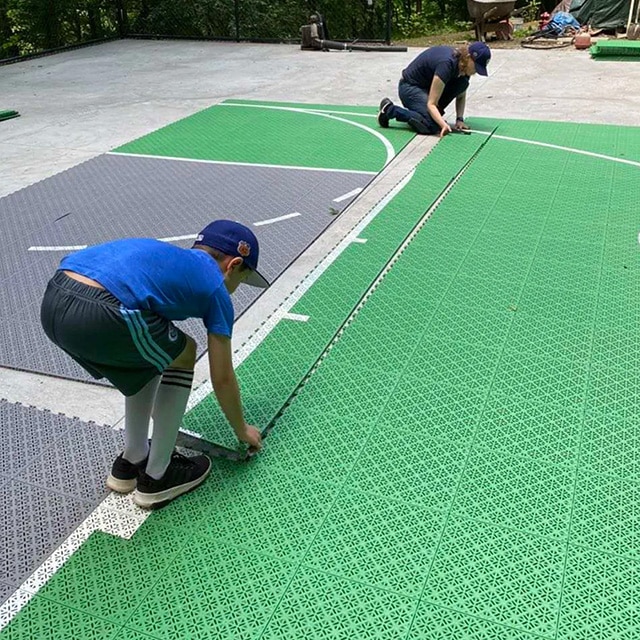
Gør-det-selv-installation af modulært basketballbaneunderlag
Placer pallen tæt på banen, og fjern indpakningen, før du går i gang.
Før du installerer din baneoverflade:
- Tjek din levering i forhold til pakkelisten
- Undersøg fliserne for transportskader
- Bekræft, at underlaget er rent, tørt og plant
- Gennemgå det nummererede banelayout-diagram
Trin 1 - Indstil dit starthjørne
Begynd i et hjørne af banen, og placer den første flise med krogkanterne vendt indad (mod banen). Match denne flise med panel #1 på dit layoutdiagram.
Trin 2 - Læg fliserne i rækkefølge
Fortsæt med at lægge fliser i numerisk rækkefølge ved at følge diagrammet række for række. Lås ikke brikkerne sammen endnu - læg dem blot på plads.
Trin 3 - Visuel justeringskontrol
Træd tilbage og bekræft:
- Banens linjer flugter korrekt med bøjlens position
- Logoer og markeringer matcher diagrammet
- Retten er firkantet og centreret
Trin 4 - Lås fliserne
Begynd igen fra det første hjørne, og lås fliserne sammen ved at lægge et let tryk nedad langs sømmene. Arbejd på tværs af banen i samme rækkefølge, som fliserne blev lagt.
Trin 5 - Installer ramper og hjørner
Monter ramperne og hjørnestykkerne. Disse inkluderer krog- og modtagerprofiler for at sikre en ren, færdig kant.
Trin 6 - Spil
Når banen er låst, er den straks klar til brug.

Installation af Mega Slam basketballkurve
Mega Slam basketballkurvesystemer er konstrueret til styrke og stabilitet, men deres vægt betyder, at installationen skal planlægges omhyggeligt.
Vigtige punkter:
- Beregn 1-2 timer til montering
- Brug 3-4 personer til sikre løft
- Følg de medfølgende instruktioner nøje
Med den rette forberedelse er installationen ligetil og kræver ikke specialværktøj.
Spørgsmål om installation
Dette er de mest almindelige spørgsmål om installation af en basketballbane. For mere detaljerede svar om forberedelse af underlaget, gulvbelægning og opsætning af kurven, se hele Ofte stillede spørgsmål om installation af en basketballbane
Ja, det er det. OnCourts modulære baneoverflader er designet til gør-det-selv-installation og kræver ingen lim eller specialudstyr.
Med det samme. Når overfladen er installeret, kan spillet begynde med det samme. Hoopsystemerne er klar, så snart monteringen er færdig.
Kun til underlaget. Overflade- og bøjleinstallation kan typisk udføres uden professionelle installatører.
Næste skridt
Når installationsprocessen er forstået, er næste skridt at sikre, at din bane er korrekt planlagt, specificeret og klar til langvarig brug.
Sådan opbygger du et underlag til en basketballbane

 English (UK)
  Български
  Čeština
  Dansk
Dansk  Deutsch
  Nederlands
  Español
  Eesti
Eesti  Français
  Ελληνικά
  Hrvatski
  Magyar
  Italiano
  Latviešu valoda
  Lietuvių kalba
  Norsk bokmål
  Português
  Polski
  Română
  Српски језик
  Slovenčina
  Slovenščina
  Suomi
Suomi  Svenska
  Türkçe
  العربية
  Bosanski
  Українська