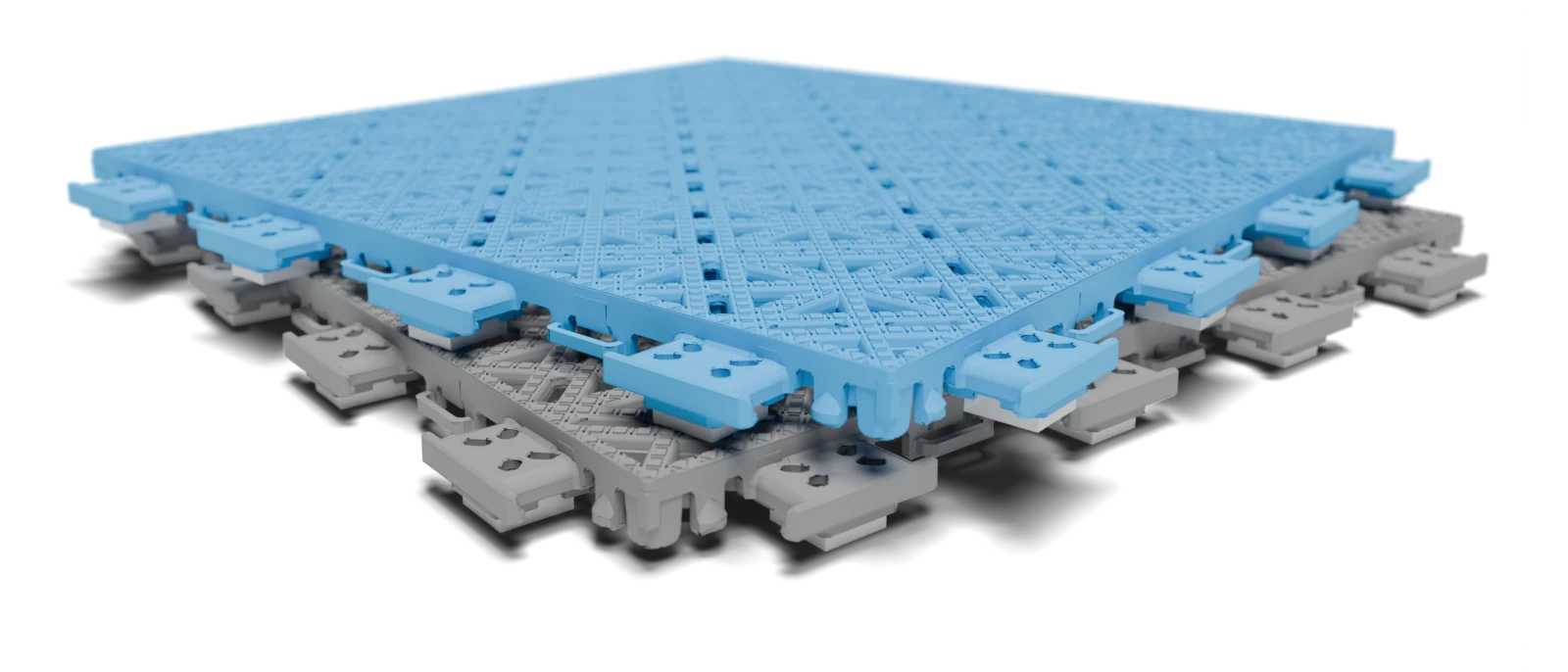
Grundlaget for en langtidsholdbar basketballbane
En basketballbane er kun så god som underlaget under den. Længe før fliserne samles, eller kurven monteres, afgør underbygningen, hvordan banen vil fungere, hvor længe den holder, og om der opstår problemer efter måneder eller år.
Denne guide fokuserer specifikt på opbygningen af underbygningen til en basketballbane. Den dækker ikke installation af belægning eller montering af kurv — disse trin kommer senere. En korrekt udført base er afgørende for, at alt andet fungerer som det skal.
Hvad er en underbygning til en basketballbane?
Underbygningen er det konstruerede fundament, der understøtter spilleoverfladen. Dens opgave er tilsyneladende enkel: at forblive plan, stabil og håndtere vand. I praksis betyder det at bære spillerbelastninger, modstå bevægelser i underlaget og forhindre, at fugt beskadiger banen ovenover.
For basketballbaner, især dem med modulært gulv, skal underbygningen være fladere og mere præcis end en almindelig terrasse, indkørsel eller havebelægning. Små afvigelser, som ville være acceptable andre steder, kan give problemer på en bane.
Valg af den rette type underbygning
De fleste basketballbaner bygges enten på beton eller asfalt, hvor beton er den foretrukne løsning i de fleste installationer. Det giver et stabilt og forudsigeligt fundament, som understøtter ensartet boldopspring og langvarig overfladeperformance.
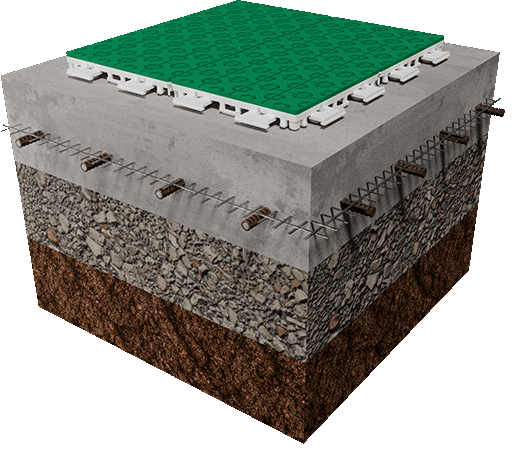
For basketballbaner bør en armeret betonplade typisk opfylde følgende kriterier:
- Minimální tloušťka 100–150 mm
- Armering med stålnet eller armeringsjern
- Laserafrettet finish
- Let fald for udendørs dræning
Asfaltunderlag kan være egnede i visse situationer, men de kræver mere omhyggelig forberedelse og er mere tilbøjelige til langvarige bevægelser.
Krav til planhed og tolerancer
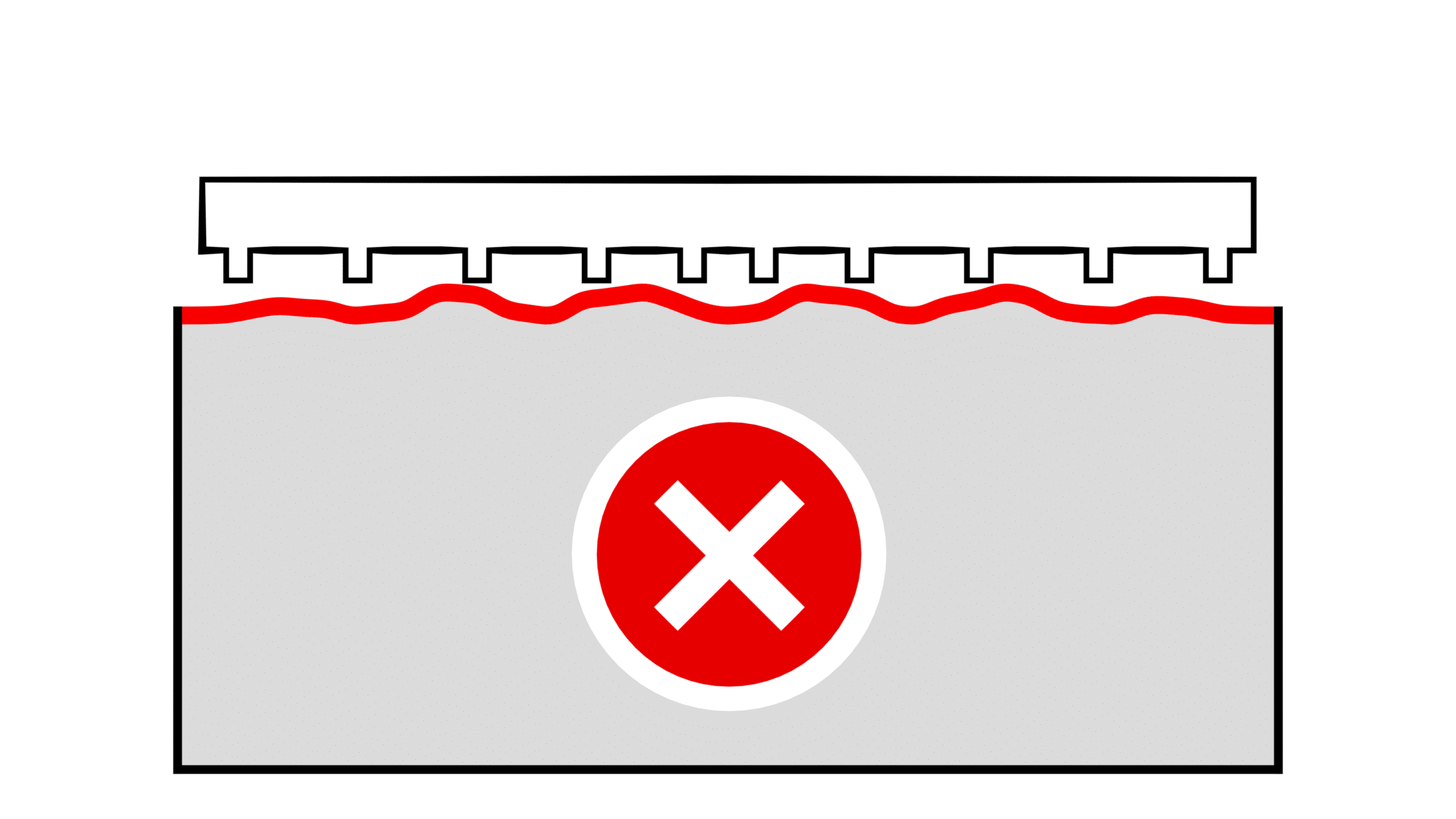
En basketballbane er ubarmhjertig over for ujævne fundamenter. I modsætning til belægning eller generelt anlægsarbejde fremhæver spilleoverfladen ujævnheder i stedet for at skjule dem. Selv mindre afvigelser i underbygningen kan påvirke boldopspring, skabe ubehageligt fodfæste og gøre installationen af overfladen mere vanskelig.
Af denne grund kræver basketballbaner en højere planhedsstandard end de fleste udendørs betonplader. Målet er ikke visuel perfektion, men ensartet ydeevne over hele spillearealet. Som praktisk rettesnor bør en basketballbanes underbygning opfylde følgende tolerancekrav:
- Højst 3–5 mm afvigelse over 3 meter
- Ingen pludselige niveauforskelle eller kanter
- Ingen stående vand efter regn (for udendørs baner)
Overholdelse af disse tolerancer i underbygningsfasen forebygger problemer, som er vanskelige eller umulige at rette, når overfladen først er installeret.
Dræning og forberedelse af underlaget
For udendørs baner er dræning lige så vigtig som planhed. Vand, der ikke kan ledes væk, vil med tiden forårsage bevægelser, revner eller frostskader.
God forberedelse af underlaget indebærer typisk et komprimeret lag af sten eller stabilgrus under betonpladen, kombineret med et let fald, der leder vand væk fra baneområdet. Målet er ikke at skabe en synlig hældning, men at forhindre stående vand på overfladen.
At ignorere dræning fører sjældent til øjeblikkelig fejl — det skaber langsomme og dyre problemer senere.
Kontrol af underbundens klarhed
Inden du går videre med installationen af basketballbanens overflade, bør du stoppe op og bekræfte følgende. Hvis du trygt kan sætte flueben ved hvert punkt, er underbygningen klar.
Din underbygning bør være:
- Strukturelt stabil, fuldt hærdet og fri for revner
- Plan inden for basketballbanens tolerancer (ingen synlige fordybninger eller kanter)
- Tør, ren og fri for affald
- Korrekt drænet, uden stående vand efter regn
- Opført med korrekte dimensioner og orientering i forhold til banens layout
Hvis nogen af disse punkter er usikre, skal de løses, før overfladen installeres. At rette problemer på dette stadie er enkelt. Senere er det ikke.
OnCourt leverer tekniske tegninger og tolerancevejledning til entreprenører, der opbygger underlag til baner.
Almindelige fejl, der bør undgås
De fleste problemer med underbygningen skyldes genveje snarere end dårlige intentioner. Brug af terrassetolerancer, udeladelse af armering, udstøbning uden præcis niveaustyring eller hastig hærdning er alle fejl, der kompromitterer banen, før den overhovedet er færdigbygget.
- Brug af utilstrækkelige tolerancer
- Ingen armering
- Udstøbning uden niveaustyring
- Installation før fuld hærdning
Det grundlæggende princip er enkelt: at udbedre problemer med underbygningen efter installation er langt vanskeligere end at bygge den korrekt fra starten.
Hvornår er underbygningen klar?
Før der fortsættes til installation af overfladen, skal underbygningen være fuldt hærdet, ren og strukturelt stabil. Den skal opfylde planhedstolerancer og ikke vise tegn på revner, bevægelse eller bløde områder.
Når disse betingelser er opfyldt, bliver installationen af baneoverfladen og kurven ligetil.
Hvem bør opbygge underbygningen?
Selvom mange basketballbaneoverflader kan installeres som gør-det-selv, bør opbygningen af underbygningen udføres af erfarne fagfolk inden for jordarbejde. Denne fase kræver det rette udstyr, kendskab til lokale jordforhold og en forståelse af tolerancer, der rækker ud over almindeligt anlægsarbejde.
OnCourt leverer tekniske tegninger og specifikationer, så lokale entreprenører kan opbygge fundamentet korrekt uden gætterier. Denne tilgang kombinerer lokal ekspertise med klare ydelsesstandarder.
FAQ om underbygning til basketballbane
Underlaget er det kompakte fundamentlag under din banes overflade. Det støtter det modulære flisesystem, absorberer belastning, forhindrer bevægelse og sikrer ensartet boldopspring. Uden et solidt underlag kan banen forskyde sig, få døde zoner eller dræne dårligt over tid.
Udgravningsdybden afhænger af underlag, jordbundsforhold og klima, men ligger typisk mellem 100 mm og 250 mm. Ved blød jord eller koldere klima kan det være nødvendigt at grave dybere for at undgå frosthævninger og sætninger.
Et almindeligt underlag inkluderer:
– Type 1 MOT (knust sten) for komprimering og dræning.
– Et lag komprimeret skarpt sand eller fint afretningslag.
– Eventuelt geotekstil til ukrudtskontrol og stabilitet.
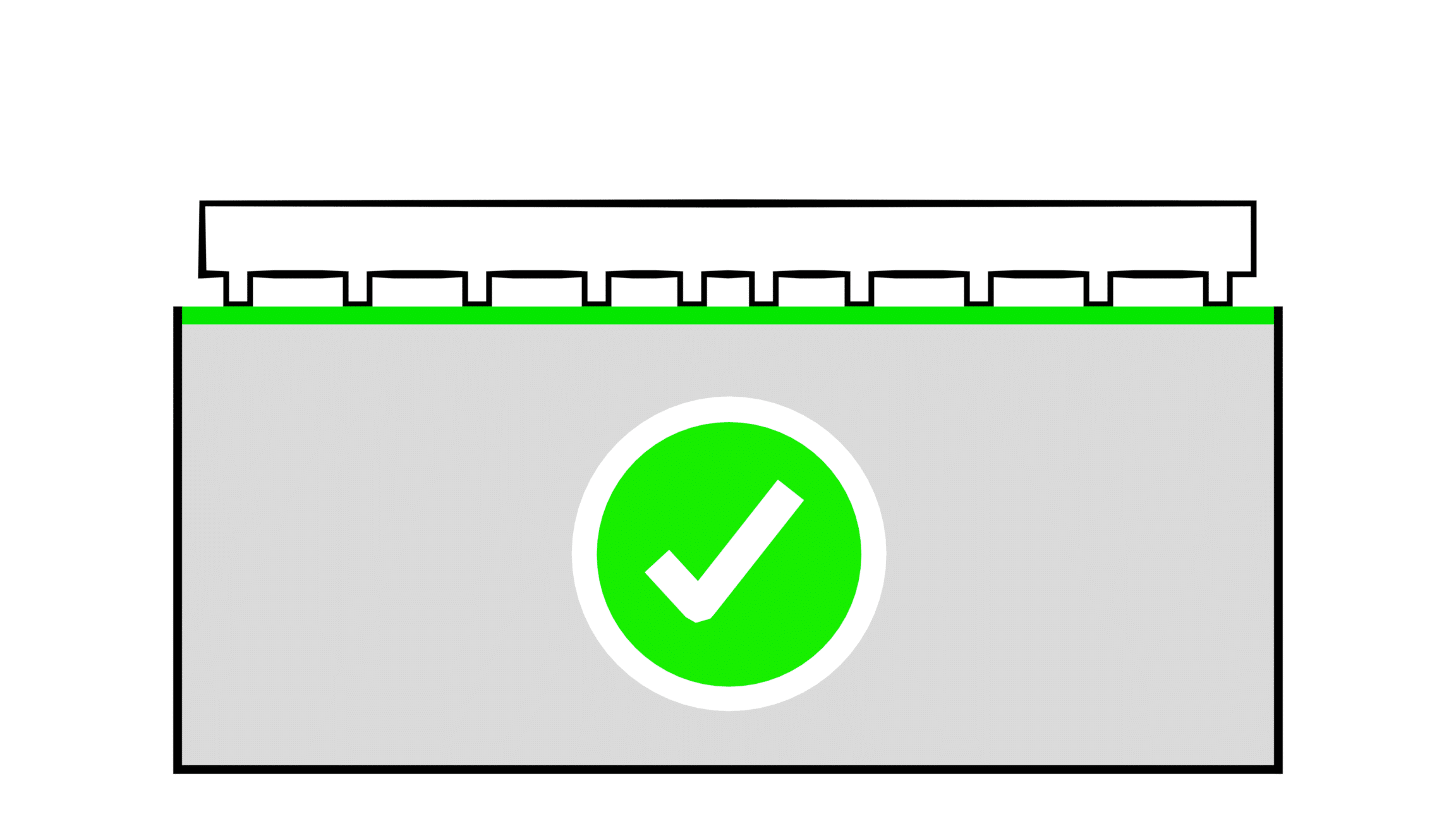
For bedste resultat, afslut med en glat beton- eller asfaltplade ved installation af modulfliser. Som nævnt i artiklen bør planhedstolerancen ikke overstige 5 mm inden for en radius på 3 m for optimal ydeevne.
Din underbase skal være plan med en tolerance på højst 5 mm over en radius på 3 m. Denne tolerance er afgørende for, at dine modulfliser låser korrekt og giver en sikker og ensartet spilleoplevelse.
Ja. Korrekt dræning er afgørende for at undgå vandansamling under det modulære banedæk. Indarbejd en let hældning, permeable lag eller drænrør efter behov til udendørsbaner.
Ja, hvis du har erfaring med udgravning og komprimering. Mange gør-det-selv-folk klarer underlaget selv, men ved større eller mere komplekse baner anbefaler vi en professionel entreprenør.
En lokal entreprenør er ofte det kloge valg. De forstår lokale jordforhold, dræningsudfordringer og har det rette udstyr og materialer. Et professionelt underlag giver dig ro i sindet og langvarig ydeevne.
Installationen af en “in-ground” Mega Slam Hoop består af to faser. Først graves et 1,25 m dybt hul til betonankeret, som holder systemet. Næste trin er at samle selve kurven. Mega Slam Hoops er tunge – det er derfor, de er de bedste til hjemmebrug. Du får brug for venner til at hjælpe med det tunge løft. Læs mere om Mega Slam Hoops installation.
NB - Ankersystemer til kurv og komponenter skal installeres under opbygning af underlaget. Konfigurer og bestil din bane, kurv og dele, så ankerne er klar ved udgravning.
Næste skridt
Når underbygningen er færdig, er du klar til at gå fra jordarbejde til samling af banen.

 English (UK)
  Български
  Čeština
  Dansk
Dansk  Deutsch
  Nederlands
  Español
  Eesti
Eesti  Français
  Ελληνικά
  Hrvatski
  Magyar
  Italiano
  Latviešu valoda
  Lietuvių kalba
  Norsk bokmål
  Português
  Polski
  Română
  Српски језик
  Slovenčina
  Slovenščina
  Suomi
Suomi  Svenska
  Türkçe
  العربية
  Bosanski
  Українська