

A fundação de um campo de basquetebol duradouro
Um campo de basquetebol vale tanto quanto a superfície que lhe serve de base. Muito antes de o pavimento modular ser encaixado ou de um cesto ser instalado, é a camada de base que determina o desempenho do campo, a sua longevidade e se os problemas surgirão meses ou anos mais tarde.
Este guia centra-se especificamente na construção da camada de base para um campo de basquetebol. Não aborda a instalação do pavimento nem a montagem do cesto — essas etapas vêm a seguir. Preparar bem a fundação é o que permite que tudo o resto funcione corretamente.
O que é a camada de base de um campo de basquetebol?
A camada de base é a fundação estrutural que suporta a superfície de jogo. A sua função parece simples: manter-se plana, estável e gerir a água. Na prática, isto significa suportar as cargas dos jogadores, resistir ao movimento do solo e evitar que a humidade danifique o campo acima.
Para campos de basquetebol, especialmente os que utilizam pavimento modular, a camada de base tem de ser mais plana e precisa do que um simples pátio, entrada de garagem ou laje de jardim. Pequenos desvios que seriam aceitáveis noutros contextos podem causar problemas num campo.
Escolher o tipo certo de camada de base
A maioria dos campos de basquetebol é construída sobre betão ou asfalto, sendo o betão a solução preferida na grande maioria das instalações. Proporciona uma fundação estável e previsível que garante um ressalto consistente da bola e um bom desempenho da superfície a longo prazo.
As bases em asfalto podem ser adequadas em determinadas situações, mas exigem uma preparação mais rigorosa e são mais suscetíveis a movimentos a longo prazo.
Requisitos de nivelamento e tolerâncias
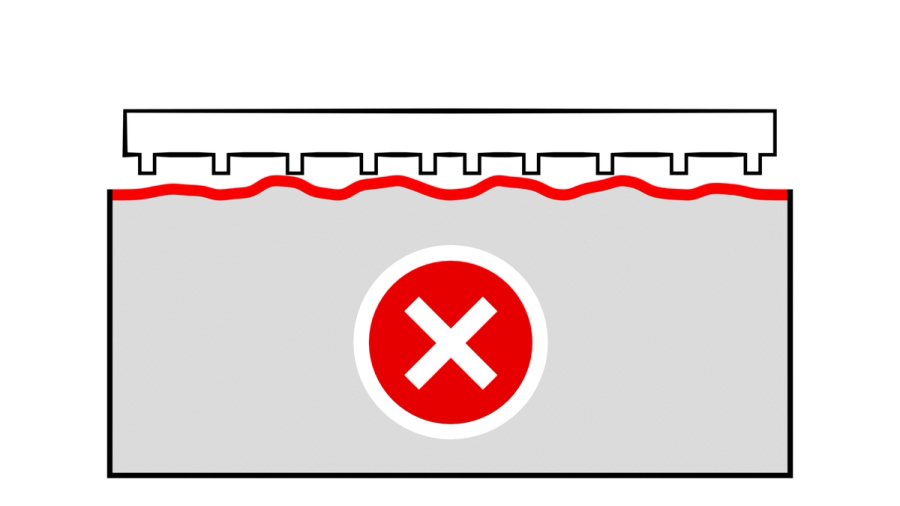
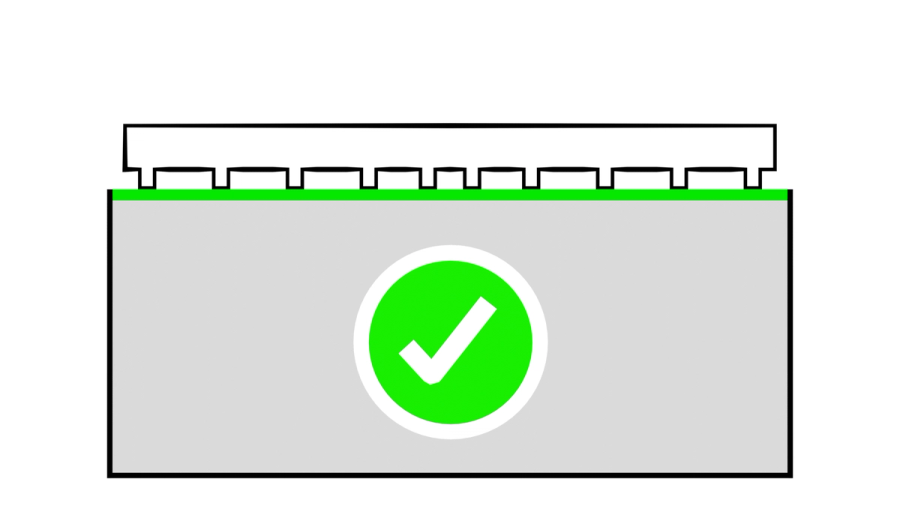
Uma superfície de campo de basquetebol não perdoa fundações irregulares. Ao contrário do pavimento comum ou de trabalhos gerais de jardinagem, a superfície de jogo amplifica as imperfeições em vez de as disfarçar. Mesmo pequenos desvios na camada de base podem afetar o ressalto da bola, criar uma pisada desconfortável e dificultar a instalação da superfície.
Por esta razão, os campos de basquetebol exigem um padrão de nivelamento mais elevado do que a maioria das lajes exteriores. O objetivo não é a perfeição visual, mas um desempenho consistente em toda a área de jogo. Como referência prática, a camada de base de um campo de basquetebol deve cumprir as seguintes tolerâncias:
- Desvio máximo de 3 a 5 mm em cada 3 metros
- Sem variações de nível abruptas nem ressaltos
- Sem acumulação de água após chuva (para campos exteriores)
Cumprir estas tolerâncias na fase da camada de base evita problemas difíceis ou impossíveis de corrigir depois de o pavimento do campo estar instalado.
Drenagem e preparação do terreno
Para campos exteriores, a drenagem é tão importante como o nivelamento. A água que não escoa acabará por provocar movimentos, fissuras ou danos por geada.
Uma boa preparação do terreno envolve geralmente uma camada de pedra compactada ou tout-venant sob a laje, combinada com uma ligeira inclinação para afastar a água da área do campo. O objetivo não é criar uma inclinação visível, mas evitar que a água se acumule em qualquer ponto da superfície.
Ignorar a drenagem raramente provoca falhas imediatas — mas origina problemas lentos e dispendiosos mais tarde.
Verificação da prontidão da camada de base
Antes de avançar para a instalação da superfície do campo de basquetebol, faça uma pausa e confirme os pontos seguintes. Se conseguir assinalar cada um deles com confiança, a sua camada de base está pronta.
A sua camada de base deve estar:
- Estruturalmente sólida, totalmente curada e sem fissuras
- Nivelada dentro das tolerâncias do campo de basquetebol (sem depressões ou ressaltos visíveis)
- Seca, limpa e sem detritos
- Com drenagem adequada, sem acumulação de água após chuva
- Construída com as dimensões e orientação corretas para o seu campo
Se algum destes pontos for incerto, resolva-o antes de instalar a superfície. Corrigir problemas nesta fase é simples. Corrigi-los mais tarde, não é.
A OnCourt disponibiliza desenhos técnicos e orientações de tolerância para empreiteiros que constroem camadas de base para campos.
Erros comuns a evitar
A maioria dos problemas na camada de base resulta de atalhos, não de má vontade. Aplicar tolerâncias para pátios comuns, dispensar o reforço, betonar sem controlo preciso do nível ou apressar o processo de cura são erros que comprometem o campo antes mesmo de estar concluído.
- Utilizar tolerâncias inadequadas
- Ausência de reforço
- Betonar sem controlo de nível
- Instalar antes da cura completa
O princípio fundamental é simples: corrigir problemas na camada de base depois da instalação é muito mais difícil do que construí-la corretamente desde o início.
Quando está a camada de base pronta?
Antes de avançar para a instalação da superfície, a camada de base deve estar totalmente curada, limpa e estruturalmente sólida. Tem de cumprir as tolerâncias de nivelamento e não apresentar sinais de fissuras, movimentos ou pontos fracos.
Assim que estas condições estejam reunidas, a instalação da superfície do campo e do cesto torna-se uma tarefa direta.
Quem deve construir a camada de base?
Embora muitas superfícies de campos de basquetebol possam ser instaladas em modo DIY, a construção da camada de base é melhor entregue a profissionais experientes em trabalhos de terraplanagem. Esta fase exige o equipamento adequado, conhecimento das condições do terreno local e uma compreensão das tolerâncias que vai além dos trabalhos gerais de paisagismo.
A OnCourt disponibiliza desenhos técnicos e especificações para que os empreiteiros locais possam construir a base corretamente, sem margem para suposições. Esta abordagem combina o conhecimento local com padrões de desempenho bem definidos.
Perguntas frequentes sobre a camada de base de um campo de basquetebol
A camada de base é a fundação compactada sob a superfície do campo. Suporta o pavimento modular, absorve cargas, impede movimentos e garante um ressalto consistente da bola. Sem uma camada de base sólida, o campo pode deslocar-se, ter zonas mortas ou drenar mal ao longo do tempo.
A profundidade de escavação depende do substrato, das condições do terreno e do clima, mas situa-se tipicamente entre 100 mm e 250 mm. Em solos moles ou climas mais frios, pode ser necessário ir mais fundo para evitar o levantamento por geada e a subsidência.
Uma composição típica da camada de base inclui:– Tout-venant tipo 1 (pedra britada) para compactação e drenagem– Uma camada de areia grossa compactada ou uma camada de regularização fina– Opcionalmente, manta geotêxtil para controlo de vegetação e estabilidadePara melhores resultados, termine com uma laje de betão ou asfalto alisado ao instalar sistemas de pavimento modular. Como referido neste artigo, uma tolerância de nivelamento não superior a 5 mm em qualquer raio de 3 m garante um ótimo desempenho.
A sua camada de base deve estar nivelada com uma tolerância de 5 mm em qualquer raio de 3 m. Esta tolerância é fundamental para garantir que o pavimento modular encaixa com segurança e proporciona uma experiência de jogo segura e consistente.
Sim. Uma drenagem adequada é essencial para evitar a acumulação de água sob o pavimento modular. Para campos exteriores, incorpore uma ligeira inclinação, camadas de base permeáveis ou ralos lineares conforme necessário.
Sim, se tiver experiência em escavação e compactação. Muitos entusiastas de DIY tratam da sua própria camada de base, mas para campos maiores ou mais complexos recomendamos trabalhar com um empreiteiro profissional.
Para a maioria das instalações, é aconselhável recorrer a um empreiteiro local especializado em terraplanagem. Ele poderá avaliar as condições do solo local, compreender os requisitos de drenagem e dispor dos equipamentos adequados para um nivelamento preciso. Uma camada de base preparada profissionalmente reduz a probabilidade de problemas a longo prazo.
A instalação do cesto MegaSlam de poste enterrado é feita em duas fases. É aberto um buraco com 1,25 m de profundidade para uma âncora de betão. O cesto é depois montado e fixado à âncora. Os cestos MegaSlam são robustos por design — planeie ter pelo menos duas pessoas durante a instalação. Saiba mais sobre a instalação do cesto MegaSlam.
NOTA – Os sistemas de cesto e as âncoras dos componentes devem ser instalados durante a construção da camada de base. Configure e encomende o seu campo, cesto e componentes para garantir que as âncoras de fixação ao solo estão disponíveis durante a construção da base.