Egy hosszú élettartamú kosárlabdapálya alapja
Egy kosárlabdapálya csak annyira jó, amennyire az alatta lévő felület. Jóval azelőtt, hogy a burkolólapokat összekapcsolnák vagy a palánkot felszerelnék, az alapréteg határozza meg a pálya teljesítményét, élettartamát és azt, hogy hónapokkal vagy évekkel később jelentkeznek-e problémák.
Ez az útmutató kifejezetten a kosárlabdapálya alaprétegének kialakítására összpontosít. Nem tárgyalja a burkolat telepítését vagy a palánk összeszerelését — ezek a lépések később következnek. A megfelelő alap biztosítja, hogy minden más megfelelően működjön.
Mi az a kosárlabdapálya alépítménye?
Az alépítmény a mérnökileg kialakított alap, amely a játékfelületet tartja. Feladata látszólag egyszerű: sík maradni, stabilnak maradni és kezelni a vizet. A gyakorlatban ez a játékosok terhelésének viselését, a talajmozgásokkal szembeni ellenállást és a felületet károsító nedvesség megelőzését jelenti.
Kosárlabdapályák esetében, különösen moduláris burkolattal, az alaprétegnek síkabbnak és pontosabbnak kell lennie, mint egy átlagos terasz, felhajtó vagy kerti burkolat esetén. Az olyan kisebb eltérések, amelyek máshol elfogadhatóak lennének, problémát okozhatnak a pályán.
A megfelelő alépítmény típusának kiválasztása
A kosárlabdapályák többsége betonra vagy aszfaltra épül, és a legtöbb esetben a beton az előnyben részesített megoldás. Stabil és kiszámítható alapot biztosít, amely egyenletes labdapattanást és hosszú távú felületi teljesítményt támogat.
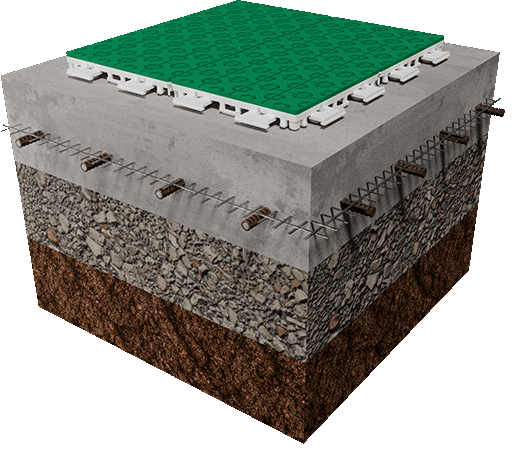
Kosárlabdapályák esetében a vasalt betonlemeznek általában a következő kritériumoknak kell megfelelnie:
- Minimális vastagság: 100–150 mm
- Acélhálós vagy betonacél erősítés
- Lézerrel szintezett felület
- Enyhe lejtés a kültéri vízelvezetéshez
Az aszfalt alapok bizonyos esetekben megfelelőek lehetnek, de szigorúbb előkészítést igényelnek, és hajlamosabbak a hosszú távú elmozdulásra.
Síklapossági és tűréshatárok követelményei
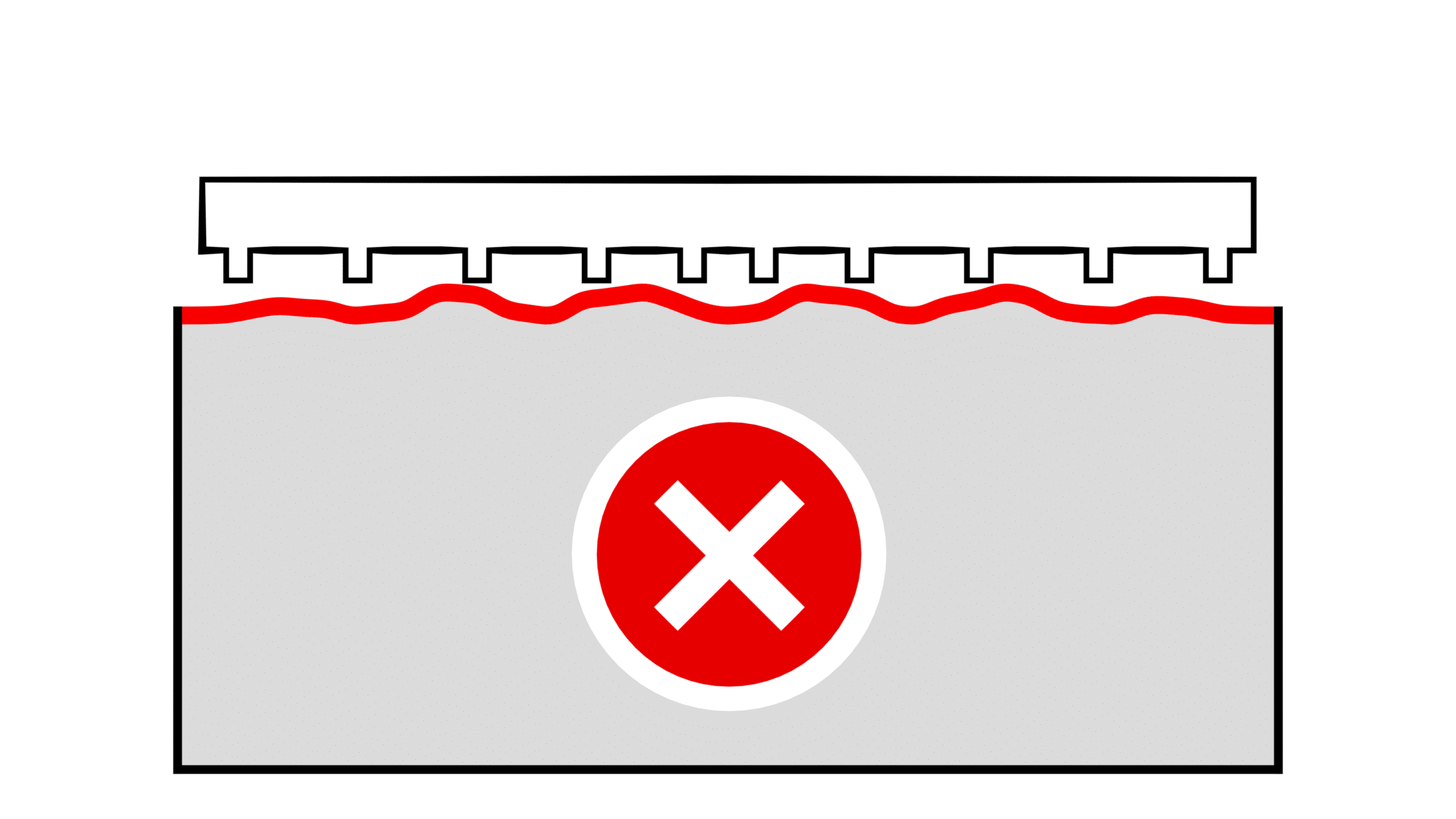
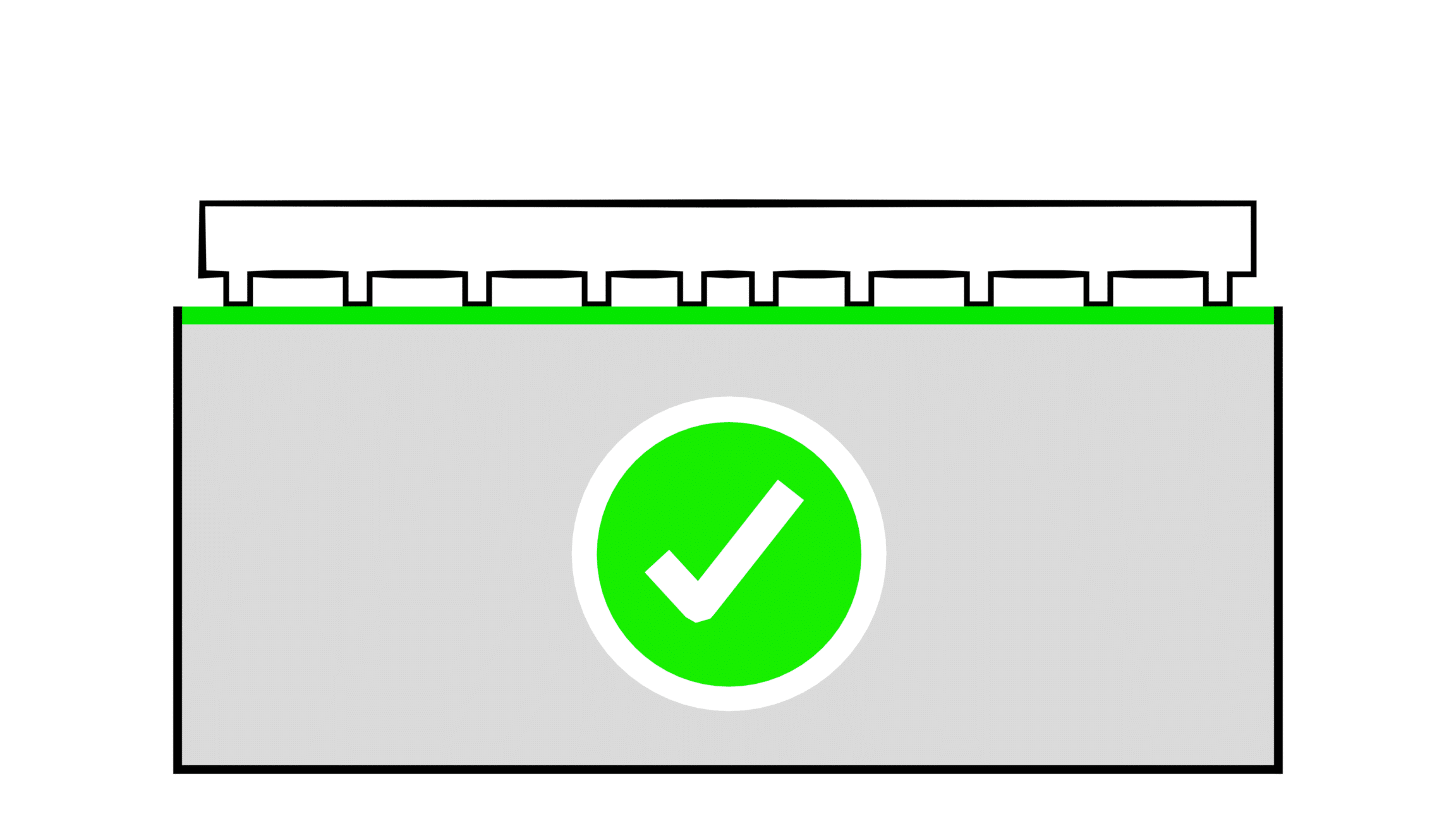
A kosárlabdapálya felülete nem tűri az egyenetlen alapot. A burkolatokkal vagy általános térburkolással ellentétben a játékfelület felerősíti a hibákat, nem pedig elfedi azokat. Még a kisebb eltérések is befolyásolhatják a labdapattanást, kényelmetlen talajérzetet okozhatnak, és megnehezíthetik a burkolat telepítését.
Ezért a kosárlabdapályák magasabb síkpontossági követelményeket támasztanak, mint a legtöbb kültéri betonlap. A cél nem a vizuális tökéletesség, hanem az egyenletes teljesítmény a teljes játékfelületen. Gyakorlati iránymutatásként a kosárlabdapálya alépítményének az alábbi tűréshatároknak kell megfelelnie:
- Legfeljebb 3–5 mm eltérés 3 méteren
- Nincsenek hirtelen szintkülönbségek vagy peremek
- Eső után ne maradjon álló víz (kültéri pályák esetén)
Ezen tűréshatárok betartása az alépítmény kialakításakor megelőzi azokat a problémákat, amelyek a burkolat telepítése után nehezen vagy egyáltalán nem javíthatók.
Vízelvezetés és talajelőkészítés
Kültéri pályák esetén a vízelvezetés ugyanolyan fontos, mint a síkpontosság. Az el nem vezetett víz idővel elmozdulást, repedéseket vagy fagy okozta károkat okoz.
A megfelelő talajelőkészítés általában tömörített zúzottkő vagy kavicsréteget jelent a betonlemez alatt, kiegészítve enyhe lejtéssel, amely elvezeti a vizet a pálya területéről. A cél nem a látható lejtés kialakítása, hanem az álló víz kialakulásának megakadályozása.
A vízelvezetés figyelmen kívül hagyása ritkán okoz azonnali meghibásodást — viszont lassú és költséges problémákhoz vezet később.
Az alépítmény készenlétének ellenőrzése
Mielőtt továbblépne a kosárlabdapálya burkolatának telepítésére, álljon meg egy pillanatra, és ellenőrizze az alábbiakat. Ha minden pontot magabiztosan kipipálhat, az alépítmény készen áll.
Az alépítménynek a következőnek kell lennie:
- Szerkezetileg stabil, teljesen kikeményedett és repedésmentes
- Síklaposság a kosárlabdapálya tűrésein belül (nincs látható bemélyedés vagy perem)
- Száraz, tiszta és törmelékmentes
- Megfelelően vízelvezetett, eső után nem marad álló víz
- A pálya elrendezéséhez megfelelő méretekkel és tájolással kialakítva
Ha ezen pontok bármelyike bizonytalan, oldja meg még a burkolat telepítése előtt. Ebben a szakaszban a problémák javítása egyszerű. Később már nem.
Az OnCourt műszaki rajzokat és tűréshatár-útmutatást biztosít a pálya-alépítményeket kivitelező vállalkozók számára.
Gyakori hibák, amelyeket érdemes elkerülni
Az alépítménnyel kapcsolatos problémák többsége rövidítésekből fakad, nem rossz szándékból. Teraszszintű tűrések alkalmazása, a vasalás kihagyása, pontatlan szintellenőrzés melletti betonozás vagy a kötési idő siettetése mind olyan hibák, amelyek már az építés előtt rontják a pálya minőségét.
- Nem megfelelő tűréshatárok alkalmazása
- Megerősítés nélkül
- Betonozás szintellenőrzés nélkül
- Telepítés a teljes kikeményedés előtt
Az alapelv egyszerű: az alépítmény problémáinak javítása a telepítés után sokkal nehezebb, mint annak helyes kialakítása már az elején.
Mikor kész az alépítmény?
A burkolat telepítése előtt az alépítménynek teljesen kikeményedettnek, tisztának és szerkezetileg stabilnak kell lennie. Meg kell felelnie a síkpontossági tűréseknek, és nem mutathat repedéseket, elmozdulást vagy puha részeket.
Ha ezek a feltételek teljesülnek, a pálya burkolatának és a palánknak a telepítése egyszerűvé válik.
Kinek kell megépítenie az alépítményt?
Bár sok kosárlabdapálya-burkolat telepíthető saját kivitelezésben, az alépítmény építését legjobb tapasztalt földmunkás szakemberekre bízni. Ez a szakasz megfelelő felszerelést, a helyi talajviszonyok ismeretét és az általános kertépítésen túlmutató tűréshatárok megértését igényli.
Az OnCourt műszaki rajzokat és specifikációkat biztosít, hogy a helyi kivitelezők találgatás nélkül, megfelelően építhessék meg az alapot. Ez a megközelítés ötvözi a helyi szakértelmet az egyértelmű teljesítménystandardokkal.
GYIK a kosárlabdapálya alépítményéről
Az alapréteg a pálya felszíne alatti tömörített réteg. Támogatja a moduláris burkolórendszert, elnyeli a terhelést, meggátolja az elmozdulást és biztosítja a labda egyenletes pattogását. Szilárd alapréteg nélkül a pálya elmozdulhat, holtpontok alakulhatnak ki, vagy rosszul vezetheti el a vizet.
Az ásás mélysége a talajrétegtől, talajviszonyoktól és az éghajlattól függ, de jellemzően 100 mm és 250 mm közé esik. Puha talaj vagy hidegebb éghajlat esetén mélyebbre kell ásni, hogy elkerüljük a fagyemelkedést és a süllyedést.
A szokásos alapréteg tartalmaz:
– 1-es típusú zúzott kő (MOT) tömörítéshez és vízelvezetéshez.
– Egy réteg tömörített durva homok vagy finom kiegyenlítő réteg.
– Opcionálisan geotextília a gyomok ellen és a stabilitás növeléséhez.
A legjobb eredmény érdekében zárd le a felületet sima beton- vagy aszfaltlap réteggel a moduláris burkolatok telepítésekor. Ahogy a cikk is említi, a 3 m sugarú körön belül legfeljebb 5 mm egyenetlenség biztosítja az optimális teljesítményt.
Az alaprétegnek legfeljebb 5 mm eltérést szabad mutatnia bármely 3 m-es sugarú körön belül. Ez a tűrés elengedhetetlen ahhoz, hogy a moduláris lapok biztonságosan rögzüljenek, és egyenletes, biztonságos játékélményt nyújtsanak.
Igen. A megfelelő vízelvezetés elengedhetetlen a víz felgyülemlésének megakadályozásához a moduláris burkolat alatt. Alkalmazzon enyhe lejtést, vízáteresztő rétegeket vagy csatornadrenázst a kültéri pályákon.
Igen, ha magabiztos vagy a földmunka és a tömörítés terén. Sokan saját kezűleg készítik el az alapréteget, de nagyobb vagy összetettebb pályák esetén javasoljuk szakember bevonását.
Egy helyi földmunkás vállalkozó általában jobb választás – jól ismeri a helyi talajviszonyokat, tisztában van a vízelvezetési kihívásokkal, és hatékonyabban tudja biztosítani a szükséges gépeket és anyagokat. Egy szakszerűen előkészített alapréteg biztosítja, hogy a pálya hosszú távon kiváló teljesítményt nyújtson.
A földbe telepíthető Mega Slam kosár rendszer telepítése kétlépcsős folyamat. Először egy 1,25 m mély gödröt kell ásni a beton alaphoz. Ezután következik a kosár összeállítása. A Mega Slam rendszerek nehezek – ez biztosítja, hogy valóban profi otthoni kosár legyen. Kérj segítséget barátoktól az emeléshez. Tudj meg többet a Mega Slam Hoops telepítés.
MEGJEGYZÉS - A kosár és a komponensek rögzítése az alapozás során történjen. Konfiguráld és rendeld meg a pályát és a rendszert előre, hogy az anker elemek elérhetőek legyenek az alapozás idején.
Következő lépések
Az alépítmény elkészülte után készen áll a földmunkákról a pálya összeállítására áttérni.

 English (UK)
  Български
  Čeština
  Dansk
Dansk  Deutsch
  Nederlands
  Español
  Eesti
Eesti  Français
  Ελληνικά
  Hrvatski
  Magyar
  Italiano
  Latviešu valoda
  Lietuvių kalba
  Norsk bokmål
  Português
  Polski
  Română
  Српски језик
  Slovenčina
  Slovenščina
  Suomi
Suomi  Svenska
  Türkçe
  العربية
  Bosanski
  Українська