De basis van een duurzame basketbalbaan
Een basketbalveld is slechts zo goed als de ondergrond eronder. Ruim voordat tegels worden gekoppeld of een basket wordt geplaatst, bepaalt de onderbouw hoe het veld presteert, hoe lang het meegaat en of er na maanden of jaren problemen ontstaan.
Deze gids richt zich specifiek op het aanleggen van de onderbouw voor een basketbalveld. De installatie van de toplaag of de montage van de basket wordt niet behandeld — die stappen volgen later. Een goede basis is essentieel om ervoor te zorgen dat alles correct functioneert.
Wat is de onderbouw van een basketbalveld?
De onderbouw is de technisch ontworpen fundering die het speeloppervlak ondersteunt. De taak lijkt eenvoudig: vlak blijven, stabiel blijven en water afvoeren. In de praktijk betekent dit het dragen van spelersbelasting, het weerstaan van grondbewegingen en het voorkomen dat vocht het veld erboven aantast.
Voor basketbalvelden, met name bij gebruik van modulaire vloeroplossingen, moet de onderbouw vlakker en nauwkeuriger zijn dan bij een standaard terras, oprit of tuintegel. Kleine afwijkingen die elders acceptabel zijn, kunnen op een veld tot problemen leiden.
Het juiste type onderbouw kiezen
De meeste basketbalvelden worden aangelegd op beton of asfalt, waarbij beton in de meeste installaties de voorkeursoplossing is. Het biedt een stabiele en voorspelbare basis die zorgt voor een consistente balstuit en langdurige prestaties van het speeloppervlak.
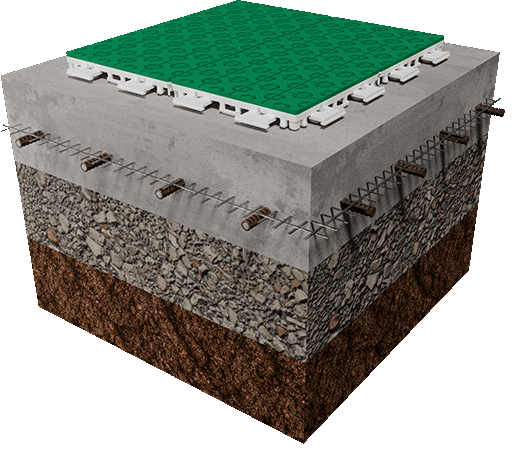
Voor basketbalvelden moet een gewapende betonplaat doorgaans aan de volgende criteria voldoen:
- Minimale dikte van 100–150 mm
- Wapening met staalgaas of betonstaal
- Laser-egaliseerde afwerking
- Lichte afschot voor buitenafwatering
Asfaltfunderingen kunnen in bepaalde situaties geschikt zijn, maar vereisen een strengere voorbereiding en zijn gevoeliger voor langdurige beweging.
Vlakheid- en tolerantienormen
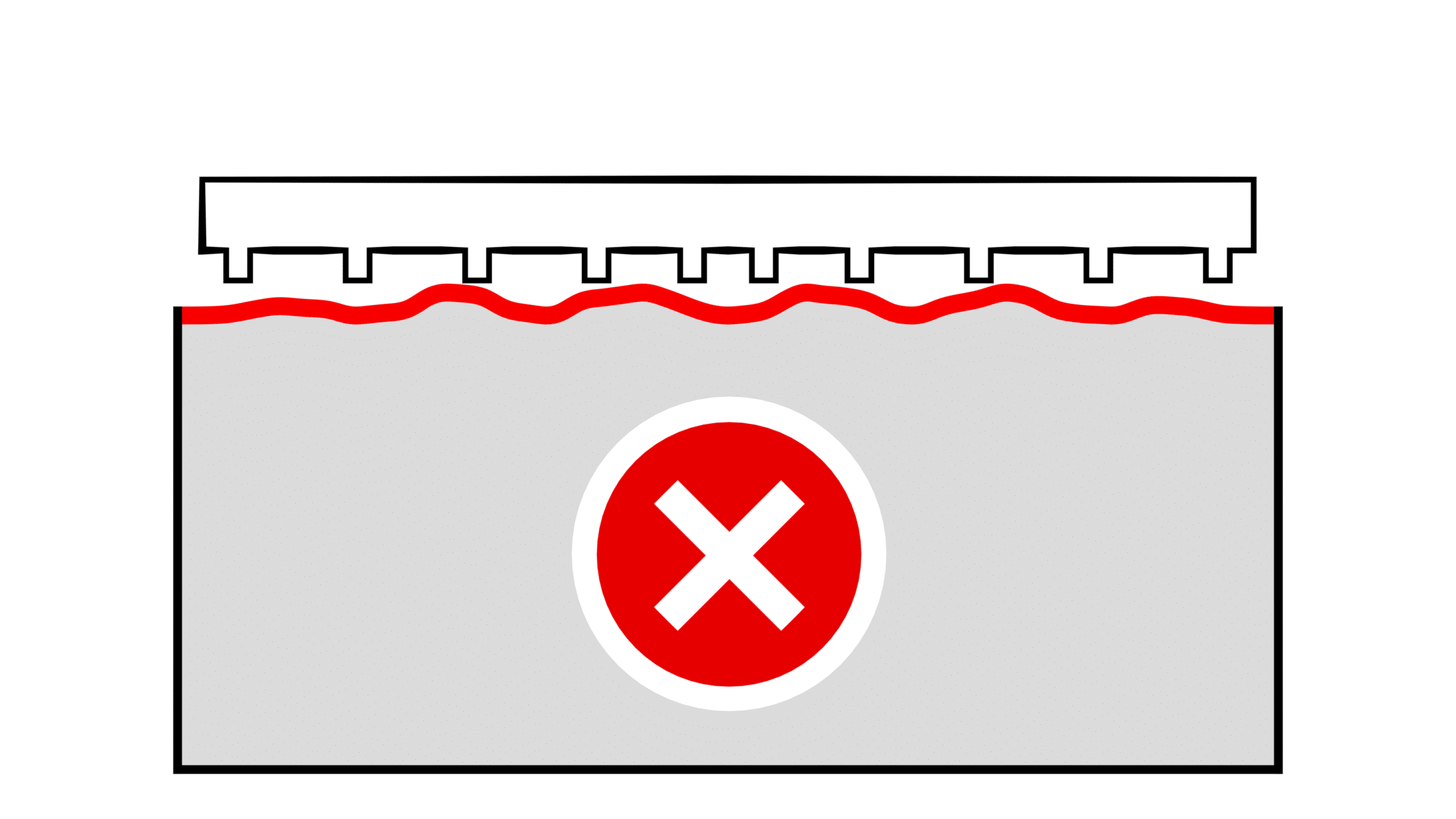
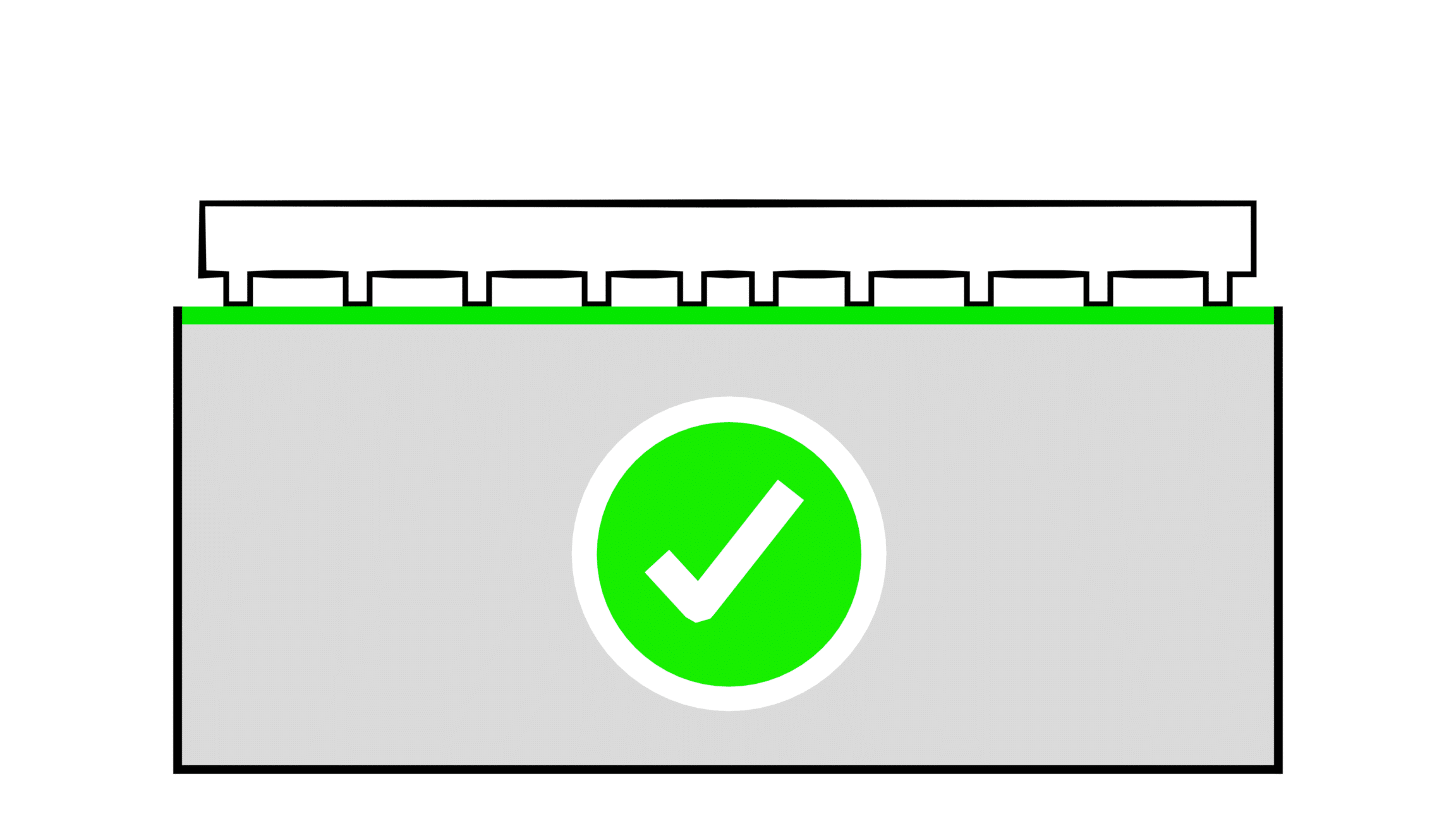
Een basketbalveld is onverbiddelijk als het gaat om een ongelijke ondergrond. In tegenstelling tot bestrating of algemene verharding vergroot het speeloppervlak oneffenheden in plaats van ze te verbergen. Zelfs kleine afwijkingen in de onderbouw kunnen de balstuit beïnvloeden, oncomfortabel staan veroorzaken en de installatie van de toplaag bemoeilijken.
Om deze reden vereisen basketbalvelden een hogere vlakheidsnorm dan de meeste buitenvloeren. Het doel is niet visuele perfectie, maar consistente prestaties over het volledige speeloppervlak. Als praktische richtlijn moet de onderbouw van een basketbalveld aan de volgende toleranties voldoen:
- Maximaal 3–5 mm afwijking over 3 meter
- Geen abrupte niveauverschillen of randen
- Geen stilstaand water na regen (voor buitenvelden)
Het naleven van deze toleranties in de onderbouwfase voorkomt problemen die na installatie van het speeloppervlak moeilijk of onmogelijk te corrigeren zijn.
Drainage en grondvoorbereiding
Voor buitenvelden is drainage net zo belangrijk als vlakheid. Water dat niet kan wegstromen zal uiteindelijk beweging, scheurvorming of vorstschade veroorzaken.
Een goede grondvoorbereiding bestaat doorgaans uit een verdichte laag steenslag of puingranulaat onder de plaat, gecombineerd met een lichte afschot om water van het speelveld weg te leiden. Het doel is niet een zichtbaar afschot te creëren, maar te voorkomen dat er ergens op het oppervlak water blijft staan.
Het negeren van drainage leidt zelden tot direct falen — het veroorzaakt later langzame en kostbare problemen.
Controle van de gereedheid van de onderbouw
Voordat u verdergaat met de installatie van het basketbalveldoppervlak, neemt u even de tijd om het volgende te controleren. Als u elk vakje met vertrouwen kunt afvinken, is de onderbouw klaar.
Uw onderbouw moet zijn:
- Constructief stabiel, volledig uitgehard en vrij van scheuren
- Vlak binnen de toleranties voor een basketbalveld (geen zichtbare kuilen of randen)
- Droog, schoon en vrij van vuil
- Correct gedraineerd, zonder stilstaand water na regen
- Gebouwd met de juiste afmetingen en oriëntatie voor de veldindeling
Als een van deze punten onzeker is, los dit dan op voordat het oppervlak wordt geïnstalleerd. Problemen in deze fase oplossen is eenvoudig. Later niet.
OnCourt levert technische tekeningen en tolerantierichtlijnen voor aannemers die onderbouwen voor sportvelden realiseren.
Veelvoorkomende fouten om te vermijden
De meeste problemen met de onderbouw ontstaan door het nemen van shortcuts in plaats van door slechte bedoelingen. Het toepassen van terras-toleranties, het overslaan van wapening, storten zonder nauwkeurige niveauregeling of het te snel laten uitharden zijn fouten die het veld al compromitteren voordat het is aangelegd.
- Gebruik van onvoldoende toleranties
- Geen wapening
- Storten zonder niveaucontrole
- Installatie vóór volledige uitharding
Het kernprincipe is eenvoudig: problemen met de onderbouw na installatie oplossen is veel lastiger dan deze vanaf het begin correct aan te leggen.
Wanneer is de onderbouw klaar?
Voordat wordt overgegaan tot de installatie van het oppervlak, moet de onderbouw volledig uitgehard, schoon en constructief stabiel zijn. Deze moet voldoen aan de vlakheidstoleranties en geen tekenen vertonen van scheuren, beweging of zachte plekken.
Zodra aan deze voorwaarden is voldaan, verloopt de installatie van het speeloppervlak en de basketbalpaal eenvoudig.
Wie moet de onderbouw aanleggen?
Hoewel veel basketbalveldoppervlakken zelf kunnen worden geïnstalleerd, wordt de aanleg van de onderbouw het best uitgevoerd door ervaren grondwerkprofessionals. Deze fase vereist de juiste apparatuur, kennis van lokale bodemomstandigheden en inzicht in toleranties die verder gaan dan algemeen tuin- en landschapswerk.
OnCourt levert technische tekeningen en specificaties, zodat lokale aannemers de basis correct kunnen bouwen zonder giswerk. Deze aanpak combineert lokale expertise met duidelijke prestatienormen.
FAQ zum Unterbau von Basketballplätzen
De onderbouw is de verdichte funderingslaag onder het speeloppervlak. Deze ondersteunt het modulaire tegelsysteem, vangt belasting op, voorkomt verschuiving en zorgt voor een consistente basketbalstuit. Zonder stevige onderbouw kan het veld verschuiven, dode plekken krijgen of slecht afwateren.
De graafdiepte hangt af van de ondergrond, bodemgesteldheid en het klimaat, maar ligt doorgaans tussen de 100 mm en 250 mm. Bij zachte grond of koud klimaat is mogelijk een diepere uitgraving nodig om vorstschade en verzakking te voorkomen.
Een gebruikelijke opbouw van de onderbouw bevat:
– Type 1 MOT (gebroken steen) voor verdichting en drainage.
– Een laag verdicht scherp zand of een fijne afwerklaag.
– Optioneel geotextiel tegen onkruid en voor stabiliteit.
Voor het beste resultaat, werk af met een gladde beton- of asfaltplaat bij het installeren van modulaire sporttegels. Zoals besproken in dit artikel, zorgt een vlakheidstolerantie van maximaal 5 mm binnen een straal van 3 m voor uitstekende prestaties.
De onderbouw moet binnen een straal van 3 m een vlakheidstolerantie van maximaal 5 mm hebben. Deze tolerantie is cruciaal zodat de modulaire tegels goed in elkaar klikken en een veilige, consistente speelervaring bieden.
Ja. Goede afwatering is essentieel om waterophoping onder het modulaire veldoppervlak te voorkomen. Zorg voor een lichte helling, waterdoorlatende lagen of afvoerkanalen voor buitencourts indien nodig.
Ja, als je ervaring hebt met uitgraven en verdichten. Veel doe-het-zelvers bouwen hun eigen onderbouw, maar voor grotere of complexere velden raden we aan om met een professionele aannemer te werken.
Een lokale grondwerker is vaak de slimme keuze. Zij kennen de plaatselijke bodemomstandigheden, begrijpen regionale drainageproblemen en kunnen efficiënter de juiste apparatuur en materialen inzetten. Een professioneel voorbereide onderbouw geeft je ook gemoedsrust dat je veld jarenlang optimaal zal presteren.
Het installeren van de ‘in-ground’ Mega Slam Hoop is een klus in twee fasen. Eerst graaf je een gat van 1,25 m diep voor het betonnen anker. Daarna monteer je het systeem. Mega Slam Hoops zijn zwaar – dat maakt ze tot de ultieme thuisoplossing. Je hebt wel een paar vrienden nodig om te helpen tillen. Lees meer over Mega Slam Hoops installatie.
OPMERKING - Het ankersysteem voor de ring en accessoires moet tijdens de aanleg van de onderbouw worden geplaatst. Configureer en bestel je veld, ring en componenten tijdig zodat alles klaar is bij het aanleggen van de onderbouw.
Volgende stappen
Met de onderbouw voltooid, kunt u overstappen van grondwerk naar de opbouw van het veld.

 English (UK)
  Български
  Čeština
  Dansk
Dansk  Deutsch
  Nederlands
  Español
  Eesti
Eesti  Français
  Ελληνικά
  Hrvatski
  Magyar
  Italiano
  Latviešu valoda
  Lietuvių kalba
  Norsk bokmål
  Português
  Polski
  Română
  Српски језик
  Slovenčina
  Slovenščina
  Suomi
Suomi  Svenska
  Türkçe
  العربية
  Bosanski
  Українська