

Basketball
Garden, driveway and indoor courts, each stating what its size gives you.
Prices are for the court. The hoop in each picture is there for scale, and you can add it on the court page.
Domača igrišča
Vrtovi, dovozi in dvorišča. Vsako igrišče vključuje regulacijsko ključavnico in črto prostega meta.
 STARTER
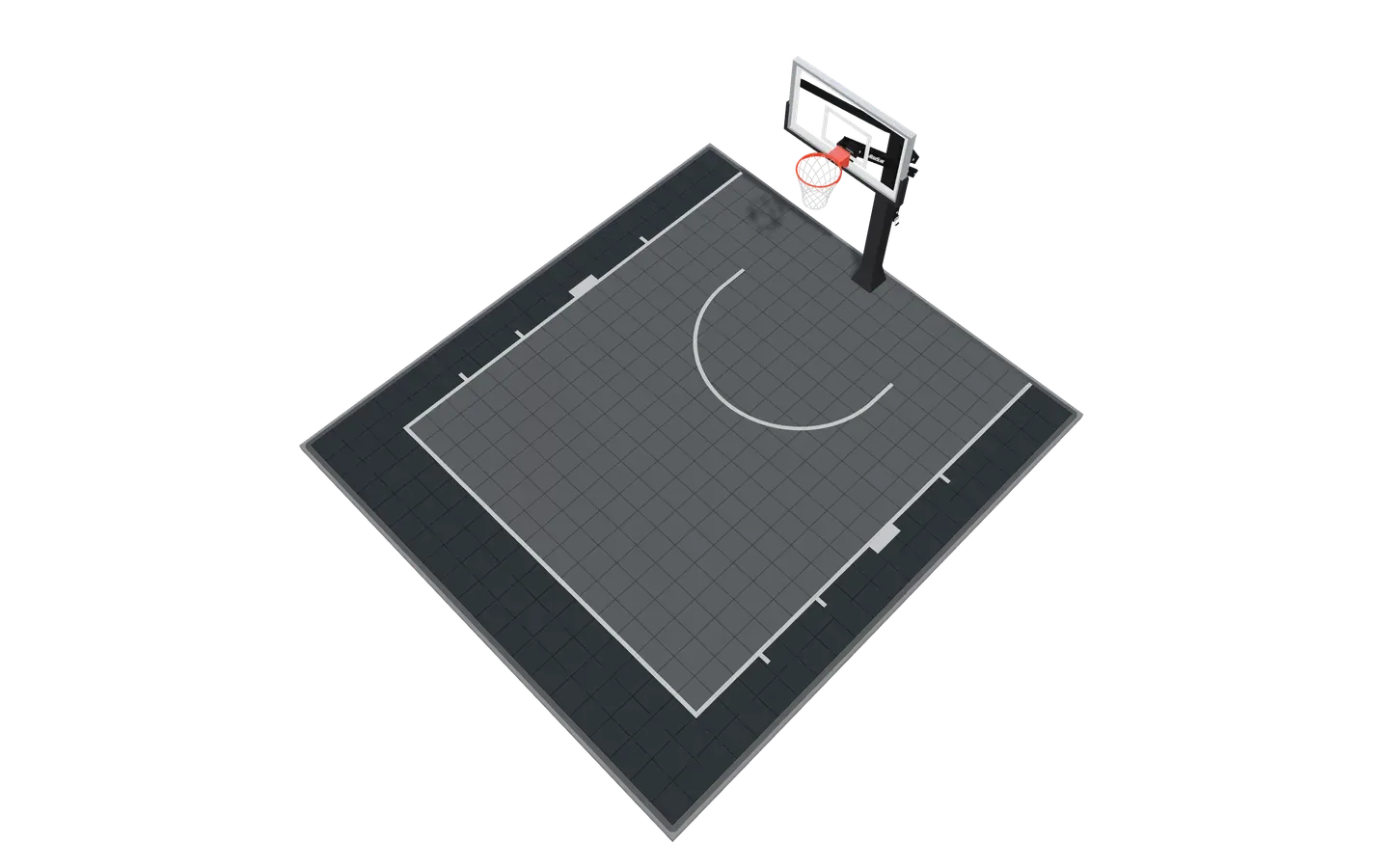
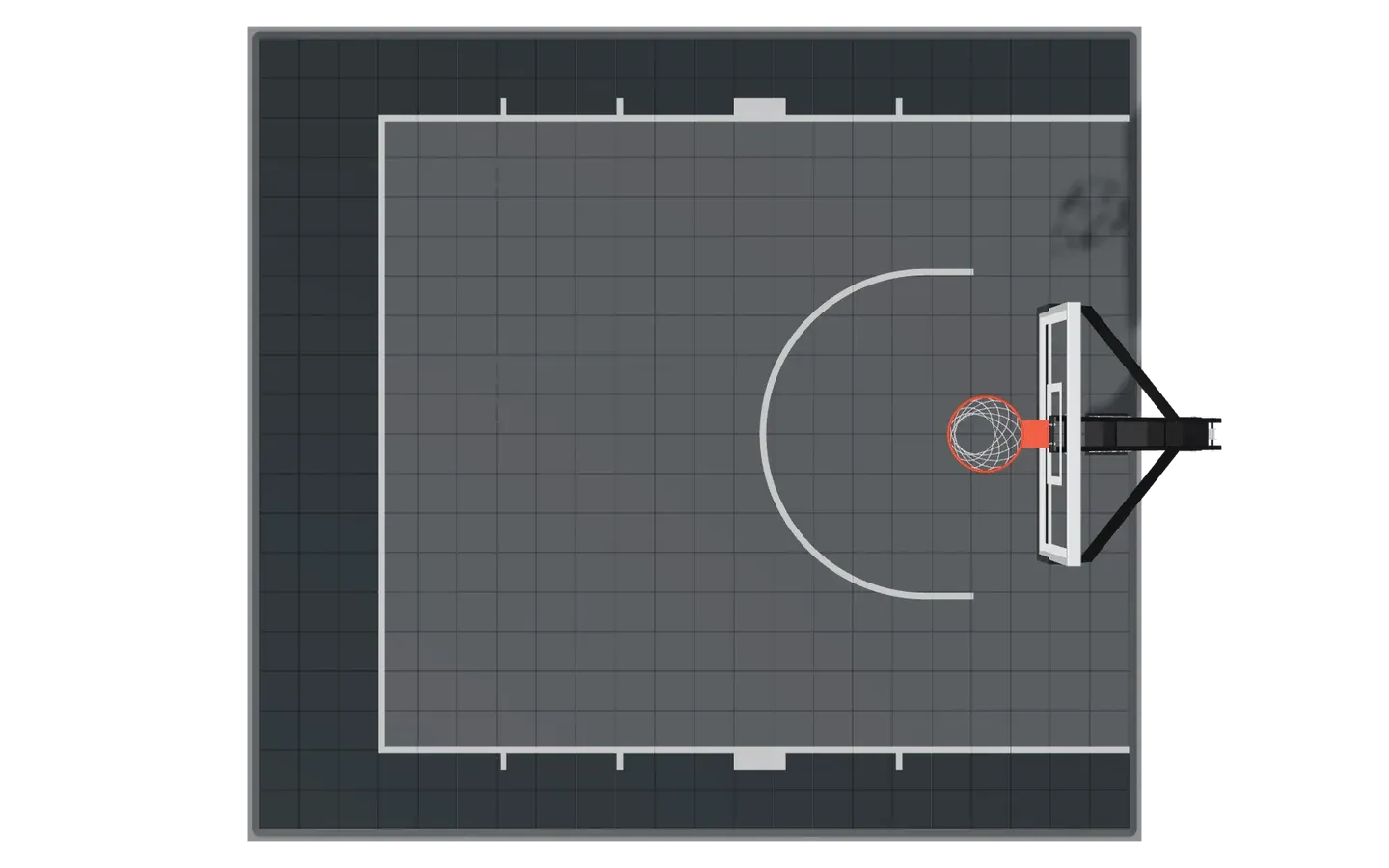
Garden key court
6.10 × 6.71 m (20 × 22 ft). Regulation key, regulation free-throw line, no three-point line.
4 ready-made colorways, or design your own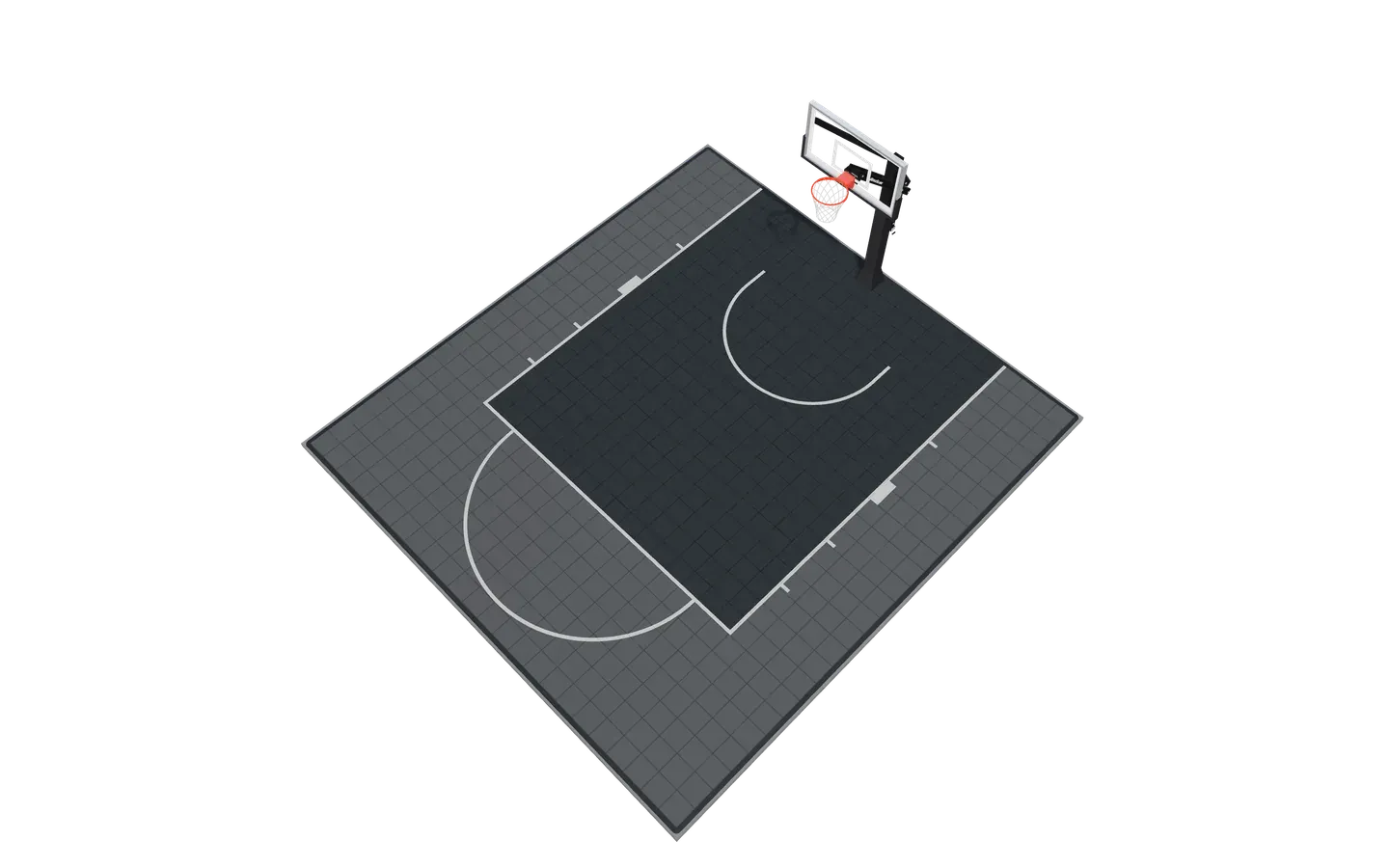
 DRIVEWAY
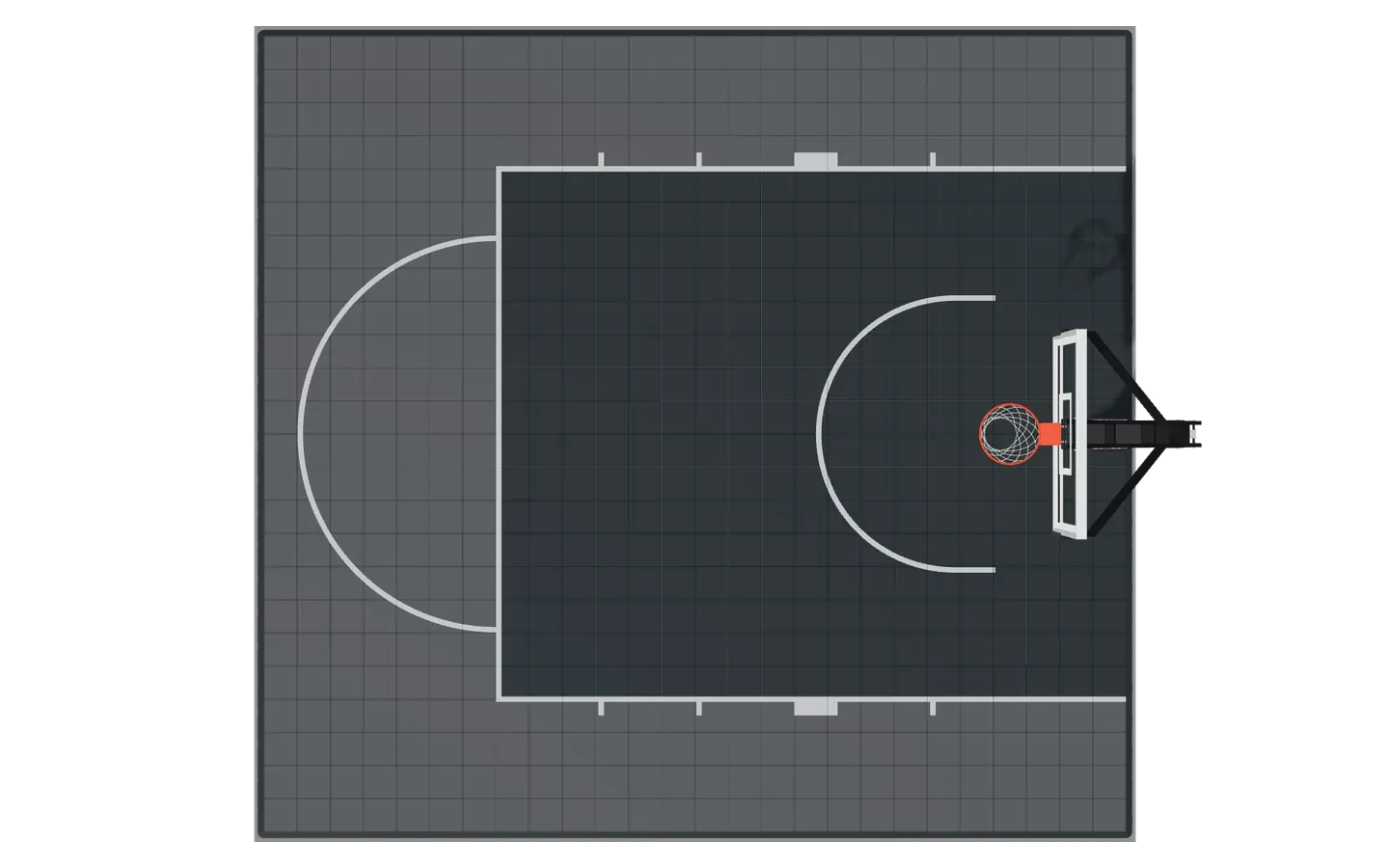
Driveway court
7.32 × 7.92 m (24 × 26 ft). Key, free-throw line and the whole free-throw circle, on two parking bays.
4 ready-made colorways, or design your own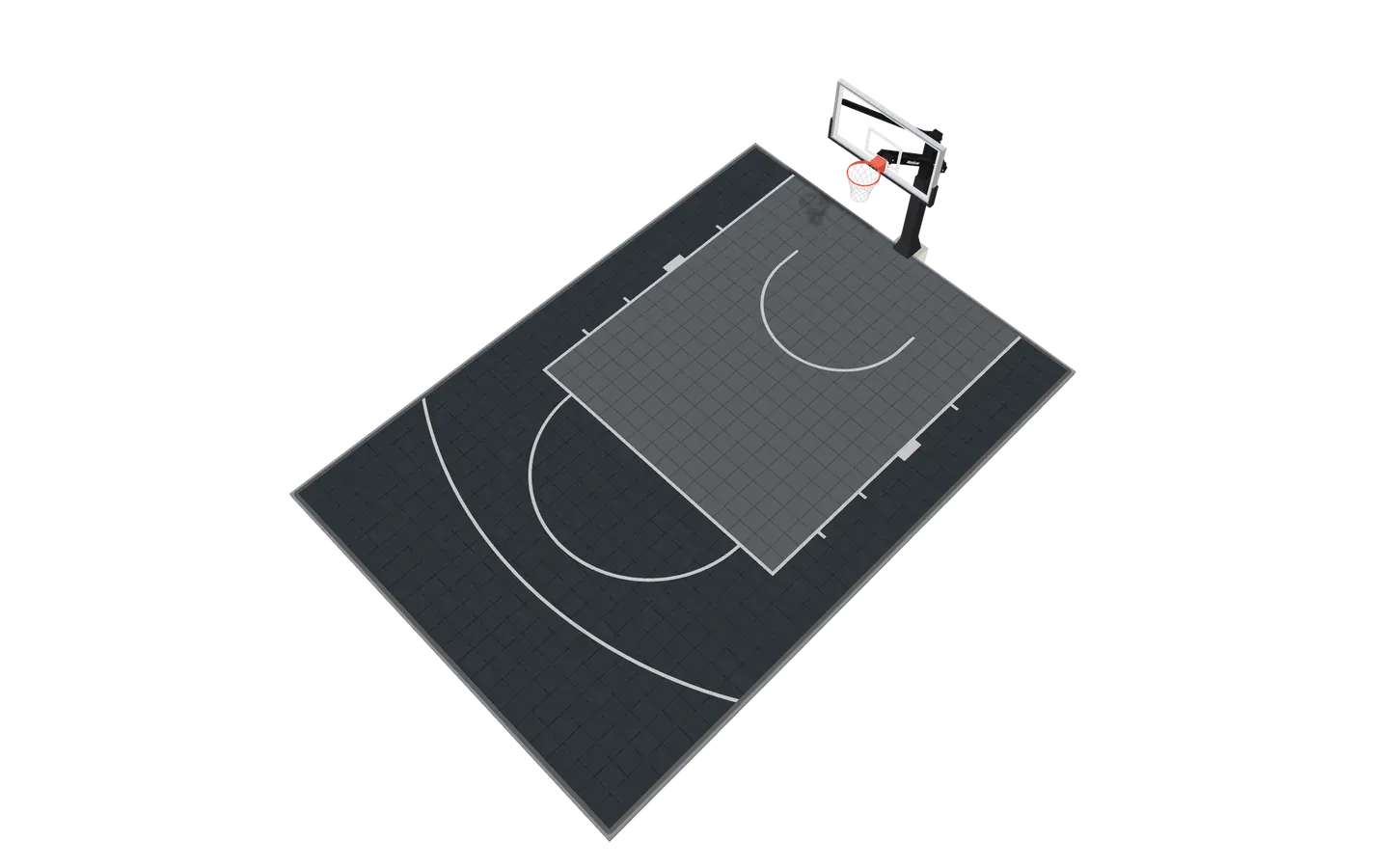
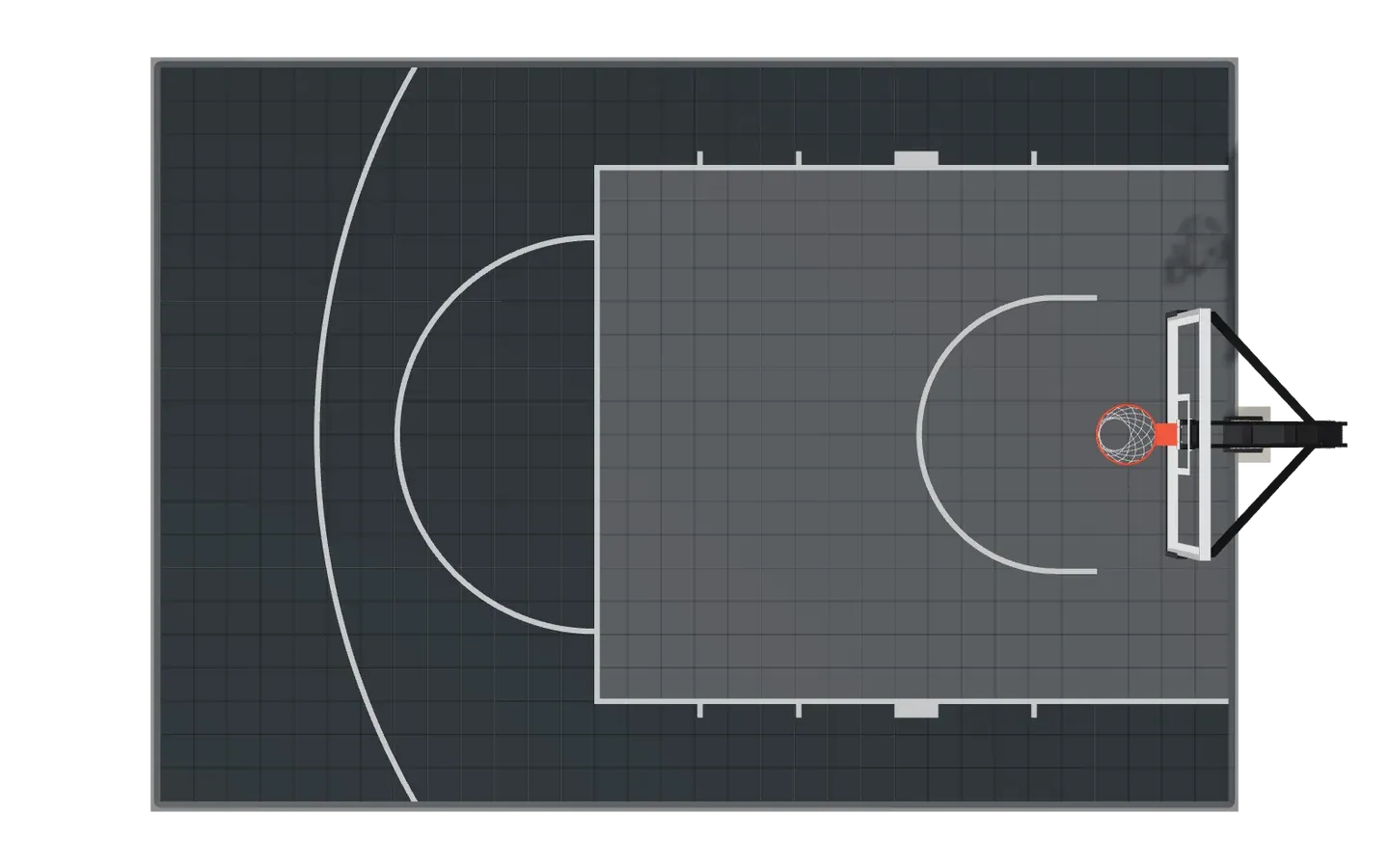 NARROW
Long garden court
6.71 × 9.75 m (22 × 32 ft). Narrow, but deep enough for the real 6.75 m arc.
4 ready-made colorways, or design your own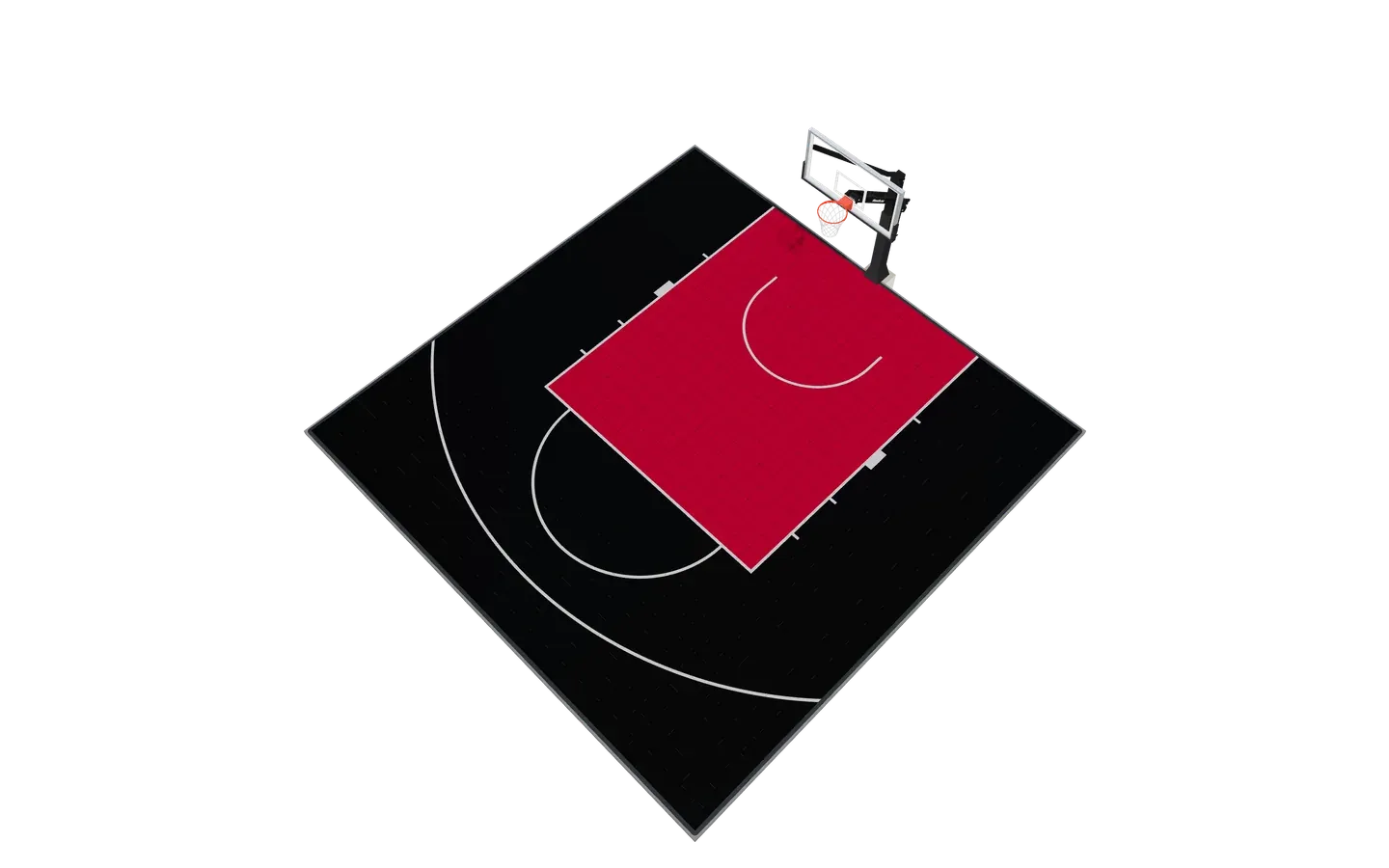
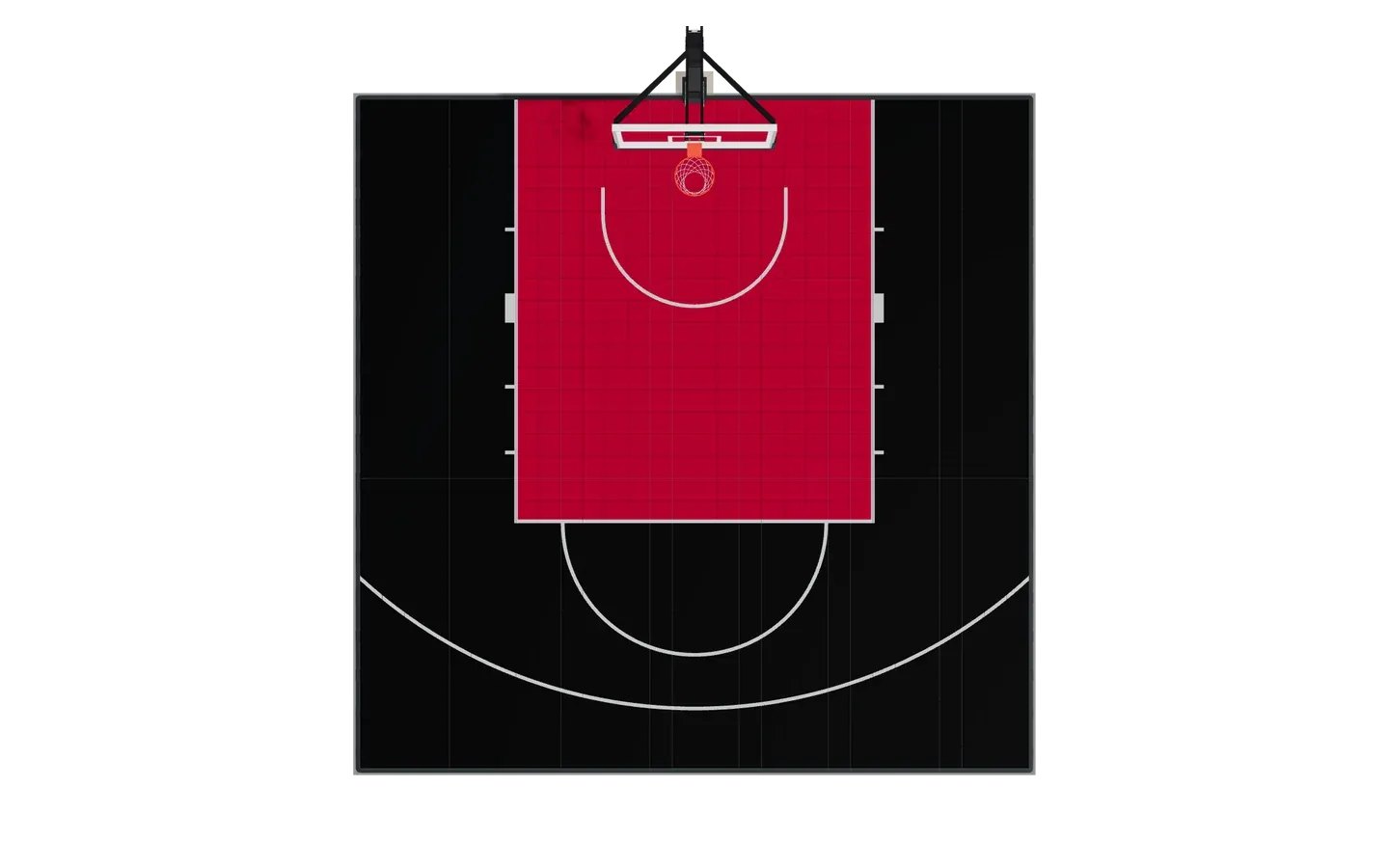 MOST POPULAR
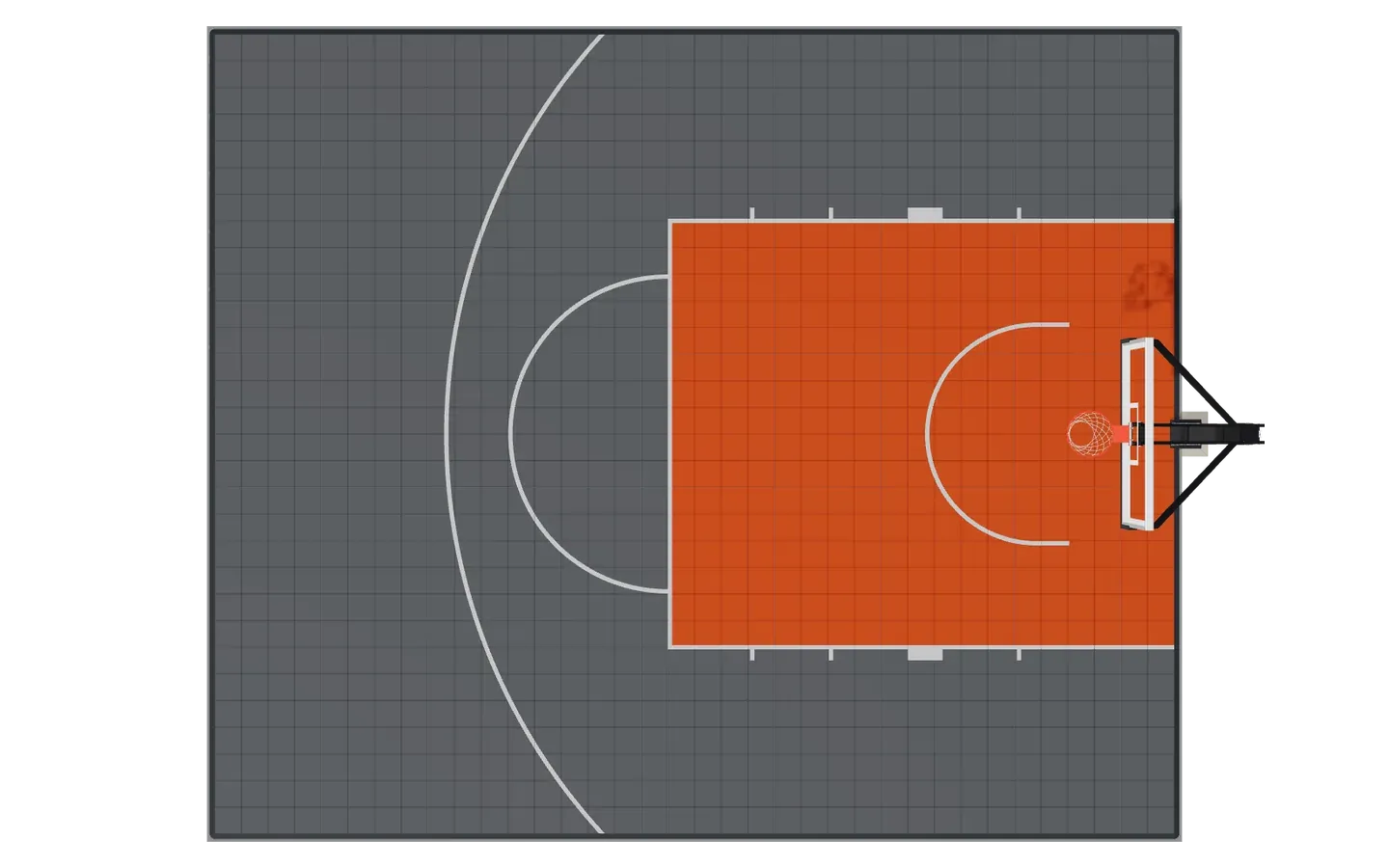
Garden half-court
9.14 × 9.14 m (30 × 30 ft). The size most home courts end up at.
5 ready-made colorways, or design your own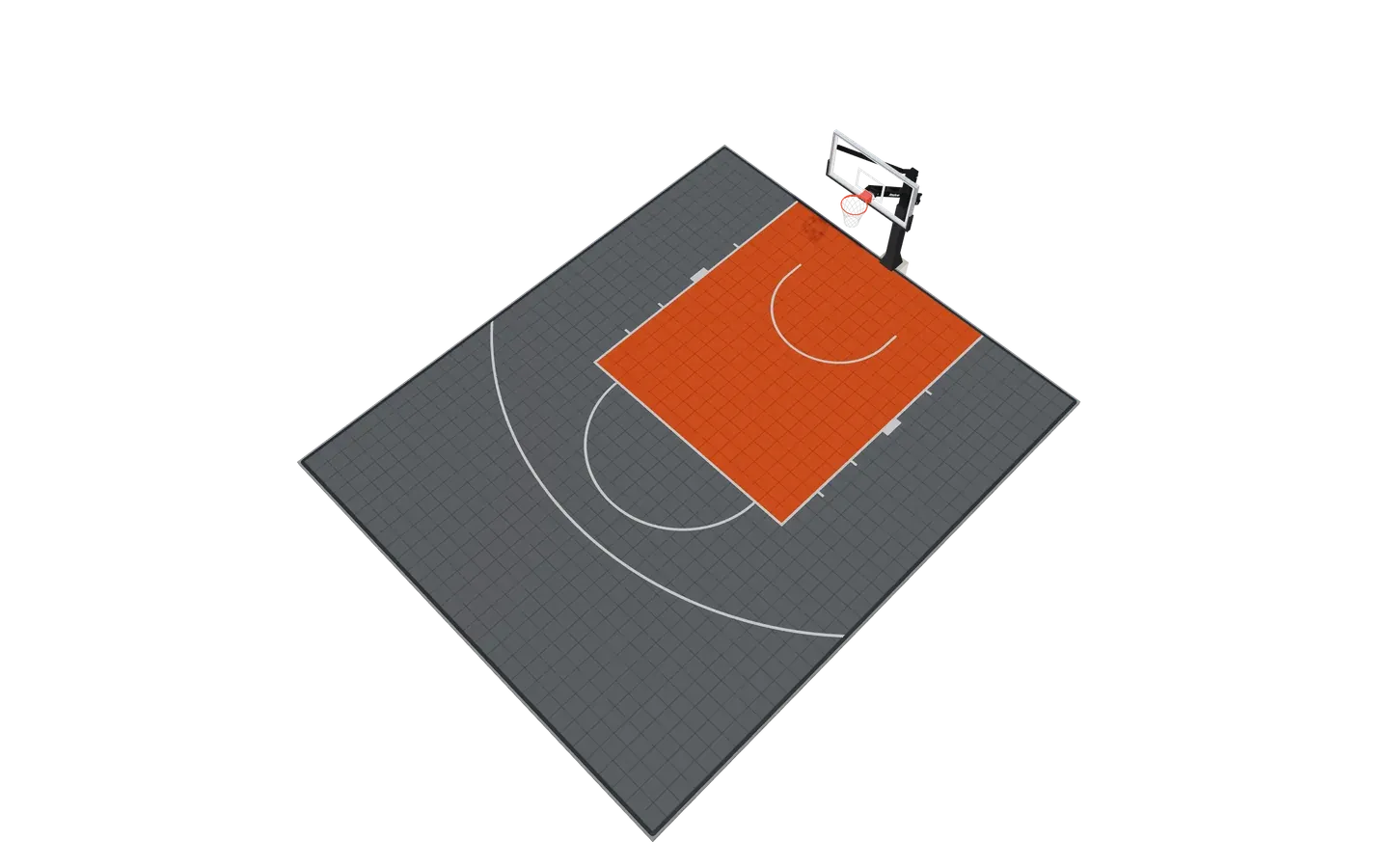
 FAMILY
Family court
9.14 × 10.97 m (30 × 36 ft). A half-court with proper room behind the arc.
5 ready-made colorways, or design your ownKlub in trening
Pol igrišča v polni širini, vključno z dvema uradnima formatoma FIBA.
 3-ON-3
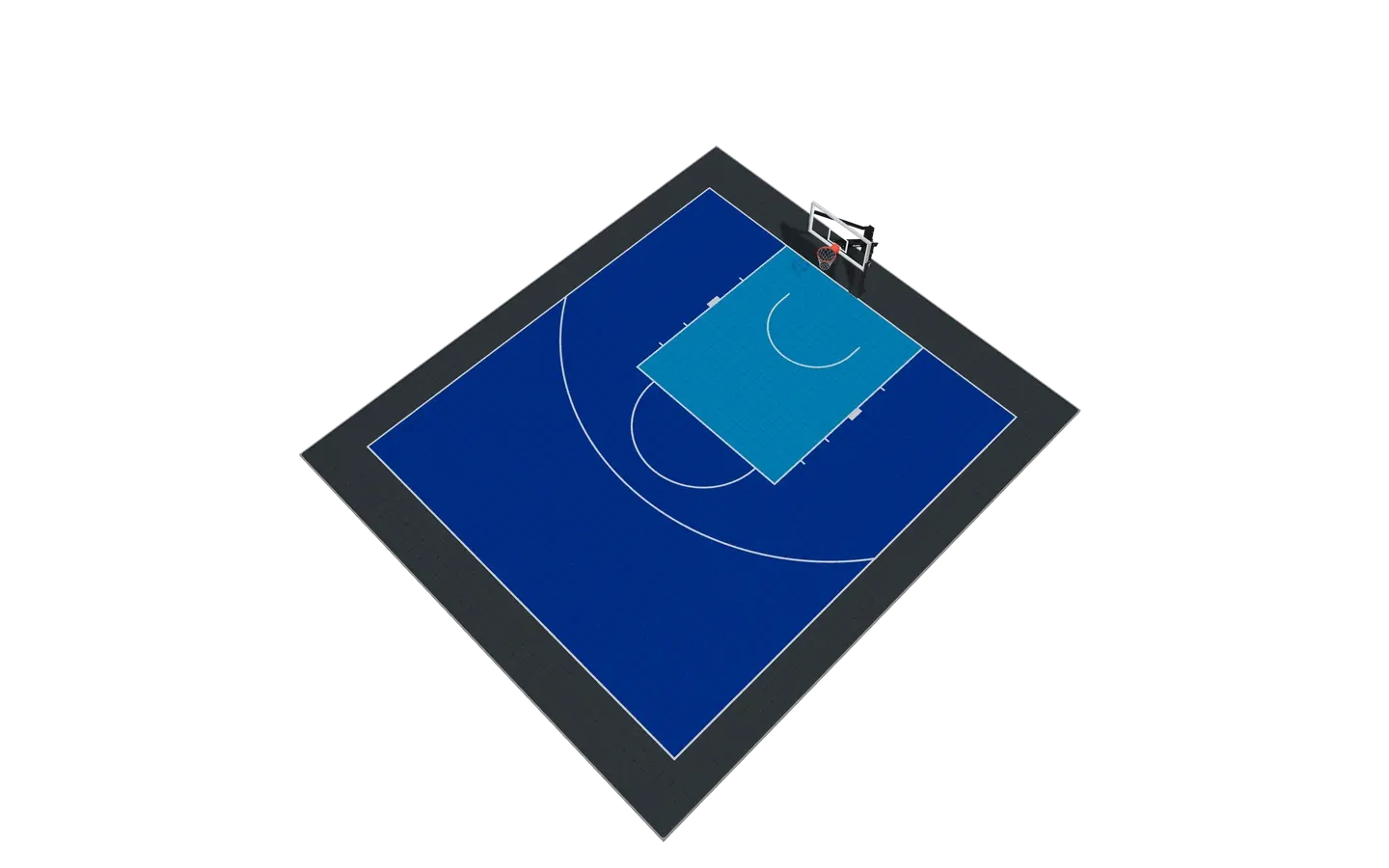
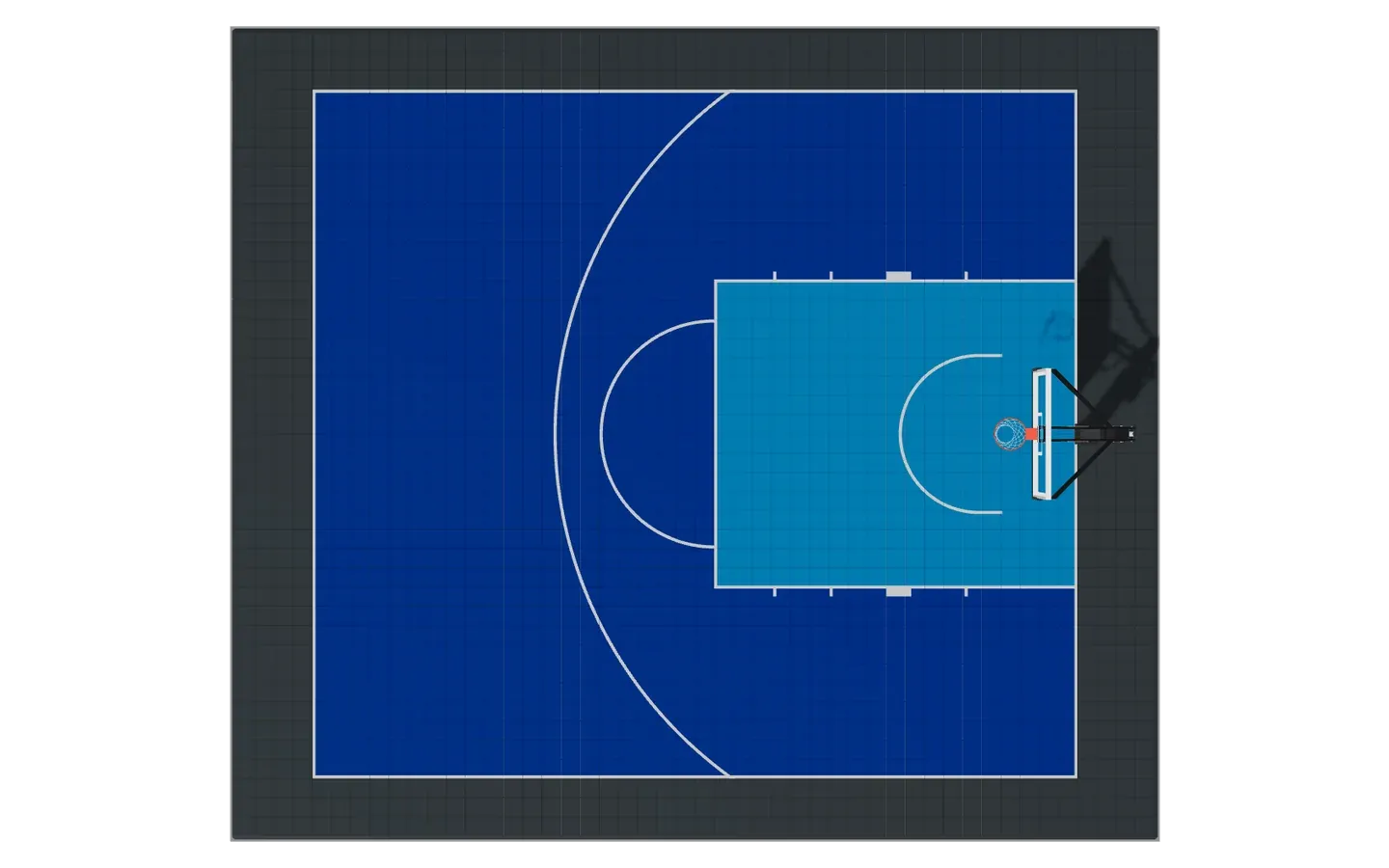
Three-on-three court
10.97 × 12.19 m (36 × 40 ft). Wide enough for corner threes.
5 ready-made colorways, or design your own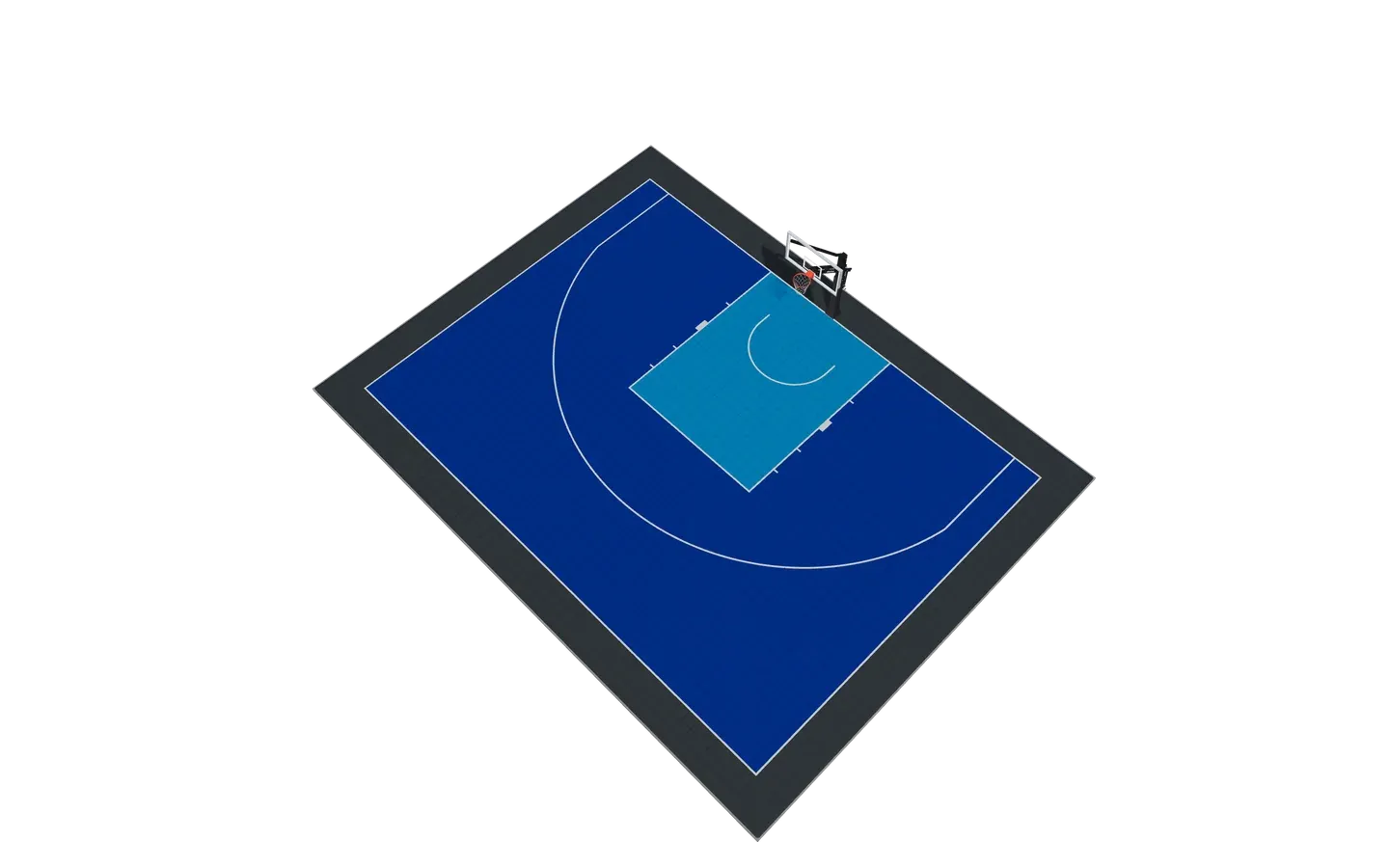
 3×3
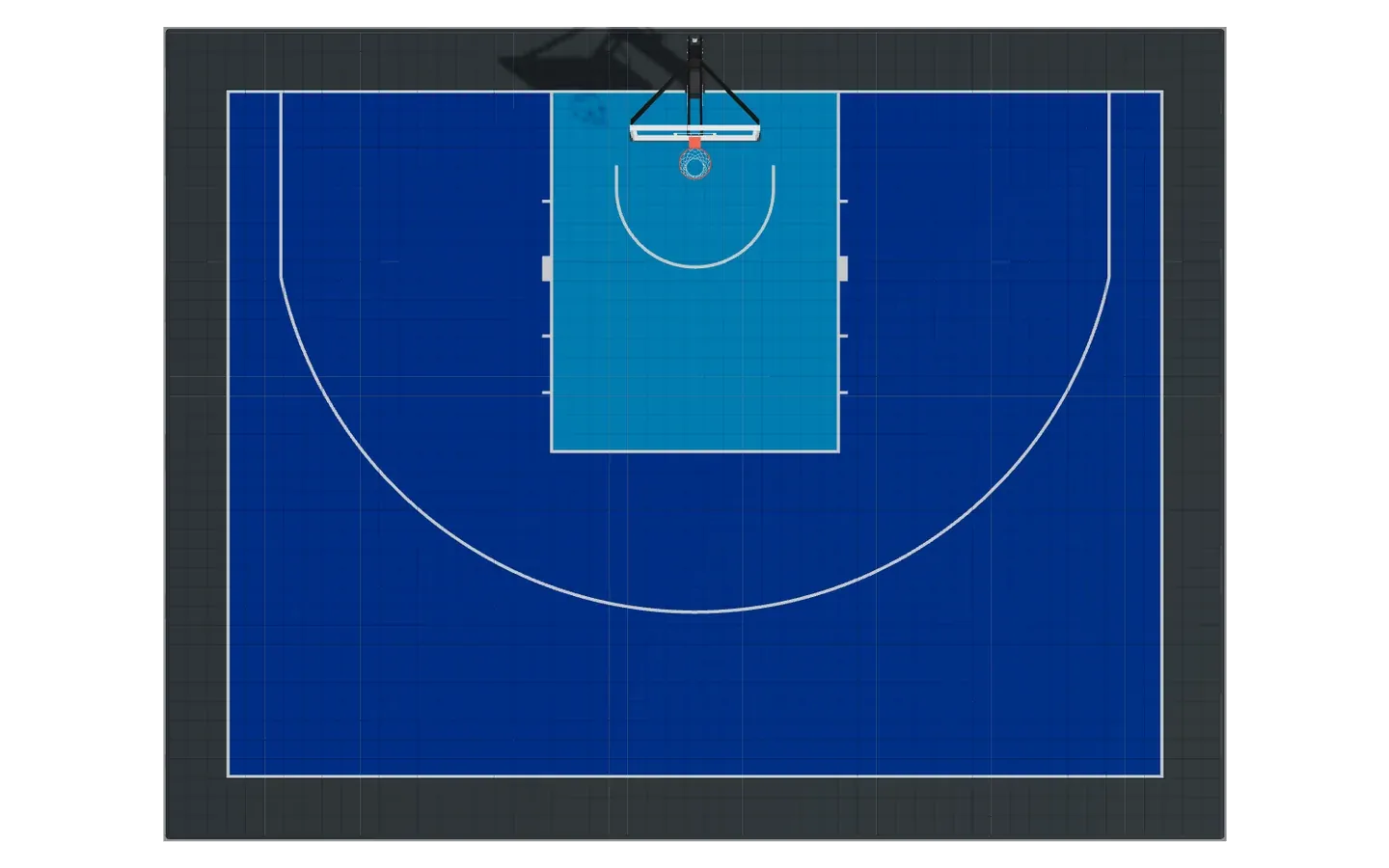
FIBA 3×3 court
14.94 × 10.97 m (49 × 36 ft). The Olympic street format: one hoop, three a side.
5 ready-made colorways, or design your own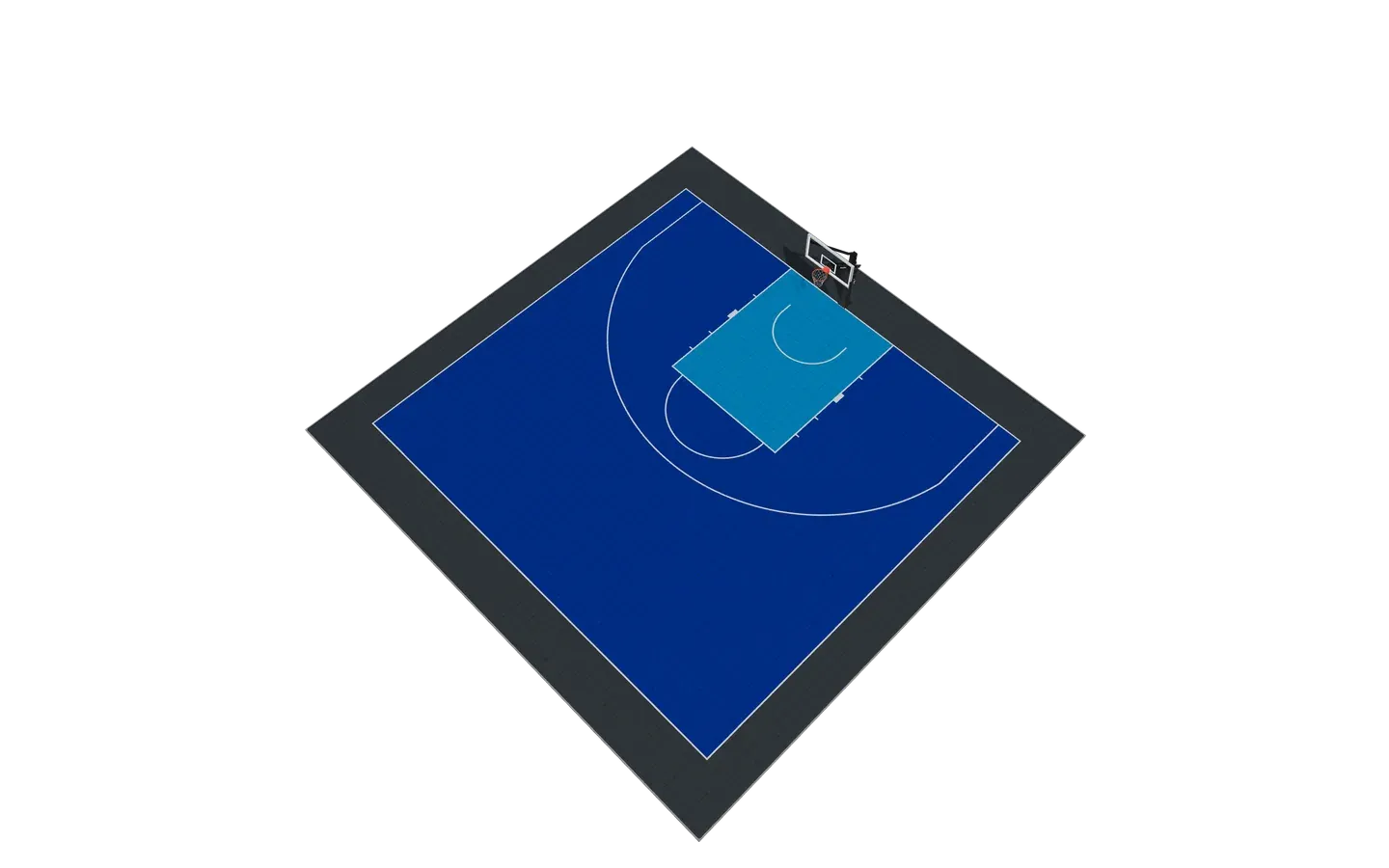
 FIBA HALF
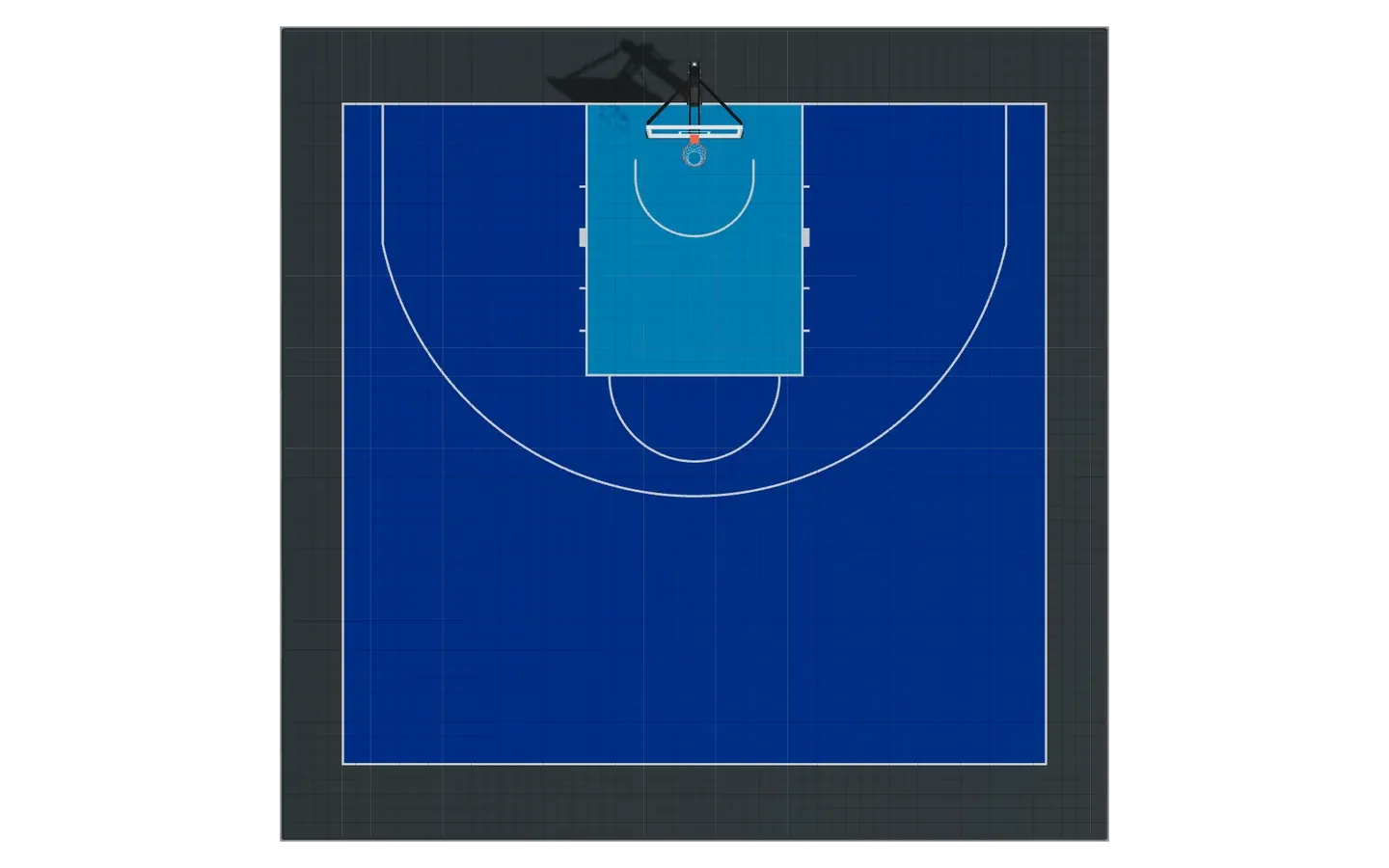
FIBA half-court
14.94 × 14.02 m (49 × 46 ft). The regulation FIBA half, the format clubs train on.
5 ready-made colorways, or design your ownCela igrišča
Pet proti pet, od konca do konca. Za klube, za šole s prostorom in za večje domače gradnje.
 SCHOOL
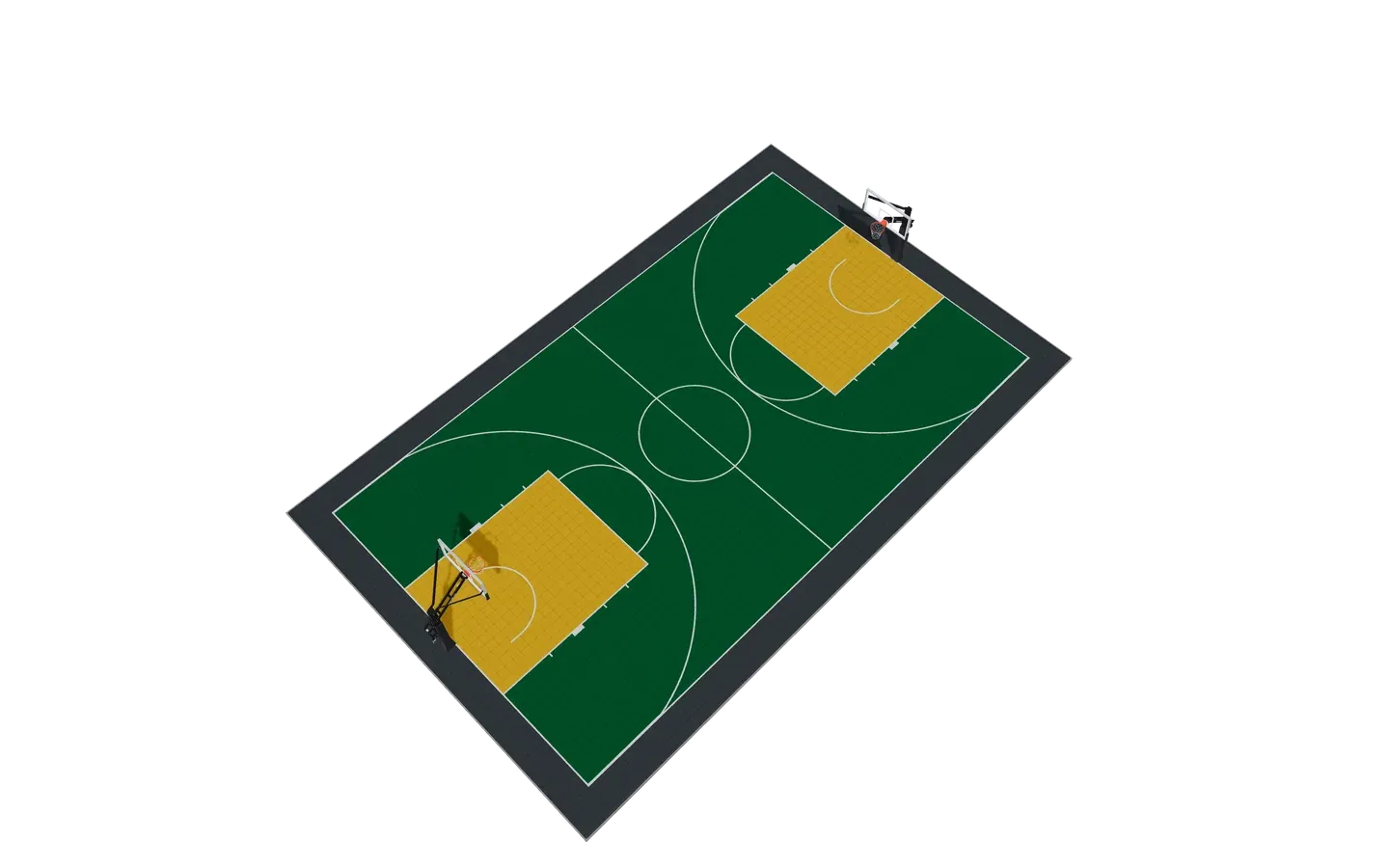
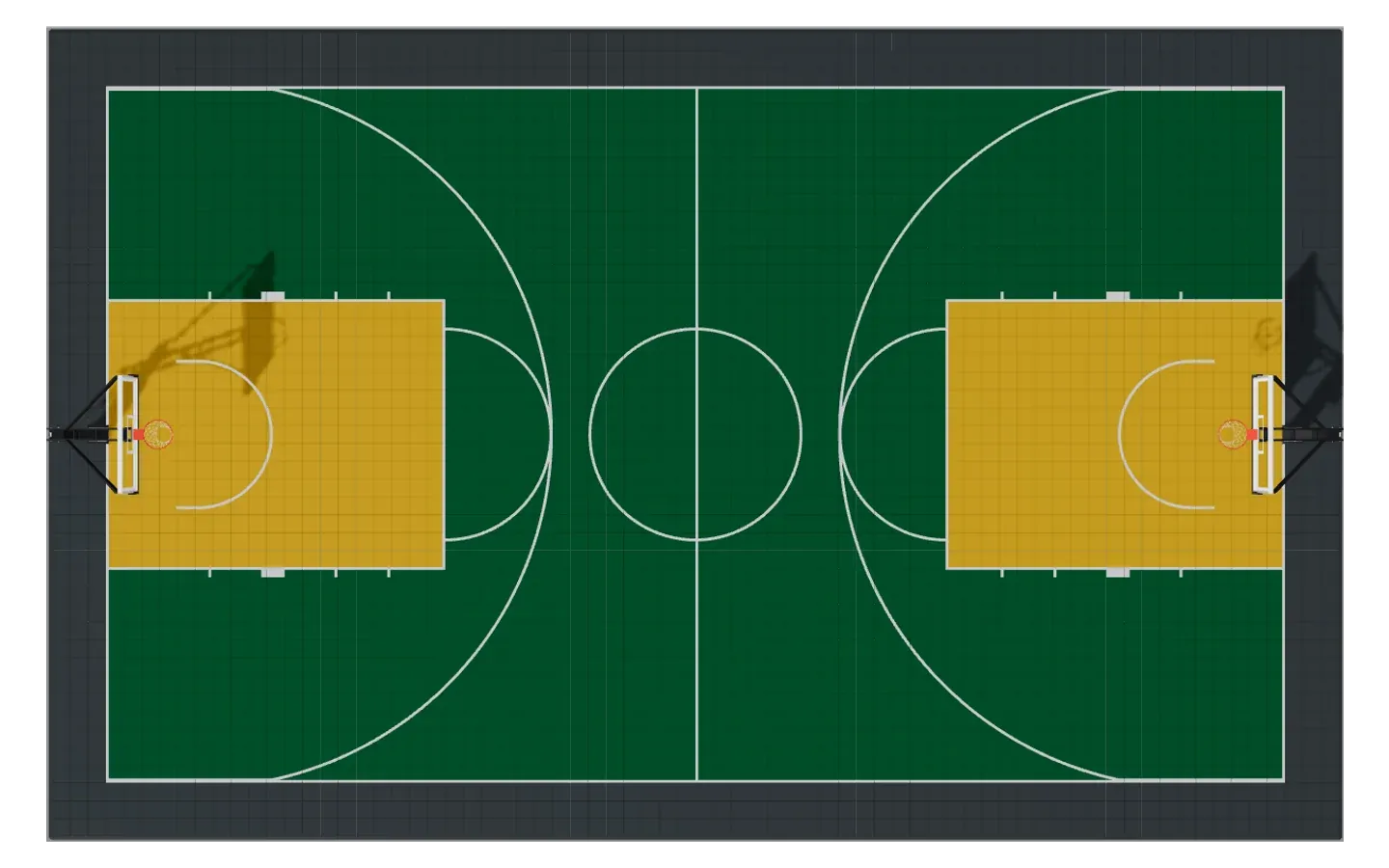
School junior court
11.89 × 20.12 m (39 × 66 ft). A scaled full court for playgrounds and MUGAs.
5 ready-made colorways, or design your own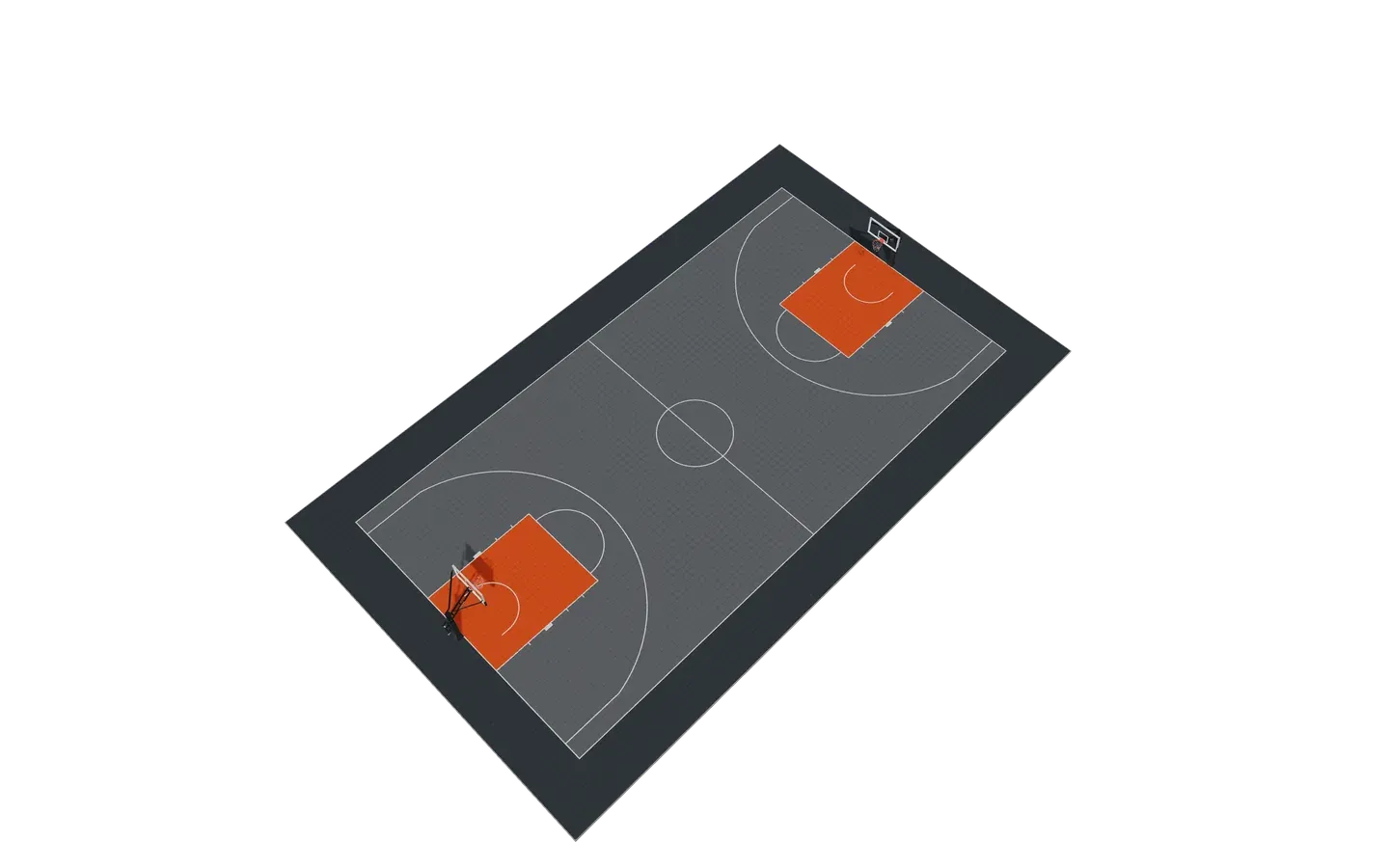
 FIBA
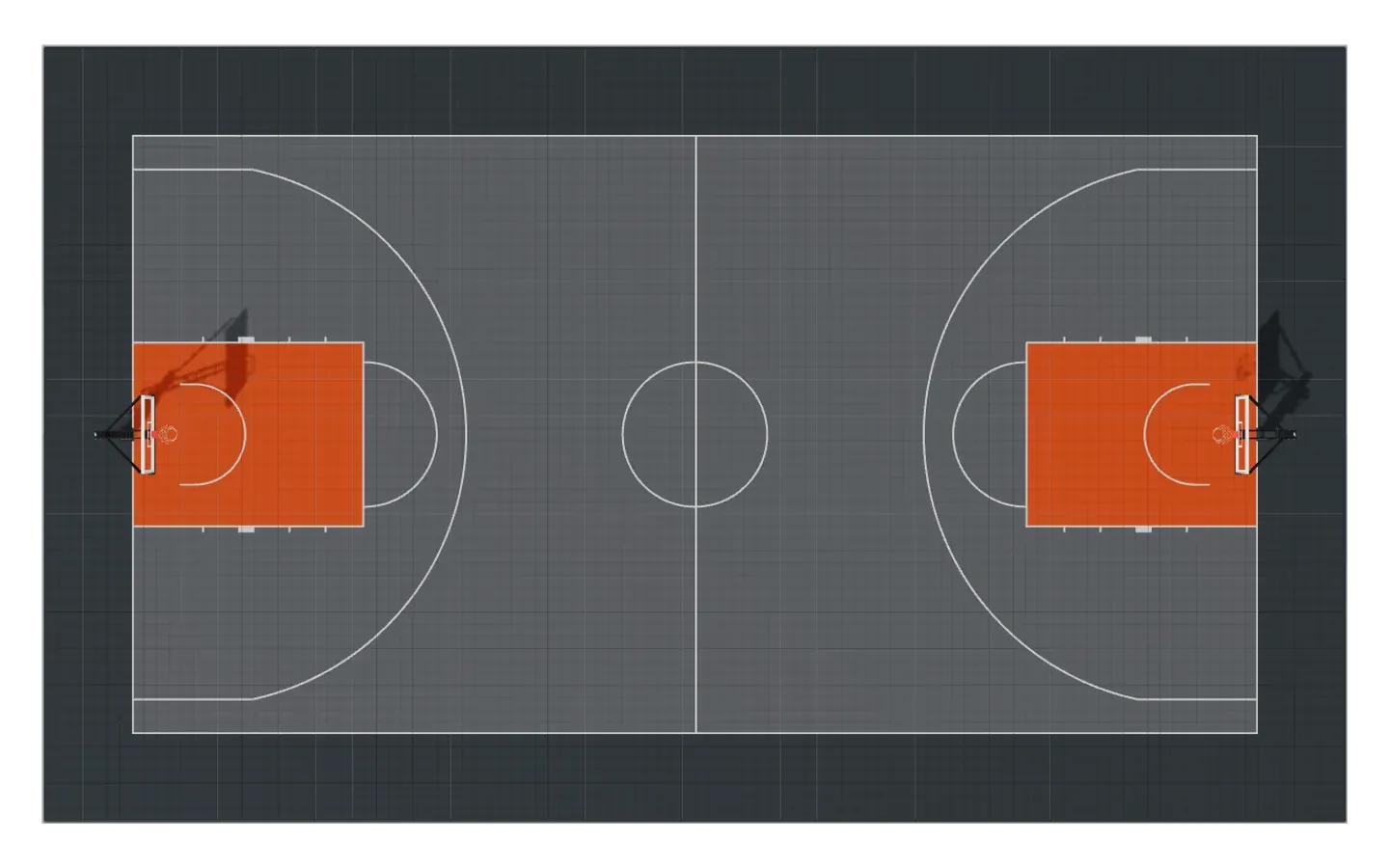
FIBA full court
14.94 × 28.04 m (49 × 92 ft). A full FIBA court with a 2 m run-off all round.
5 ready-made colorways, or design your own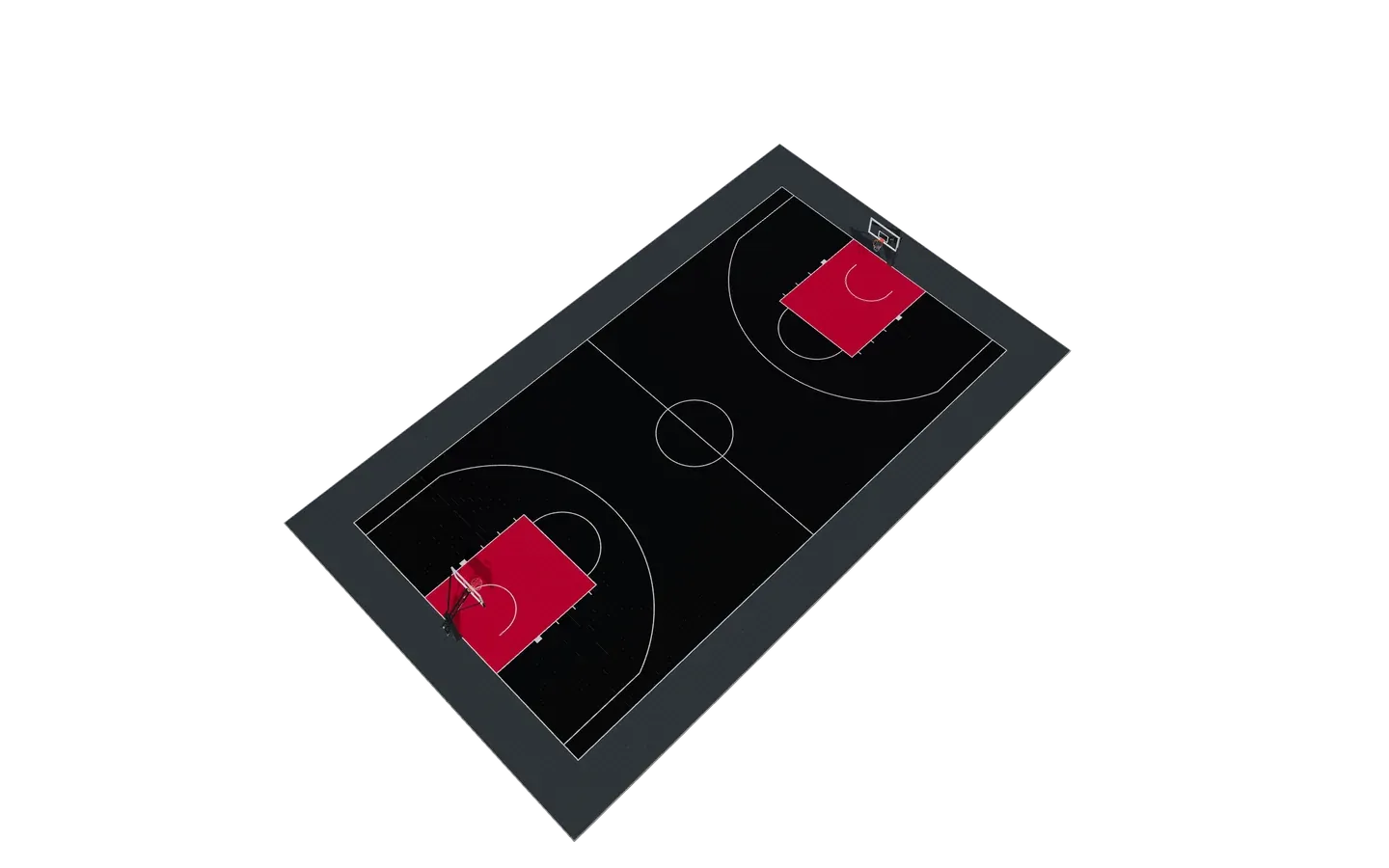
 NBA
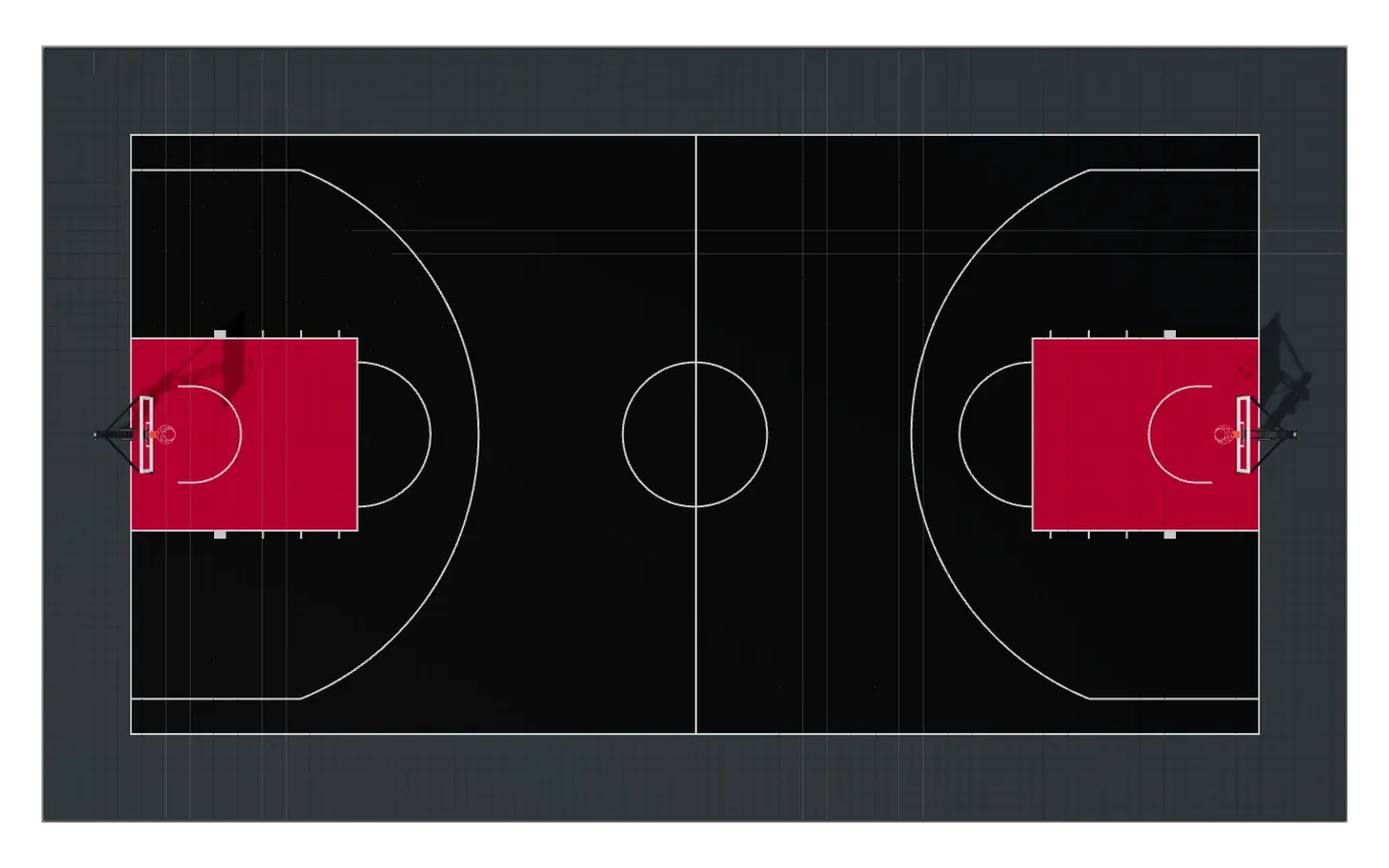
NBA full court
15.24 × 28.65 m (50 × 94 ft). NBA proportions, including the deeper 7.24 m arc.
5 ready-made colorways, or design your ownDvoranska igrišča
Garaže, hlevi, skladiščne hale in dvorane. Podlage ni treba polagati in ni čakanja na vreme – vsako igrišče navaja zahtevano višino stropa.
 GARAGE
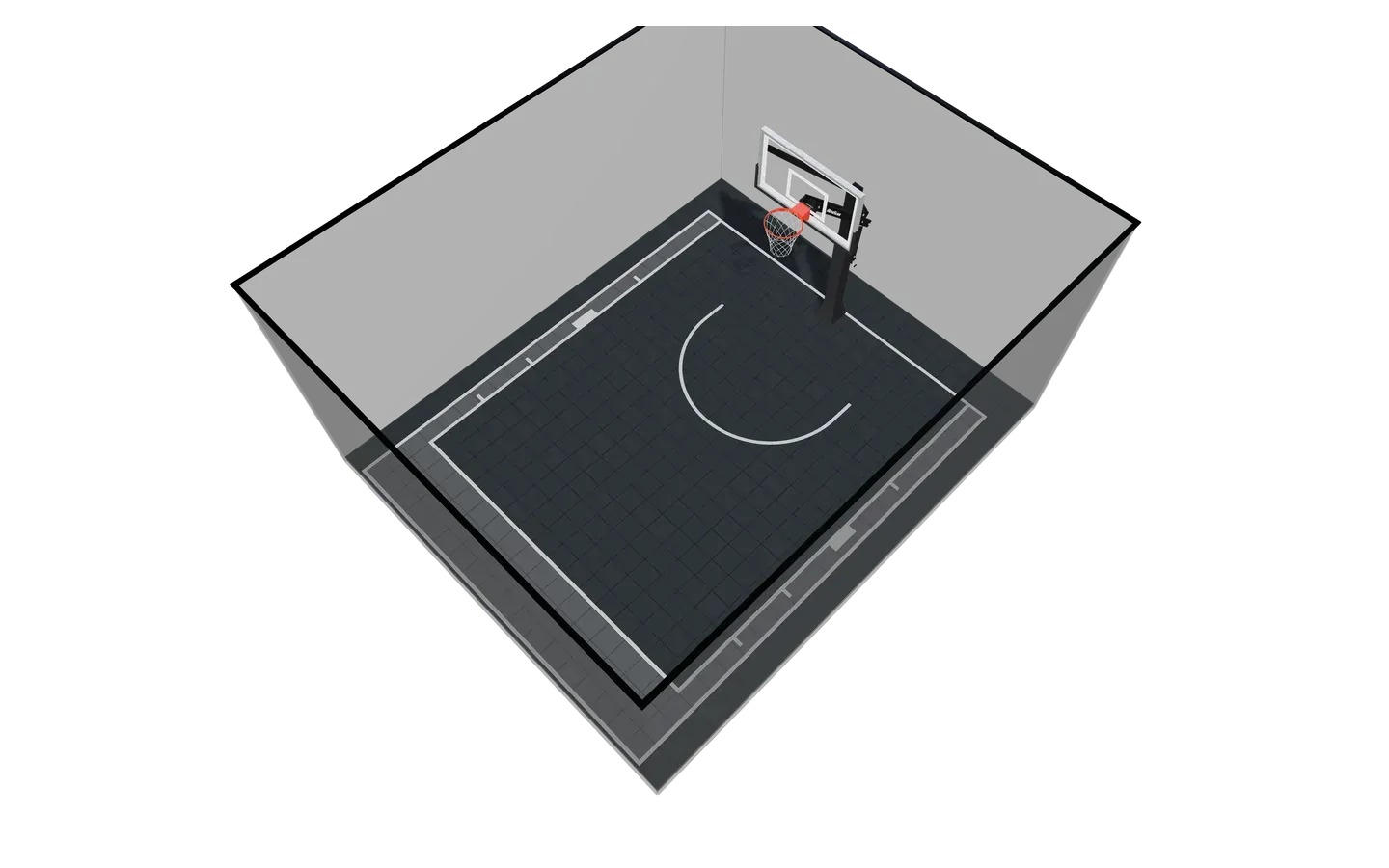
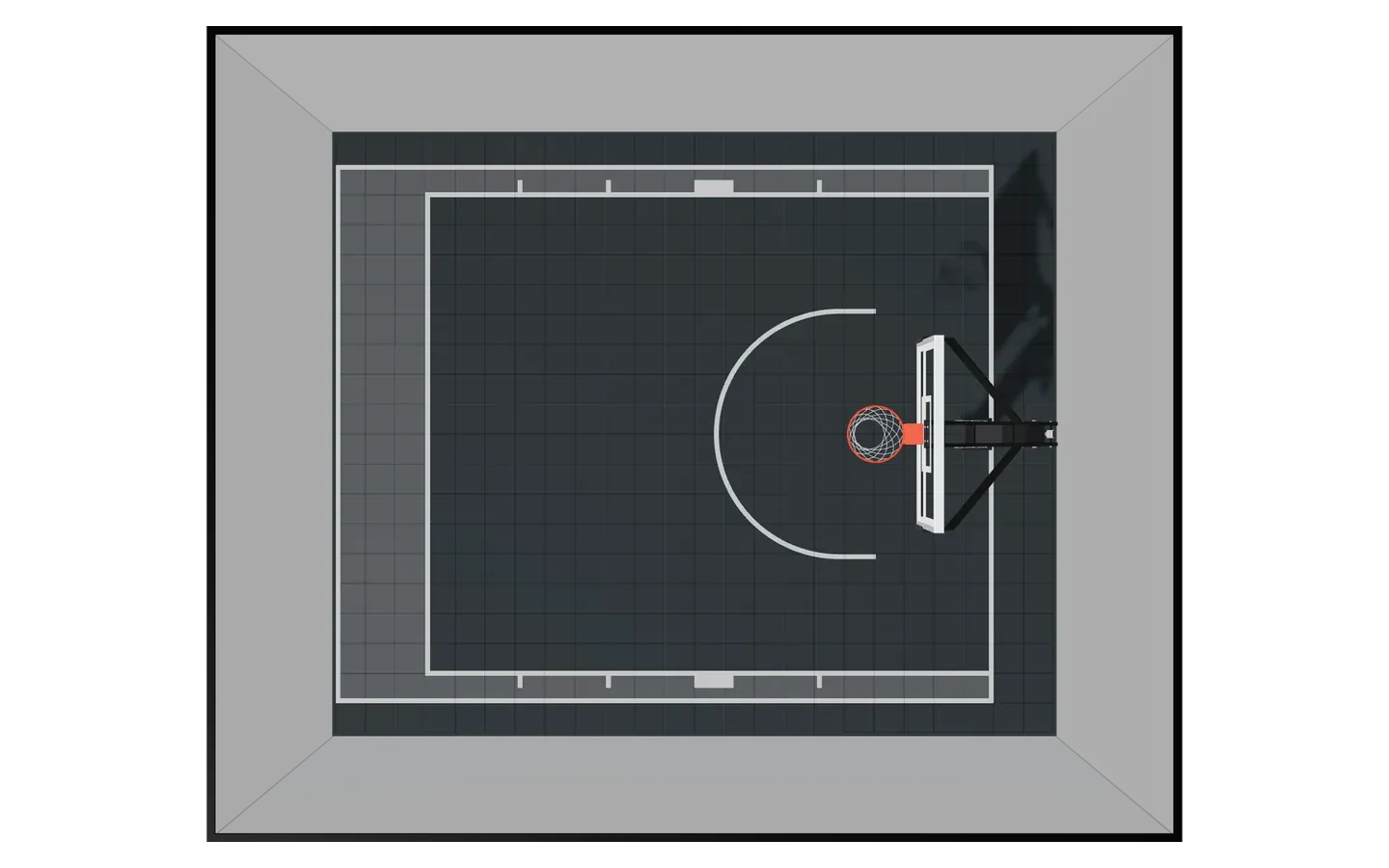
Indoor garage court
5.49 × 6.71 m court in a 6.10 × 7.32 m garage (20 × 24 ft). Regulation key and free-throw line. No three-point line at this depth.
4 ready-made colorways, or design your ownPotrebuje 3.8 m višine stropa
 GAMES ROOM
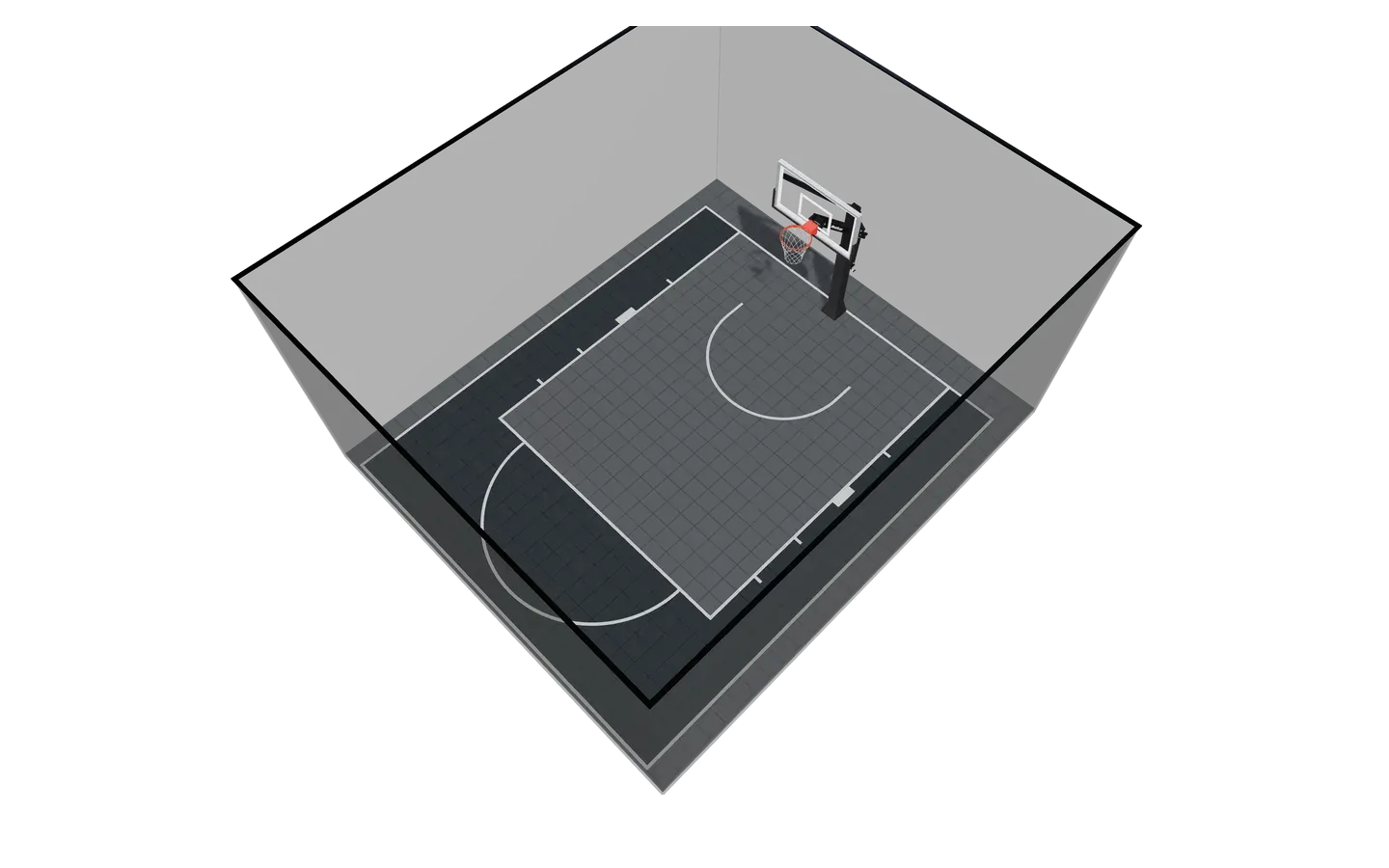
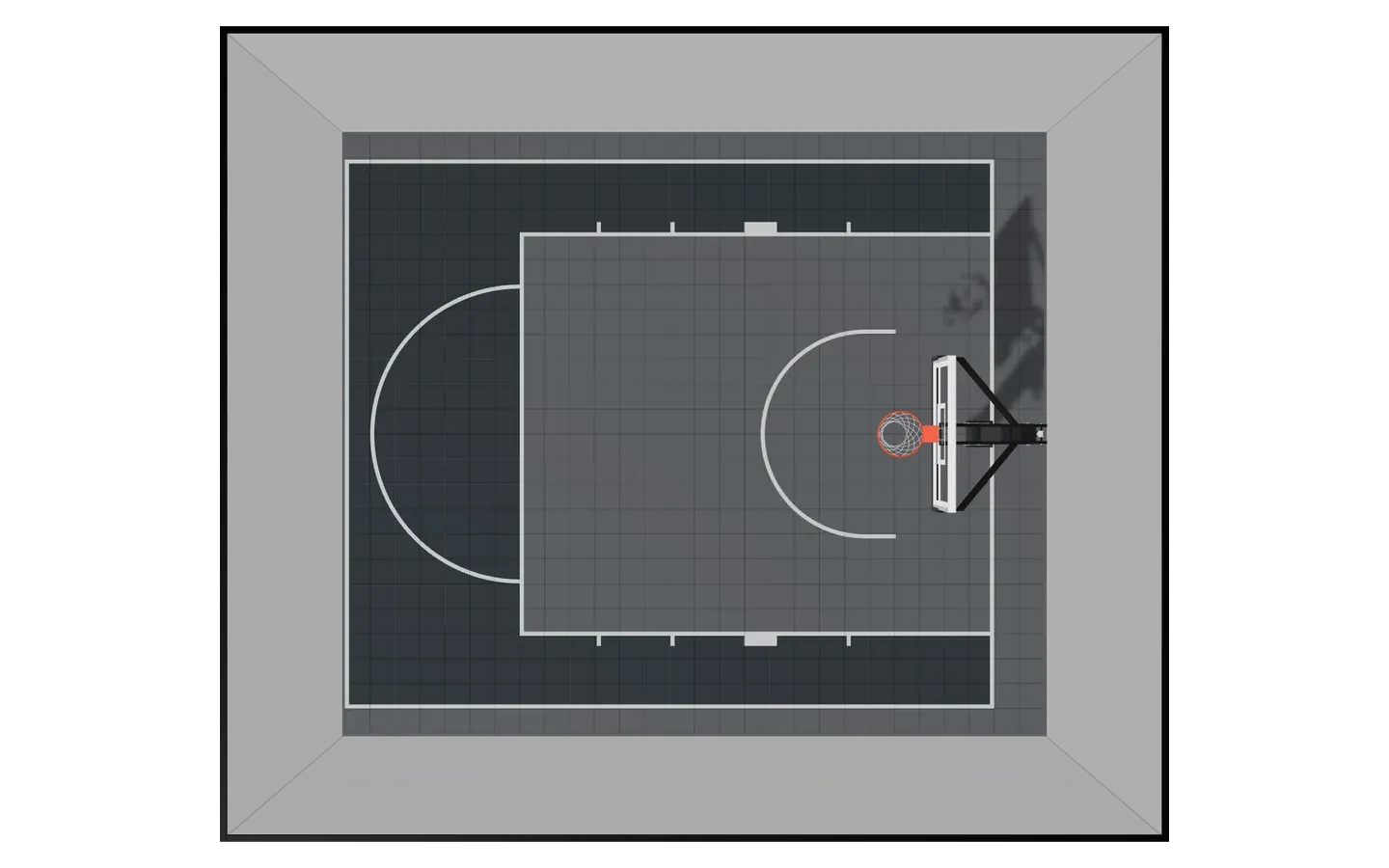
Games room court
6.71 × 7.92 m court in a 7.32 × 8.53 m room (24 × 28 ft). Key, free-throw line and the complete free-throw circle.
4 ready-made colorways, or design your ownPotrebuje 4.5 m višine stropa
 IRREGULAR ROOM
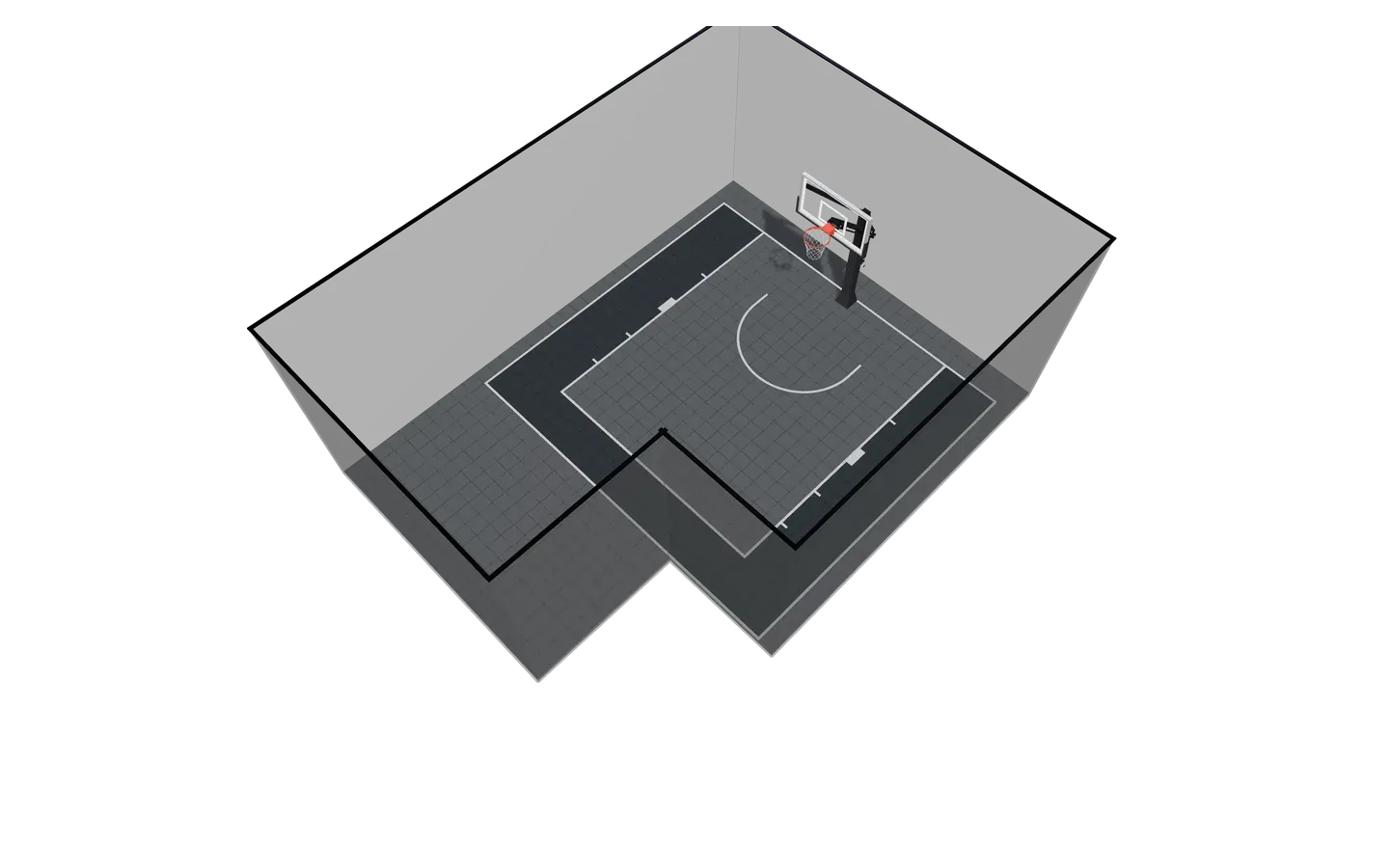
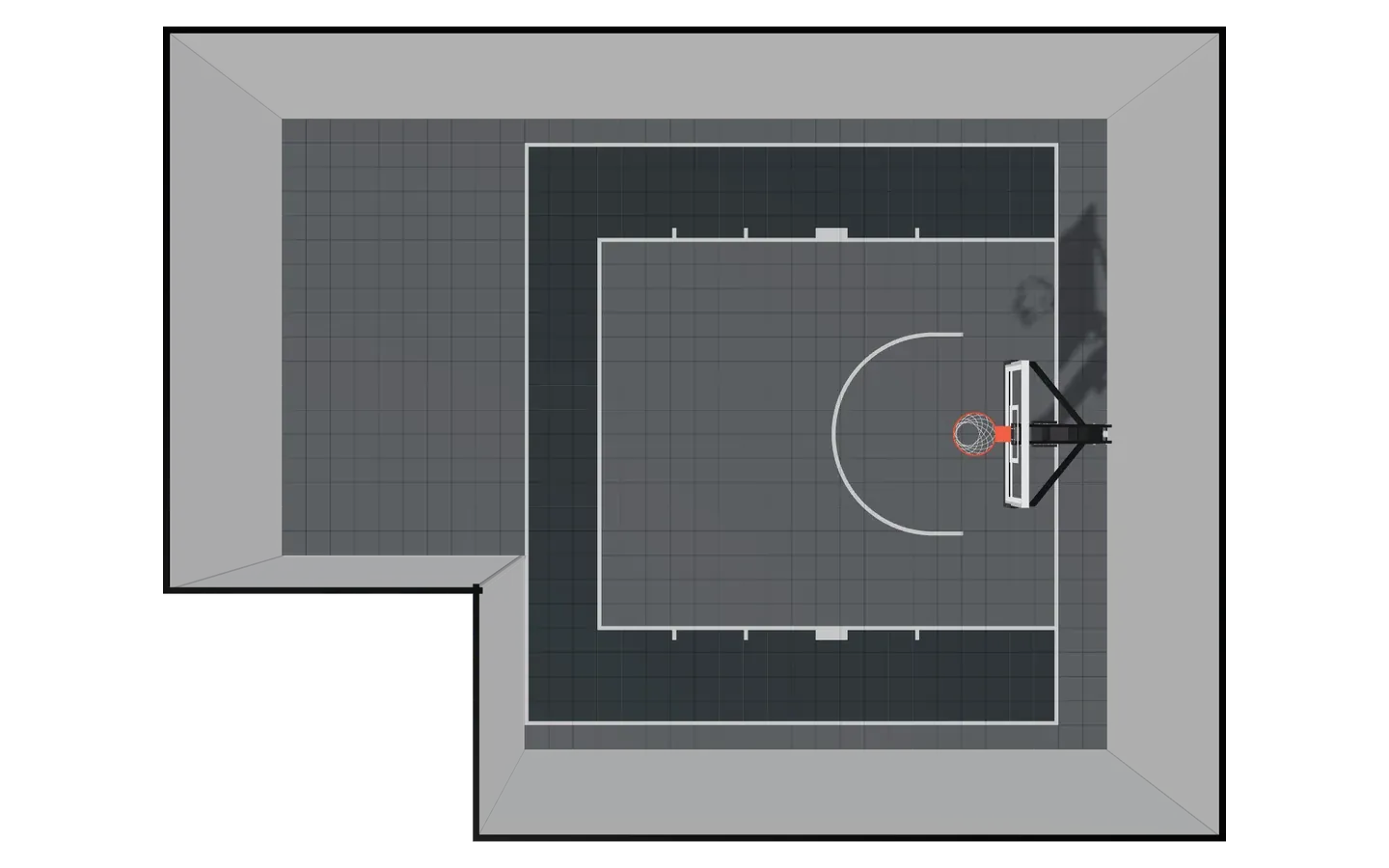
L-shaped room court
7.32 × 6.71 m court in an L-shaped 74.7 m² room. You pay for the floor you have, not the rectangle round it.
4 ready-made colorways, or design your ownPotrebuje 4.5 m višine stropa
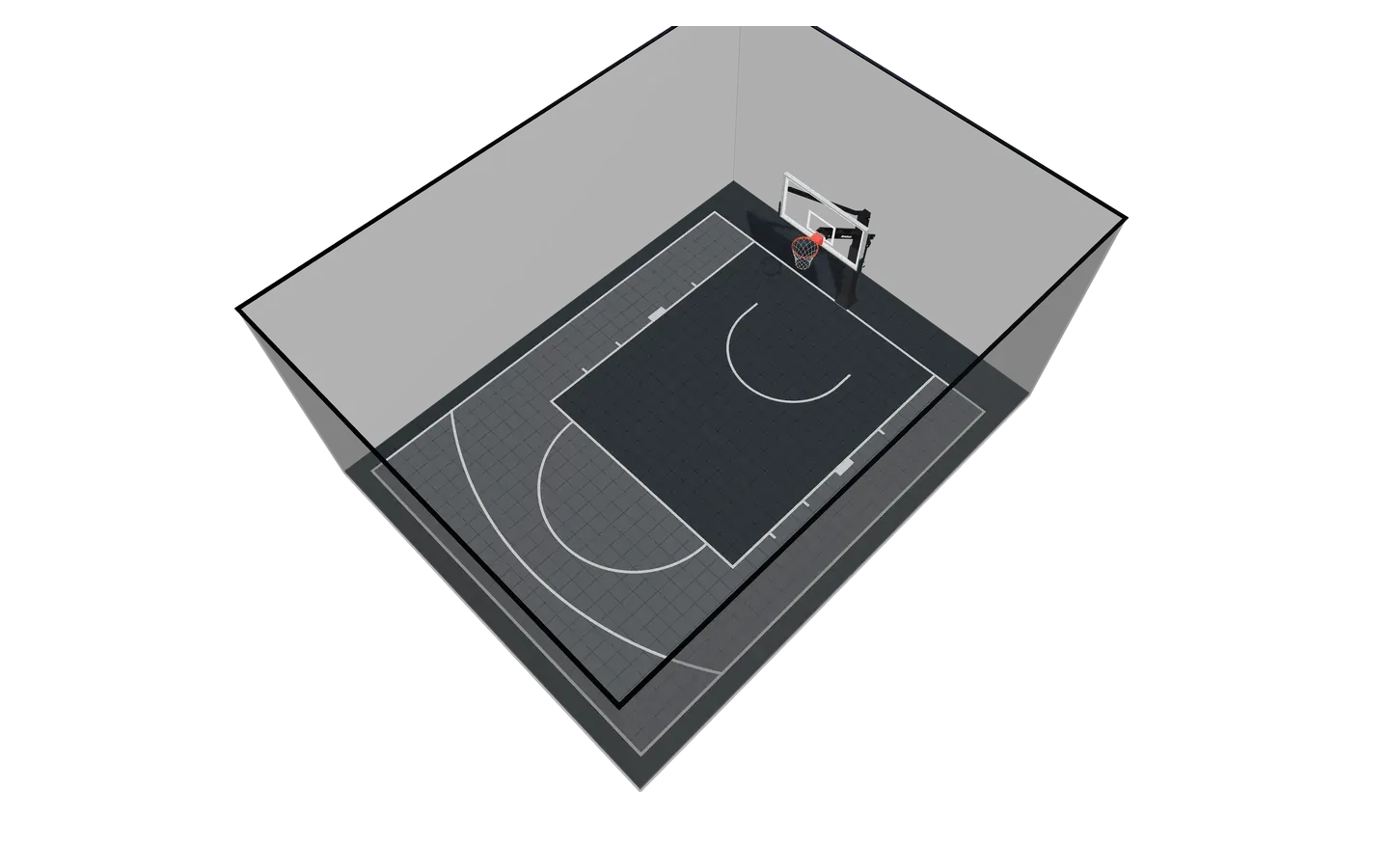
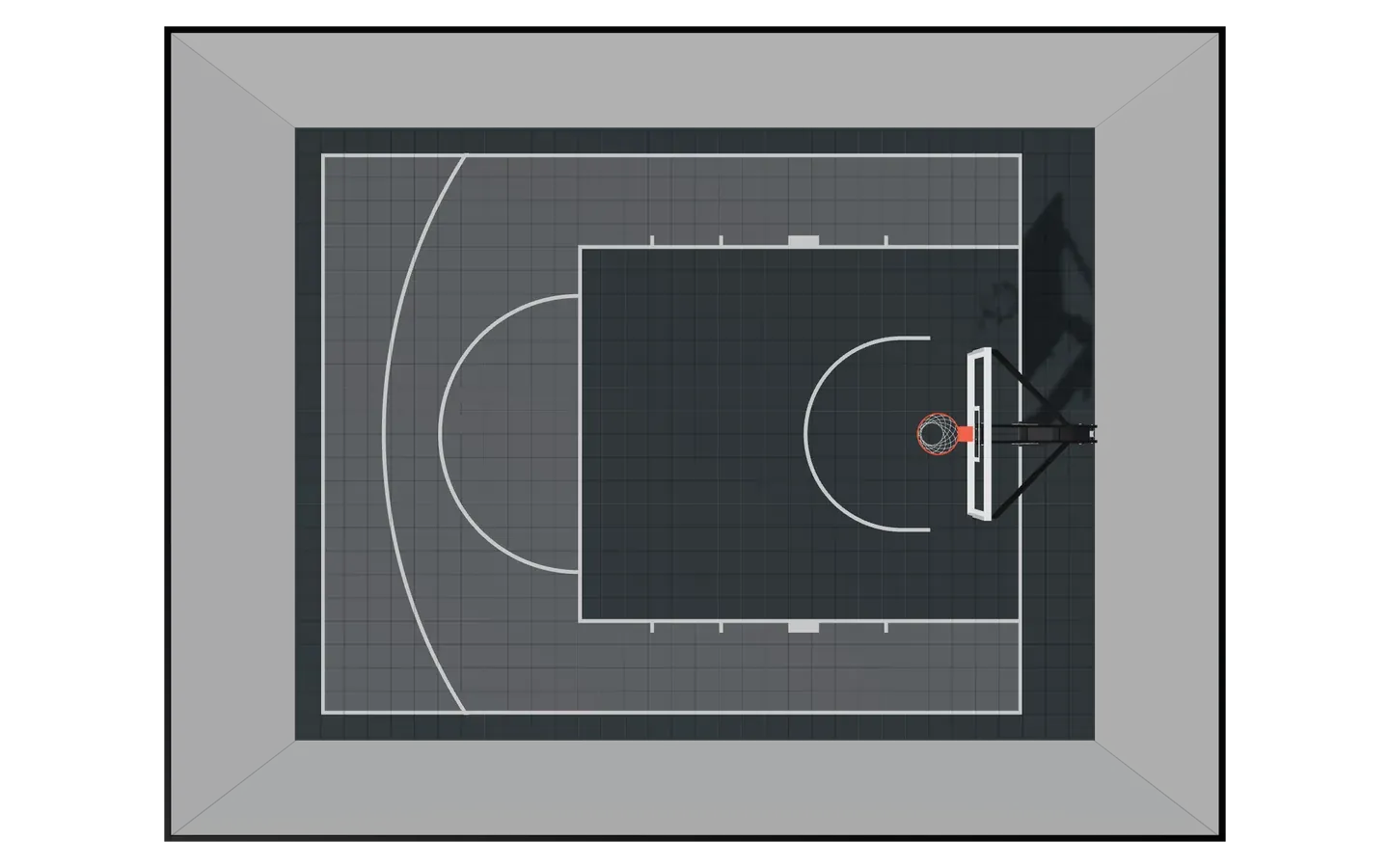 BARN
Barn court
7.32 × 9.14 m court in a 7.92 × 10.36 m room (26 × 34 ft). Deep enough for the real 6.75 m arc.
4 ready-made colorways, or design your ownPotrebuje 5 m višine stropa
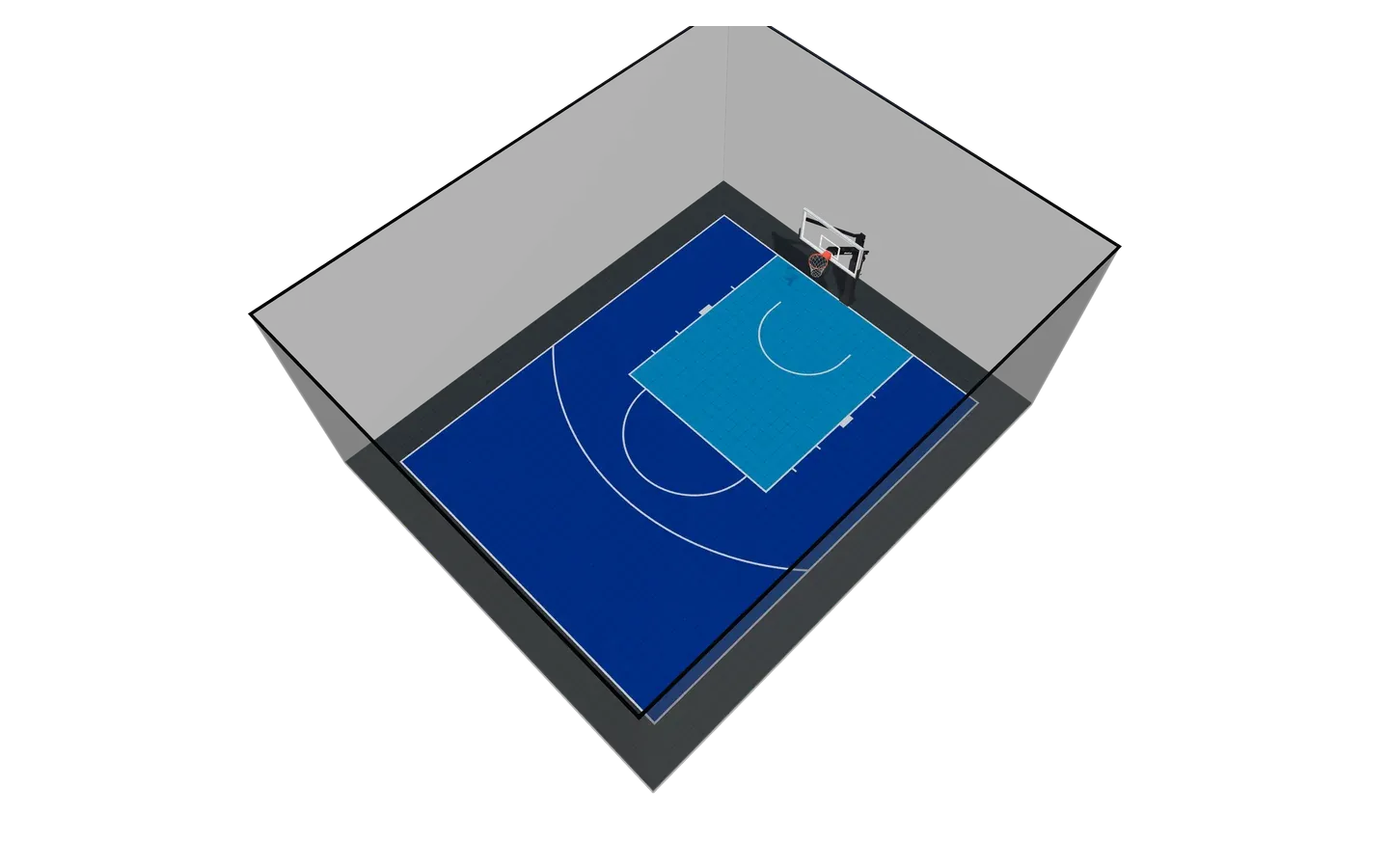
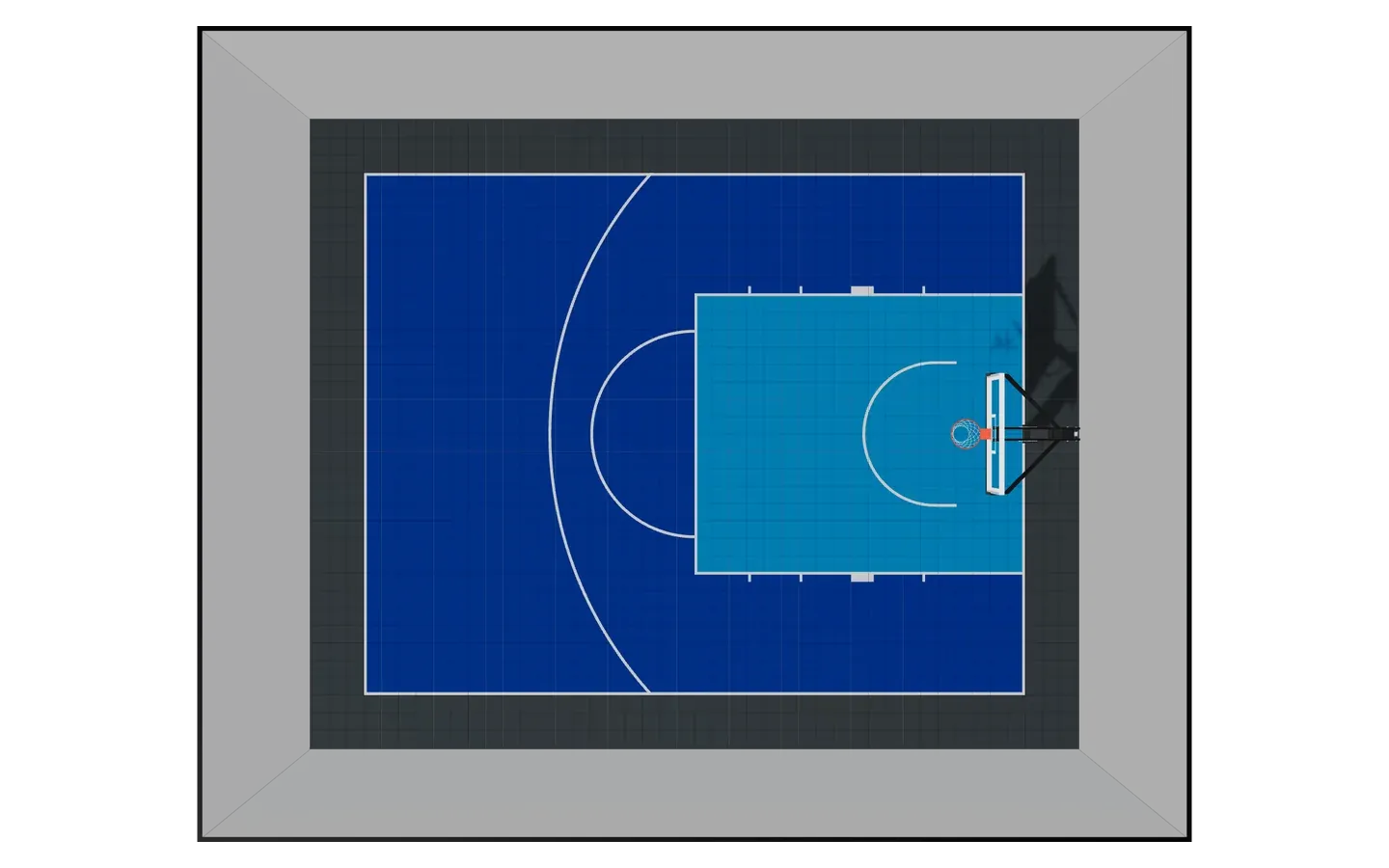 WAREHOUSE
Warehouse bay court
9.14 × 11.58 m court in a 10.97 × 13.41 m bay (36 × 44 ft). Room to shoot from behind the arc.
5 ready-made colorways, or design your ownPotrebuje 6.1 m višine stropa
 SPORTS HALL
Sports hall half-court
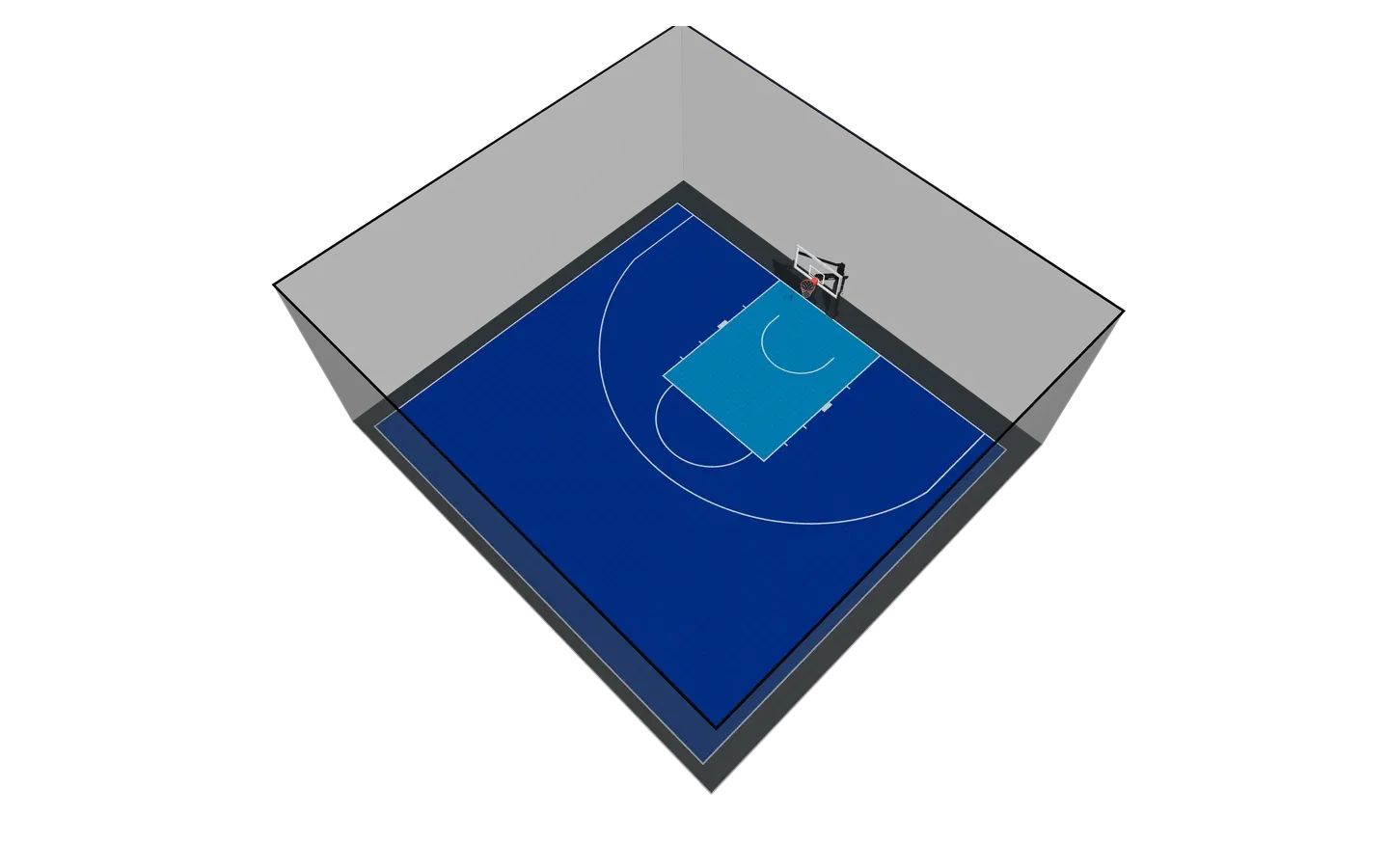
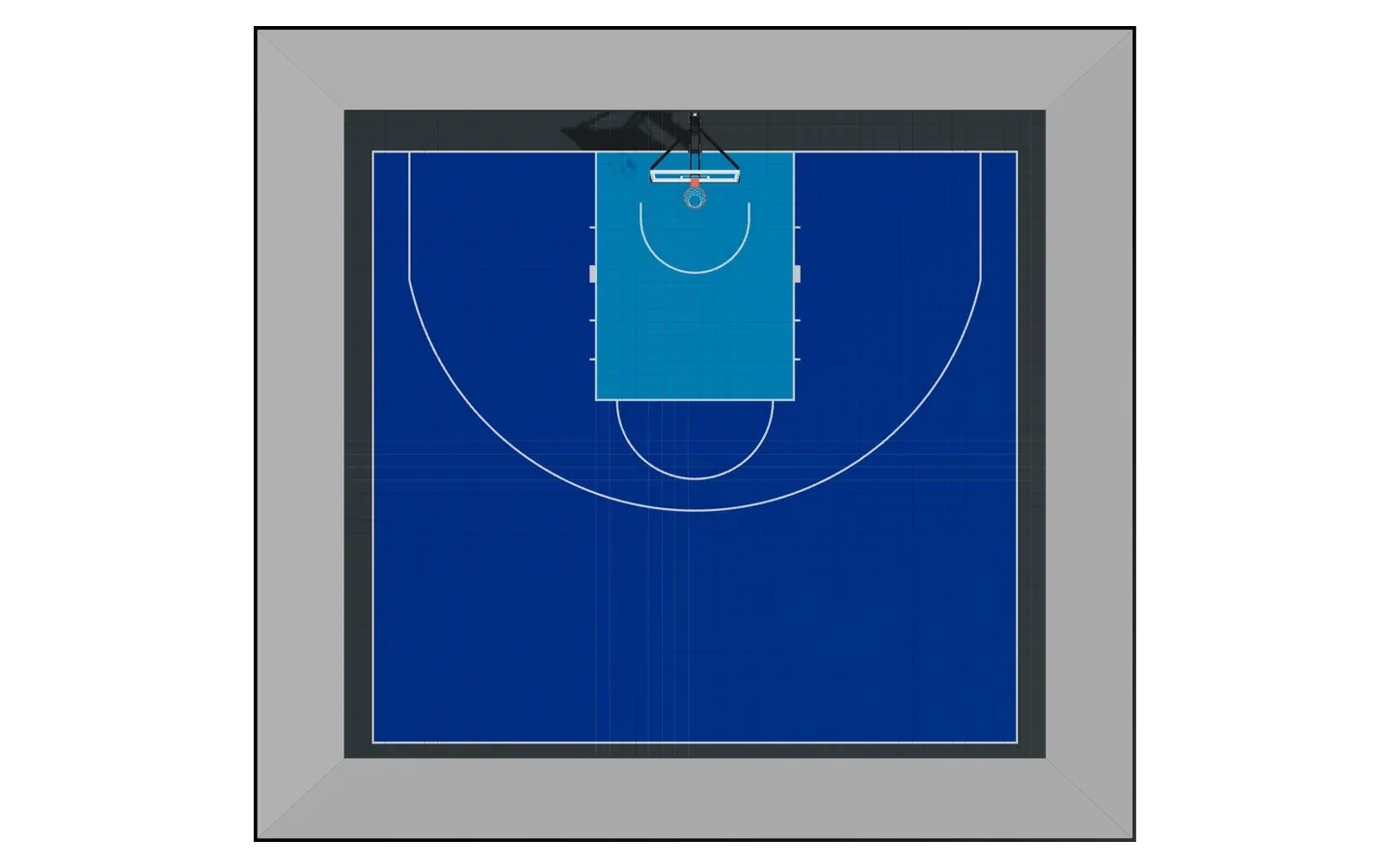
14.94 × 13.72 m FIBA half-court in a 16.15 × 14.94 m hall (53 × 49 ft). Both corner segments of the arc.
5 ready-made colorways, or design your ownPotrebuje 7 m višine stropa
 COMPACT
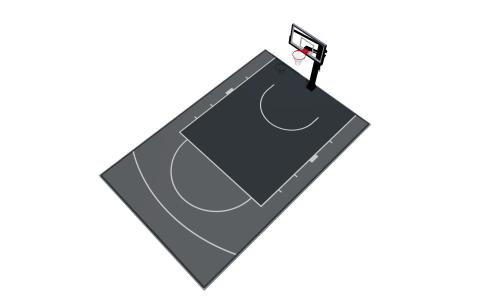
Grey court by the garage
A 5.5 × 9.1 m half-court in Wind Grey with a Graphite Grey key, in the gap beside the garage
 MULTI-SPORT
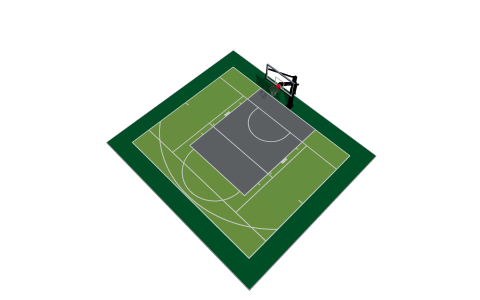
Tennis + basketball garden court
Two sports on one 14 × 11.6 m pad — lime and forest green with a grey shooting zone
Start with the space you have
Measure the depth first, from where the backboard will sit out to the far edge. Basketball happens up and down more than side to side, so depth decides how much of the game you get.
- Under 6 m deep (20 ft)
- A rim, a backboard and somewhere to shoot. Too shallow for a regulation key, so we would not mark one.
- 6.1 to 7.9 m (20 to 26 ft)
- The regulation 4.90 m key, and the free-throw line at its real 4.60 m from the backboard. No three-point line at this depth.
- 7.9 to 9.1 m (26 to 30 ft)
- The same, plus the complete 1.80 m free-throw circle and room to stand behind the line and shoot.
- 9.1 m and over (30 ft)
- The regulation 6.75 m arc, apex inside the court. On a narrow court it runs off at the sidelines, which is how a real compact court looks.
- 11 m and over (36 ft)
- Proper room behind the arc. Catch the ball, set your feet and shoot without stepping off the surface.
- 15 × 13.7 m (49 × 45 ft)
- The full regulation FIBA half-court, with both corner segments of the arc.
Width matters less. 6.1 m gives you the key plus 0.6 m either side, 9.1 m gives you a proper wing, and from about 11 m the corner three exists. On the home courts the size quoted is the whole thing: lines run to the edge of the tiles, so there is no surround to buy and the pad is the court. Club and full courts add the run-off their format calls for. Either way, leave about 0.7 m of firm ground behind the baseline for an in-ground hoop: its arm carries the backboard out over the court, so the post itself stands within 30 cm of the baseline, and the footing and height crank take the rest. Building indoors? Measure the ceiling as well as the floor: 3.8 m is the least that takes a hoop, 6.1 m is what we recommend for full shooting, and 7 m is FIBA’s figure for official competition.
Basketball courts, indoors and out: what each size actually gives you
Most people turn up here with a space rather than a size, so this range is built backwards from the usual one. We start with the distances that cannot move and work out what fits afterwards.
The rim is 3.05 m up. The free-throw line is 4.60 m back from the backboard, which is the 15 feet you have been shooting from since you were eight. The key is 4.90 m across. The arc is 6.75 m from the centre of the rim. Shrink any of those to fit a garden and the court teaches distances that exist nowhere else.
So we do not scale markings. Every court on this page carries the regulation key and the regulation free-throw line. A court deep enough for the real arc gets the real arc. One that is not deep enough gets no arc at all, and the card says so rather than drawing a 3 m circle and calling it a three-point line.
What that leaves you choosing is space, which is the decision you can actually make. Around 6 × 6.7 m gives you the key and free throws. Nine metres square adds the full arc. From 11 m deep there is room to shoot from behind it. At 15 × 13.7 m you have the regulation FIBA half-court that clubs train on.
Every court is laid on OnCourt’s Super X tile, the FIBA 3×3 Level 1 certified surface, in colours moulded through the tile instead of painted on top. Keys and coloured zones are laid as different tiles, so a colourway cannot peel or wear off the way paint does.
Pair any size with a MegaSlam in-ground hoop and change whatever you like in 3D above: dimensions, tile colours, line colours, markings, hoop.
Every court here can be built indoors, and the indoor section is designed for it: a garage, a games room, a barn, a warehouse bay and a sports hall. Indoors the constraint moves. You stop thinking about the base, because there already is one, and you start thinking about the ceiling.
Height is the number to check before anything else, because it is the one you cannot change. The rim is 3.05 m and the backboard stands above it, so the lowest ceiling that takes a hoop at all is about 3.8 m once you allow clearance over the top of the board. That is enough for ball-handling, footwork, layups and close work off the backboard, and it is not enough for a normal jump shot. We recommend 6.1 m for basketball you would call unrestricted, and FIBA asks for 7 m of clear height for official competition. A standard domestic garage is about 2.4 m and will not take a hoop at any rim height.
The other reason to build indoors is the calendar. You cannot lay a base in frost, so outdoor builds stop when the ground does and lead times stretch through the winter. Indoors there is nothing to pour and nothing to cure: the tiles float on the floor that is already there, and a power-floated warehouse or garage slab is the best base this tile ever gets.
Indoor rooms are rarely clean rectangles. Draw yours in the configurator (an L-shaped return, a chimney breast, a stair box, structural pillars), and the tiles, the cut list and the quote all follow the outline you draw rather than the rectangle around it. Every tile the wall line passes through is charged as a whole tile, because that is how it is bought and cut, and tiles outside the room are not charged at all.
Pogosta vprašanja
What ceiling height do I need for an indoor basketball court?
About 3.8 m is the lowest ceiling that will take a hoop at all. The rim sits at 3.05 m, the backboard stands above it, and we allow 30 cm of clearance over the top of the board. At that height you get ball-handling, footwork, layups and close-range shooting off the backboard, but not a normal jump shot. We recommend 6.1 m for basketball you would call unrestricted, and FIBA requires 7 m of clear height for official competition. Every indoor court in this range states the ceiling it needs, from the indoor garage court up to the sports hall half-court.
Can I put a basketball court in my garage?
Only if the ceiling is high enough, and a standard domestic garage is not. Most are around 2.4 m, which is below the 3.05 m rim, so no hoop will fit at regulation height whatever else you do. Converted garages, workshops and outbuildings with a raised or open roof often clear 3.8 m, and that is what our smallest indoor court is built for. Measure the height before you measure the floor.
My room is not a rectangle. Can you still build a court in it?
Yes, and it is one of the things the configurator exists for. Draw the room as it actually is, including pillars, a chimney breast or an L-shaped return, and the court is tiled and quoted to that outline. Every tile the wall line passes through is charged as a whole tile, because that is how it is bought and then cut on site, and tiles falling outside the room are not charged at all. You pay for the floor you have rather than the rectangle around it. The L-shaped room court is a worked example.
Do I need to lay a base for an indoor court?
Almost never. The tiles float on whatever is already there, and a power-floated concrete warehouse or garage slab is the best base this tile ever gets. Lay straight onto it with no preparation. That is most of why indoor builds are faster than outdoor ones: nothing to pour, nothing to cure, and nothing that cares what the weather is doing. The floor does need to be flat and sound; a badly cracked or uneven slab still wants attention first. Our guide to resurfacing an existing court covers how to judge the floor you have.
What size is a home basketball court?
There is no single answer, but most land between 6 × 6.7 m and 9 × 11 m. About 9 × 9 m is the most common, the size of our garden half-court. It is the smallest court that carries the key, the free-throw line and the full arc at their real distances. Smaller courts still work well for free throws, finishing and one-on-one.
How far is the free-throw line on your courts?
4.60 m from the face of the backboard, which is 15 feet, on every court we sell that marks one. The same as a regulation gym. If a court is too shallow to hold it we leave the free-throw line off rather than move it closer. Every regulation distance is set out in our basketball court dimensions guide.
Can you draw the three-point line closer so it fits my garden?
No. A three-point line at 4 m is a different shot, and it teaches a distance that exists nowhere else. Courts from about 9.1 m deep, such as the long garden court, carry the regulation 6.75 m arc. Below that we mark the key and the free-throw line and leave the arc off, as on the garden key court.
How much space do I need behind the hoop?
Less than most people expect. A MegaSlam carries its backboard forward on an arm, so with the board at the regulation 1.2 m the post stands at the baseline, not behind the court. On a MegaSlam 72 the post’s back face is about 0.25 m behind the baseline and the height crank reaches about 0.6 m, so allow 0.7 m of firm ground behind it for the post, its 500 mm square footing and room to turn the crank. A MegaSlam 60’s arm is 30 cm shorter, so with its board in the same place its post stands about 0.3 m inside the baseline and needs less room behind it.
Do I need a concrete base?
The tiles need a firm, flat, free-draining base: new concrete or tarmac, or an existing slab in good condition. They float on top of it, so nothing is glued down and the court can be lifted and relaid if you move. If you already have a slab, measure it and build the court to fit rather than the other way round. Our guide on how to build a basketball court takes the base step by step.
Can I play other sports on the same court?
Yes. Every court here is a modular tile pad, so a second sport can be marked on the same surface in a different line colour. Pickleball, badminton, netball and five-a-side are the usual pairings. Add the extra sport in the 3D configurator and you will see how the two sets of lines sit together before you buy.
How long does a court last outdoors?
The colour runs through the tile rather than sitting on top of it, so it cannot peel or wear off the way a painted court does. The surface drains straight through, so there is no standing water and nothing to wait for after rain. Individual tiles can be swapped out without touching the rest of the court, and replacing a court tile is a job you can do yourself. Our guide to how long a modular court lasts covers what decides it.
Nadaljuj z raziskovanjem
MegaSlam basketball hoops
In-ground hoops to pair with any court in this range
Super X court tile
The FIBA 3×3 Level 1 certified surface under every court here
Basketball court dimensions
Every official size, from a garden key to the NBA court
What does a court cost?
Real build costs, itemised step by step
Basketball court FAQ
Surfaces, dimensions, durability and installation
Recent court installs
Real OnCourt courts, from garden keys to full courts