The Foundation of a Long-Lasting Basketball Court
A basketball court is only as good as the surface beneath it. Long before tiles are clipped together or a hoop is installed, the sub-base determines how the court will perform, how long it will last and whether problems appear months or years down the line.
This guide focuses specifically on building the sub-base for a basketball court. It does not cover surface installation or hoop assembly — those steps come later. Getting the foundation right is what allows everything else to work properly.
What Is a Basketball Court Sub-Base?
The sub-base is the engineered foundation that supports the playing surface. Its job is deceptively simple: stay flat, stay stable and manage water. In practice, this means carrying player loads, resisting ground movement and preventing moisture from damaging the court above.
For basketball courts, particularly those using modular flooring, the sub-base must be flatter and more precise than a typical patio, driveway or garden slab. Small deviations that would be acceptable elsewhere can cause problems on a court.
Choosing the Right Type of Sub-Base
Most basketball courts are built on either concrete or asphalt, with concrete being the preferred solution in the majority of installations. It provides a stable, predictable foundation that supports consistent ball bounce and long-term surface performance.
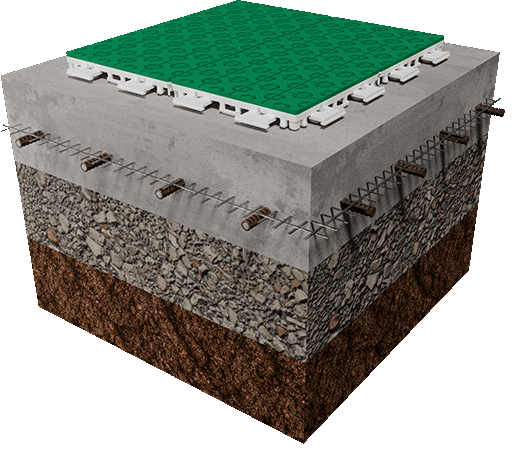
For basketball courts, a reinforced concrete slab should typically meet the following criteria:
- Minimum thickness of 100–150 mm
- Steel mesh or rebar reinforcement
- Laser-levelled finish
- Subtle fall for outdoor drainage
Asphalt bases can be suitable in certain situations, but they require stricter preparation and are more prone to long-term movement.
Flatness and Tolerance Requirements
A basketball court surface is unforgiving when it comes to uneven foundations. Unlike paving or general hardscaping, the playing surface amplifies imperfections rather than hiding them. Even minor deviations in the sub-base can affect ball bounce, create uncomfortable footing and make surface installation more difficult.
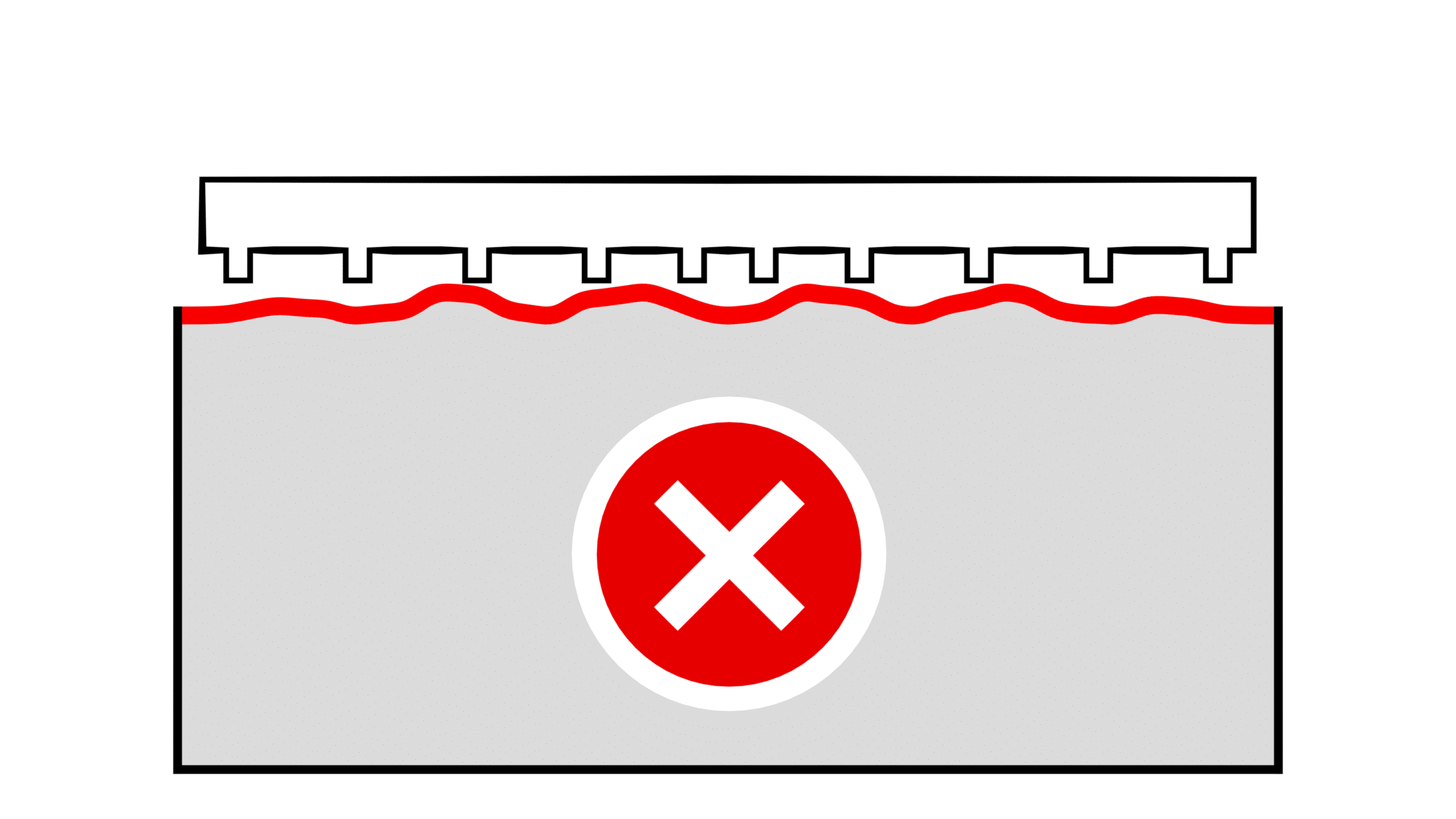
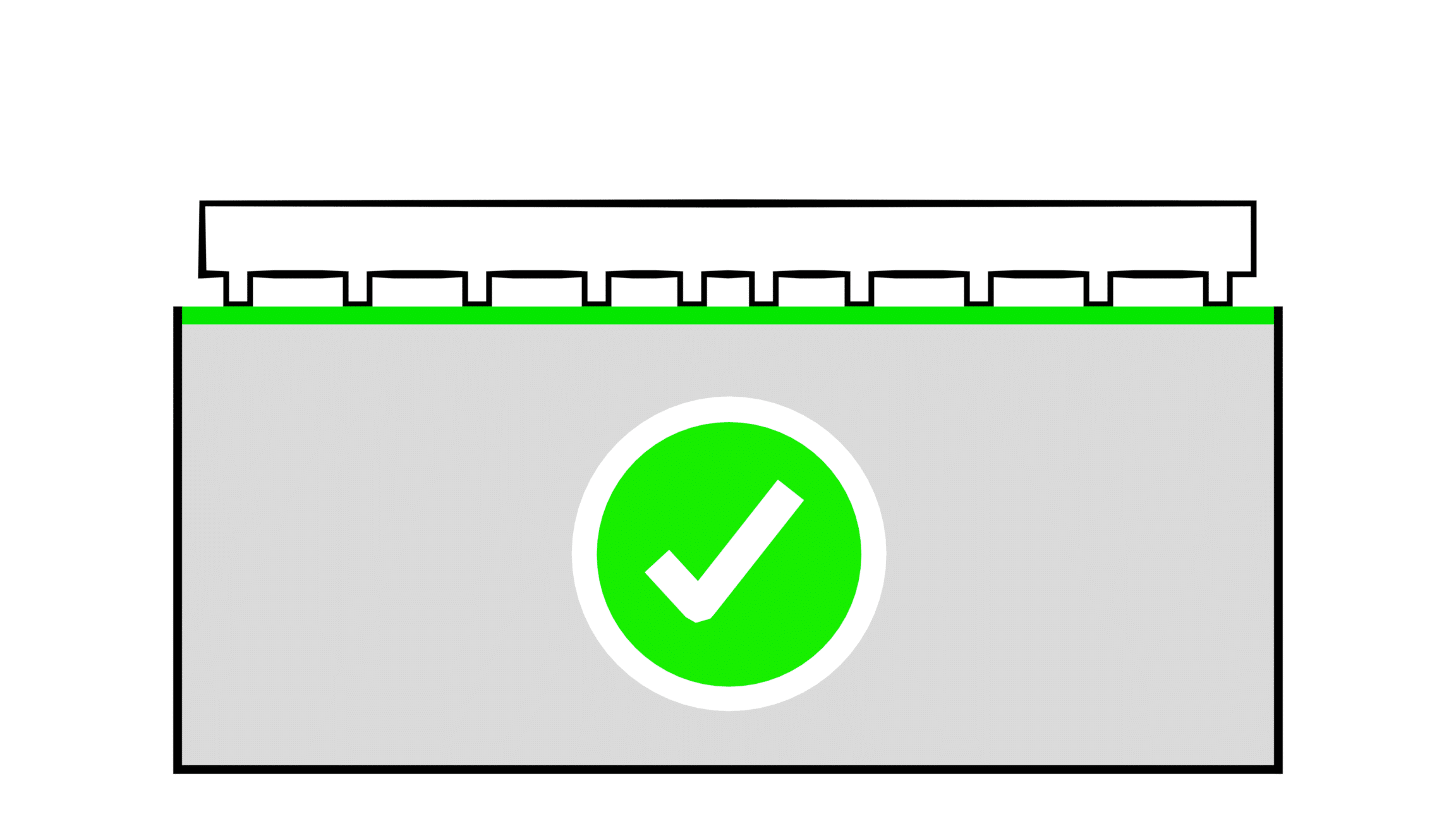
For this reason, basketball courts require a higher standard of flatness than most exterior slabs. The aim is not visual perfection, but consistent performance across the entire playing area. As a practical guide, a basketball court sub-base should meet the following tolerance expectations:
- No more than 3–5 mm deviation over 3 metres
- No abrupt level changes or ridges
- No standing water after rainfall (for outdoor courts)
Meeting these tolerances at the sub-base stage prevents issues that are difficult or impossible to correct once the court surface is installed.
Drainage and Ground Preparation
For outdoor courts, drainage is as important as flatness. Water that cannot escape will eventually cause movement, cracking or frost damage.
Good ground preparation typically involves a compacted stone or hardcore layer beneath the slab, combined with a gentle fall to guide water away from the court area. The goal is not to create a visible slope, but to prevent standing water from forming anywhere on the surface.
Ignoring drainage rarely causes immediate failure — it causes slow, expensive problems later.
Sub-Base Readiness Check
Before you move on to installing your basketball court surface, pause and confirm the following. If you can confidently tick every box, your sub-base is ready.
Your sub-base should be:
- Structurally sound, fully cured and free from cracks
- Flat within basketball court tolerances (no visible dips or ridges)
- Dry, clean and clear of debris
- Properly drained, with no standing water after rainfall
- Built to the correct dimensions and orientation for your court layout
If any of these points are uncertain, resolve them before installing the surface. Fixing issues at this stage is straightforward. Fixing them later is not.
OnCourt provides technical drawings and tolerance guidance for contractors building court sub-bases.
Common Mistakes to Avoid
Most sub-base issues stem from shortcuts rather than bad intentions. Using patio-grade tolerances, skipping reinforcement, pouring without accurate level control or rushing the curing process are all mistakes that compromise the court before it’s even built.
- Using poor tolerances
- No reinforcement
- Pouring without level control
- Installing before full cure
The key principle is simple: fixing sub-base problems after installation is far harder than building it correctly in the first place.
When Is the Sub-Base Ready?
Before moving on to surface installation, the sub-base should be fully cured, clean and structurally sound. It must meet flatness tolerances and show no signs of cracking, movement or soft spots.
Once these conditions are met, installing the court surface and hoop becomes straightforward.
Who Should Build the Sub-Base?
While many basketball court surfaces can be installed DIY, sub-base construction is best handled by experienced groundworks professionals. This stage requires the right equipment, knowledge of local ground conditions and an understanding of tolerance requirements that go beyond general landscaping work.
OnCourt provides technical drawings and specifications so local contractors can build the base correctly without guesswork. This approach combines local expertise with clear performance standards.
Συχνές ερωτήσεις για το γήπεδο μπάσκετ Sub-Base
Η υποδομή είναι το συμπιεσμένο θεμέλιο κάτω από την επιφάνεια του γηπέδου. Υποστηρίζει το αρθρωτό σύστημα πλακιδίων, απορροφά τα φορτία, αποτρέπει τις μετακινήσεις και εξασφαλίζει ομοιόμορφη αναπήδηση της μπάλας. Χωρίς σταθερή υποδομή, το γήπεδο μπορεί να μετακινηθεί, να έχει νεκρά σημεία ή να στραγγίζει ανεπαρκώς με τον καιρό.
Το βάθος εκσκαφής εξαρτάται από το υπόστρωμα, τις εδαφικές συνθήκες και το κλίμα, αλλά κυμαίνεται συνήθως από 100 mm έως 250 mm. Σε μαλακά εδάφη ή ψυχρότερα κλίματα, μπορεί να χρειαστεί να σκάψετε βαθύτερα για να αποφύγετε την ανύψωση από παγετό ή την καθίζηση.
Μια συνηθισμένη υποδομή περιλαμβάνει:
– Τύπου 1 MOT (θρυμματισμένη πέτρα) για συμπίεση και αποστράγγιση.
– Ένα στρώμα από συμπιεσμένη χοντρή άμμο ή λεπτή στρώση εξομάλυνσης.
– Προαιρετικά, γεωύφασμα για έλεγχο των ζιζανίων και σταθερότητα.
Για καλύτερα αποτελέσματα, ολοκληρώστε με μια λεία βάση από σκυρόδεμα ή άσφαλτο κατά την εγκατάσταση πλακιδίων modular. Όπως αναφέρεται στο άρθρο, ανοχή επιπεδότητας έως 5 mm σε ακτίνα 3 m εξασφαλίζει άριστη απόδοση.
Η βάση πρέπει να είναι επίπεδη με ανοχή έως 5 mm σε ακτίνα 3 m. Αυτή η ανοχή είναι κρίσιμη ώστε οι αρθρωτές πλάκες να κουμπώνουν σωστά και να προσφέρουν ασφαλές και σταθερό παιχνίδι.
Ναι. Η σωστή αποστράγγιση είναι απαραίτητη για να αποφευχθεί η συσσώρευση νερού κάτω από την αρθρωτή επιφάνεια του γηπέδου. Ενσωματώστε μια ήπια κλίση, διαπερατά στρώματα ή αγωγούς αποστράγγισης για υπαίθρια γήπεδα.
Ναι, αν είστε εξοικειωμένοι με εκσκαφή και συμπίεση. Πολλοί κάνουν μόνοι τους τη βάση, αλλά για μεγαλύτερα ή πιο περίπλοκα γήπεδα, συνιστούμε συνεργασία με επαγγελματία εργολάβο.
Ένας τοπικός εργολάβος γης είναι συνήθως η πιο έξυπνη επιλογή. Γνωρίζει καλύτερα τις τοπικές εδαφικές συνθήκες, τα προβλήματα αποστράγγισης και μπορεί να κινητοποιήσει τον απαραίτητο εξοπλισμό και υλικά πιο αποτελεσματικά. Μια επαγγελματικά προετοιμασμένη βάση εξασφαλίζει ότι το γήπεδο σας θα λειτουργεί άριστα για πολλά χρόνια.
Η εγκατάσταση του Mega Slam Hoop στο έδαφος γίνεται σε δύο στάδια. Αρχικά ανοίγεται λάκκος βάθους 1,25 μ για τη βάση σκυροδέματος. Στη συνέχεια συναρμολογείται η μπασκέτα. Οι μπασκέτες Mega Slam είναι βαριές – αυτό τις καθιστά ιδανικές για το σπίτι. Θα χρειαστείτε βοήθεια για τη μεταφορά και στήριξη. Μάθετε περισσότερα για την Εγκατάσταση Mega Slam Hoops.
ΣΗΜΕΙΩΣΗ - Οι άγκυρες του συστήματος και των εξαρτημάτων πρέπει να τοποθετηθούν κατά την κατασκευή της βάσης. Διαμορφώστε και παραγγείλετε το γήπεδο και τον εξοπλισμό εγκαίρως ώστε οι άγκυρες να είναι διαθέσιμες όταν χρειαστούν.
Next Steps
With the sub-base complete, you’re ready to move from groundworks to court assembly.

 English (UK)
  Български
  Čeština
  Dansk
Dansk  Deutsch
  Nederlands
  Español
  Eesti
Eesti  Français
  Ελληνικά
  Hrvatski
  Magyar
  Italiano
  Latviešu valoda
  Lietuvių kalba
  Norsk bokmål
  Português
  Polski
  Română
  Српски језик
  Slovenčina
  Slovenščina
  Suomi
Suomi  Svenska
  Türkçe
  العربية
  Bosanski
  Українська